
Guide
Why a Door Goes Off Track in Evanston
Evanston's pre-1960 housing stock and cold winters both push garage door tracks out of alignment. Here's what actually causes it and when to call a pro.
Local detail
The Situation
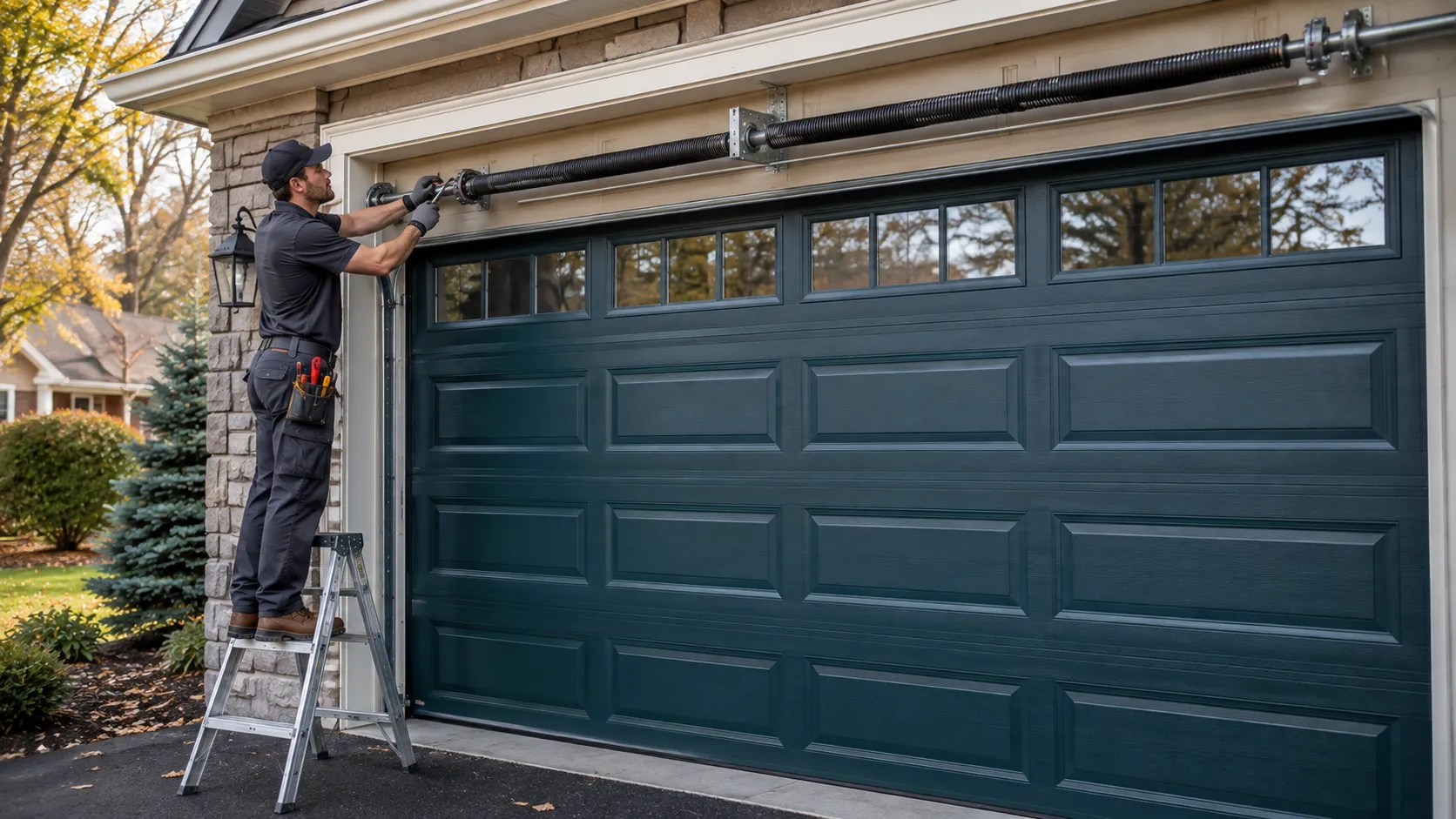
Most of the housing stock in this part of the service area went up between 1938 and 1992, with a median build year of 1959. That matters for track alignment because a door built or installed on a house from that era is very likely still running on the original steel track brackets, lag-bolted into wood jambs that have shifted, dried, or settled over sixty-plus years. Track doesn't wander on its own. It follows the frame it's bolted to. On a house from the 1950s, that frame has had decades to move a fraction of an inch here, a fraction there, until the vertical track no longer sits plumb to the door panel.
Add to that the fact that a lot of these doors have had one or two roller swaps over the years but never a full bracket re-set, because a partial fix looks like it solved the problem at the time. The rollers ride fine for a while, then the wear pattern on an already-tilted track accelerates. The door starts binding on one side, or a panel edge starts catching the weatherstrip. That's the off-track door announcing itself before it actually jumps the track.

The area
When It Stops Being a DIY Job
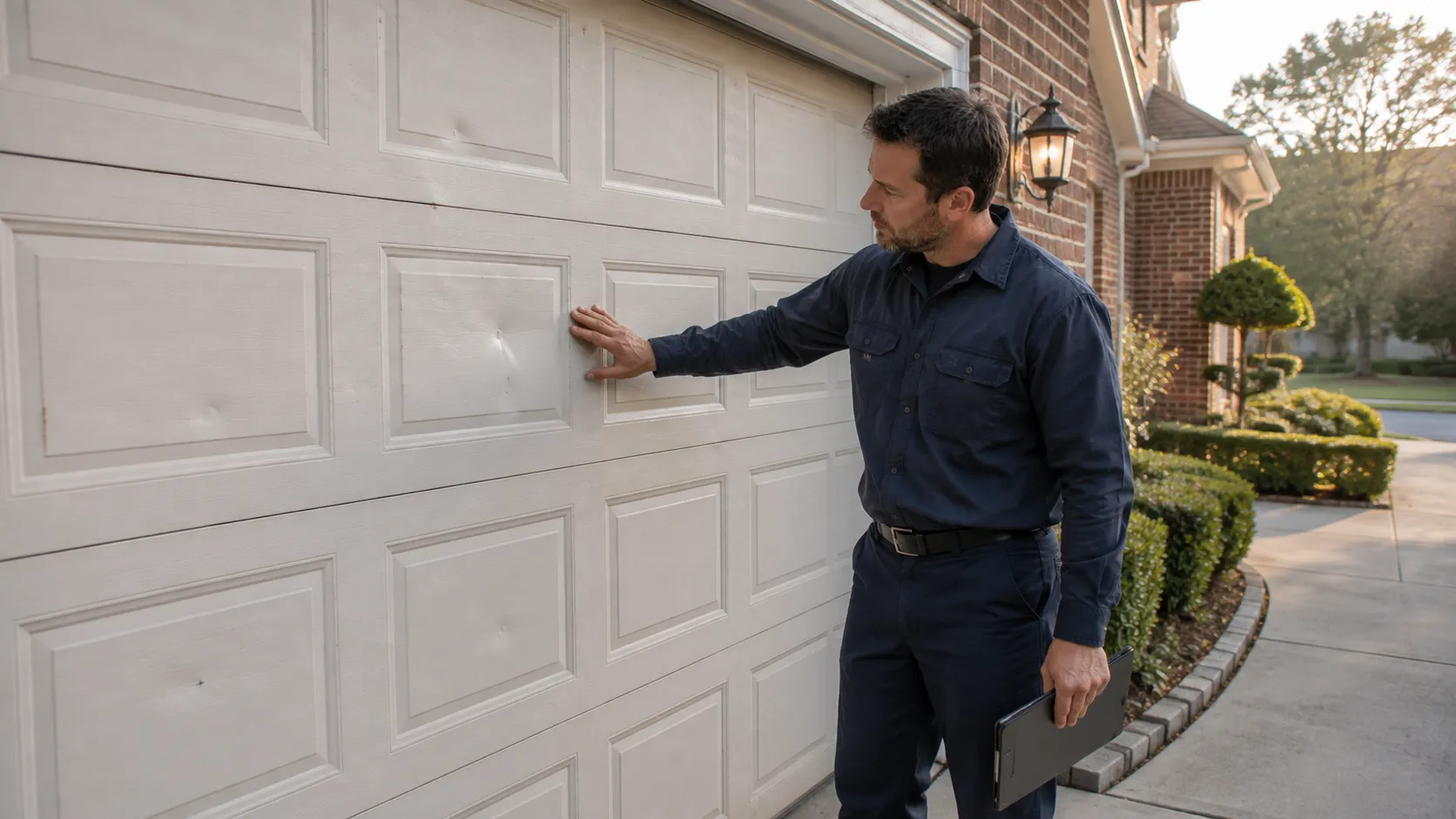
A door that's a little noisy or slightly crooked on a track this old is not a job for a can of lubricant and a level. If the track is original hardware from a pre-1960 install, the bracket screws are often into softened wood, and re-tightening them without addressing the wood underneath just moves the problem six months down the line. That's a call, not a YouTube afternoon.
The honest limit here: if a track is bent more than about a quarter inch out of plane, or if a bracket has pulled loose from the jamb entirely, straightening it back into service isn't reliable. At that point the fix is a new track section and often new brackets set into fresh anchor points, not a bend-back. We'll tell you that instead of forcing an old track to hold. On a door that's already jumped the track with the opener still running, stop immediately. Running the opener against a jammed track is how cables snap and how spring tension lets go somewhere it shouldn't.
What we find
The Cost of This Job
What drives the price on this job is almost never the labor of resetting the track itself. It's what the track reveals once it's off the wall. On houses from the 1938-1992 build range that make up most of this area, the two cost variables are: how much of the original bracket hardware is salvageable, and whether the jamb wood behind it needs a repair before new hardware goes in. A straightforward re-square and re-bolt on sound wood is a quick job. A track replacement where the jamb also needs shoring up takes longer and costs more, because now it's carpentry as well as garage door work.
We don't quote a flat number for this one over the phone, because we haven't seen what's behind your bracket yet. What we can tell you upfront is that a door that's only slightly off track, caught early, is almost always cheaper to fix than one that's been left to grind against a bent rail for a season. The wear compounds.
How we work
What the Weather Here Does to It
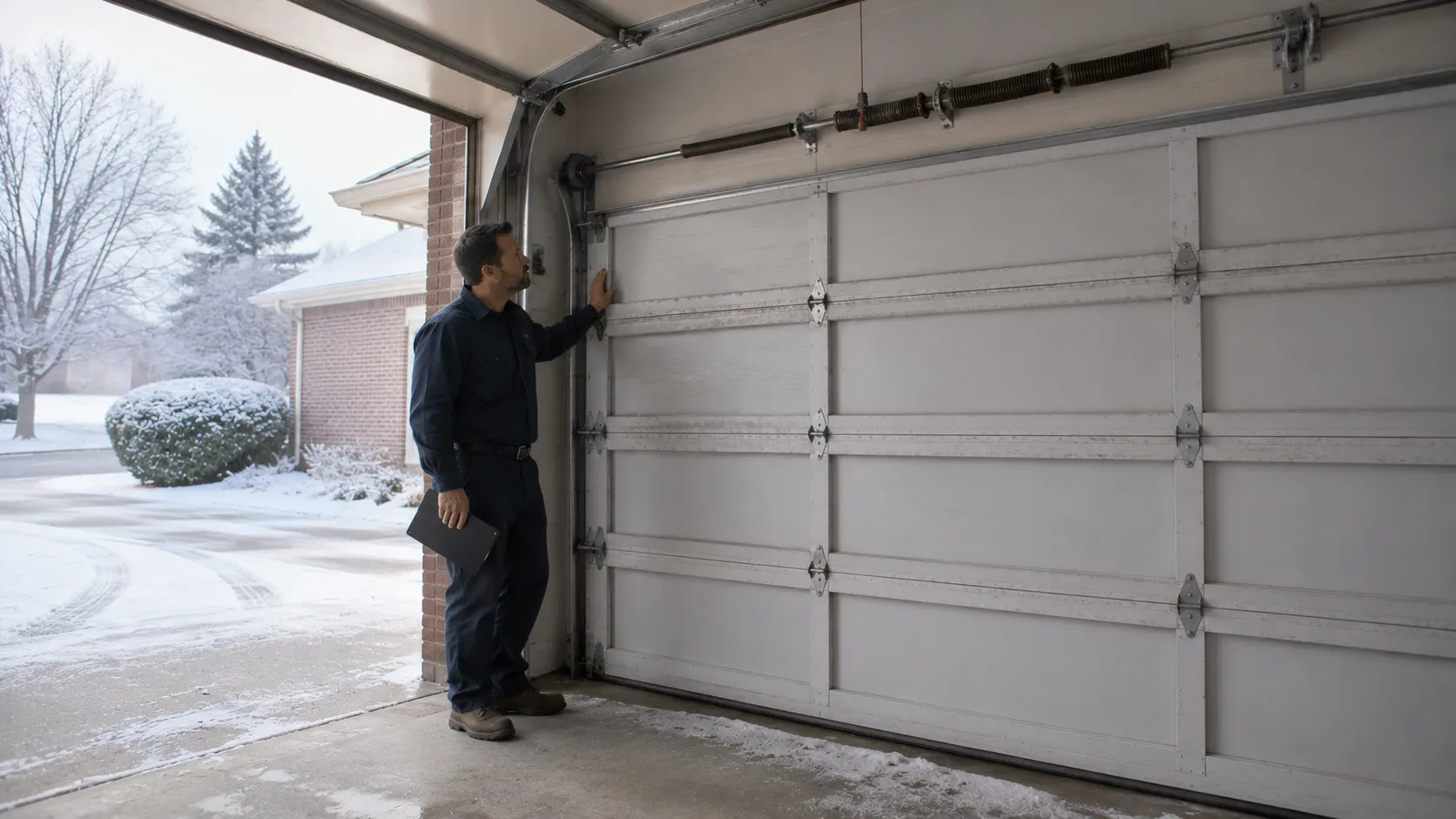
This area sits in a cold climate band, and that cold does specific things to track alignment that a warmer region never deals with. Steel track contracts in winter. On a track that's already got a slight bow or a loose bracket, that seasonal contraction is enough to pull a marginal alignment past the point where the rollers still ride true. That's why a lot of these calls come in during the first real cold snap of the season, not in summer. The door was borderline all along; the cold just finished the job.
Condensation is the other piece. A garage that swings from near-freezing overnight to warmer during the day gets moisture cycling on any exposed steel, and on an older bracket that's already got surface rust, that cycle speeds up the corrosion right at the mounting point. We see it most on doors where the track sits against an uninsulated wall. If your bracket bolts look rusted at the head, that's worth a look before winter really sets in, not after the door's already binding.
Questions
Common questions
My garage door only jumps the track on one side. Is that still serious?
Yes. A one-sided jump usually means a bracket has pulled loose or a roller has worn through on that side, and running the door further will bend the track itself. On the pre-1960 hardware common in this area, that bend usually means a track section replacement rather than a simple readjustment.
Can cold weather really cause this, or is it just the age of the house?
Both, working together. The cold climate here makes steel track contract each winter, and on a house from the 1938-1992 range, the mounting hardware has usually loosened enough over the decades that the contraction is what finally pushes a marginal alignment out of spec.
Is it ever okay to just push the door back onto the track myself?
If the door is already off the track with the opener disconnected, and the track itself isn't visibly bent, a careful reset by someone who knows the hardware is possible. But if the opener is still connected and running, or the track shows any bend, that's a call, not a DIY fix.
Ready when you are
Need a garage door sorted in Evanston?
Evanston Garage Door Pros repairs and installs garage doors, springs and openers in Evanston, IL and the surrounding area.