
Evanston, IL
Garage Door Repair Built for Evanston's Older Housing Stock
Garage door repair for Evanston homes built 1938-1992, where original hardware and cold winters wear out springs and rollers faster than newer stock.
What we do
Garage door work in Evanston
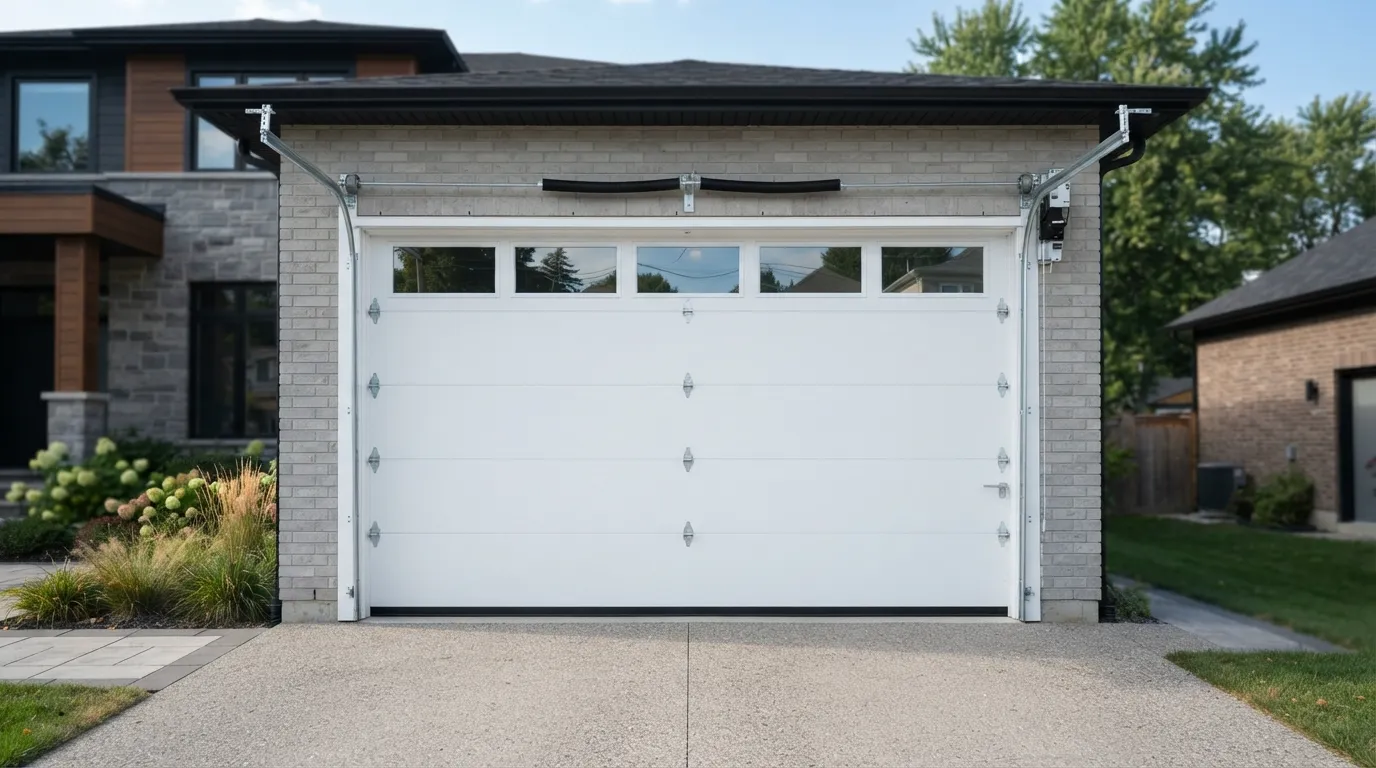
Garage Door Installation for Evanston's Older Housing Stock
Installing a new garage door on a house built before 1960 near Evanston takes different hardware than a new-construction job. Learn more →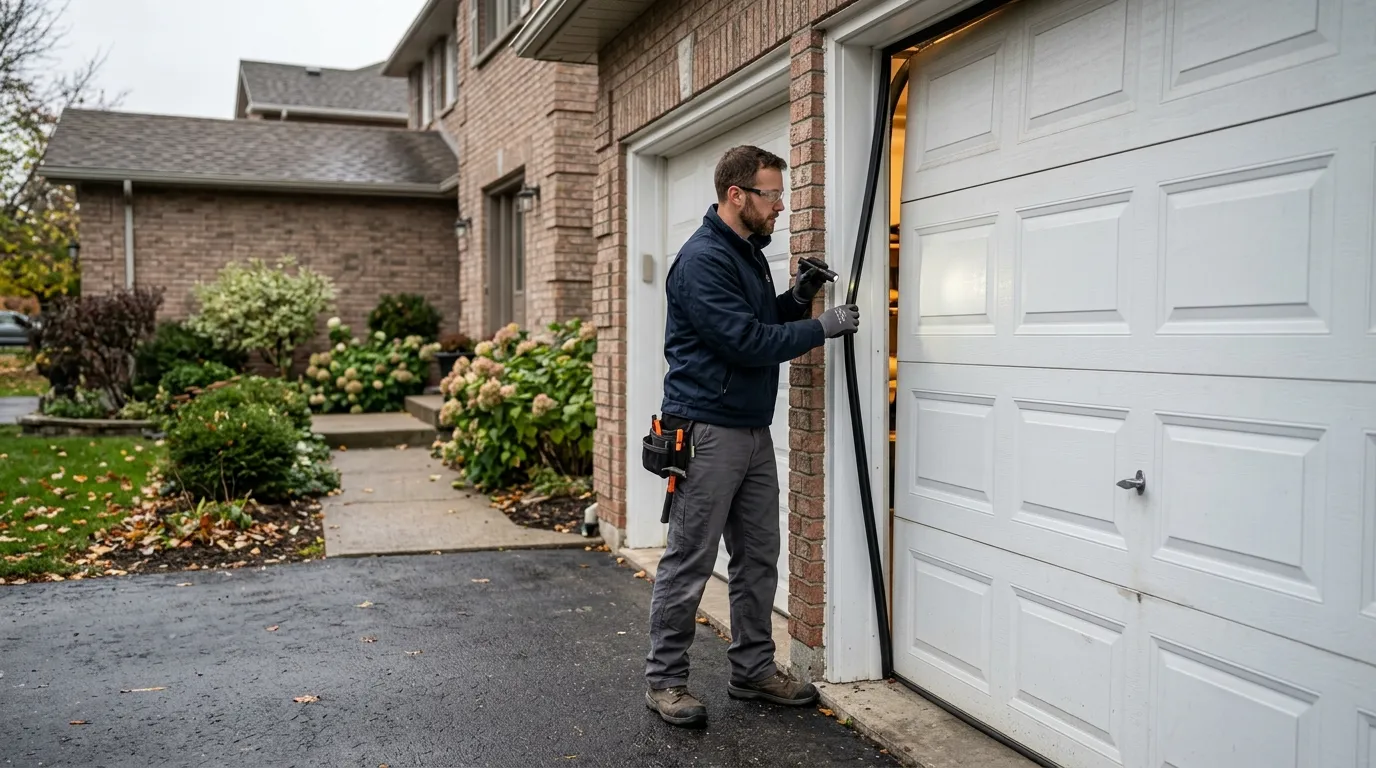
Garage Door Repair for Evanston Homes
Evanston Garage Door Pros repairs springs, openers, and tracks in Evanston's pre-1960 housing stock, matched to the cold-climate wear these older doors take every winter. Learn more →Local detail
What the Repair Takes
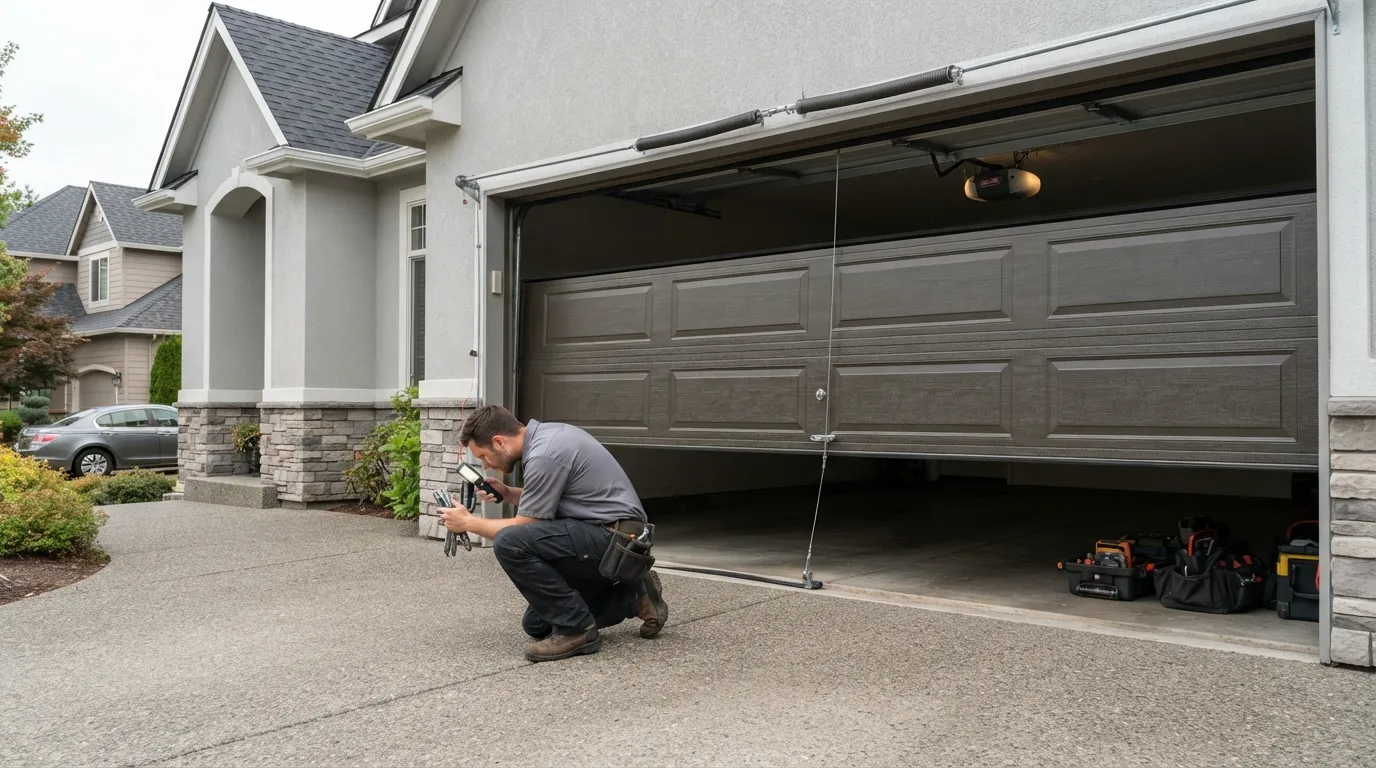
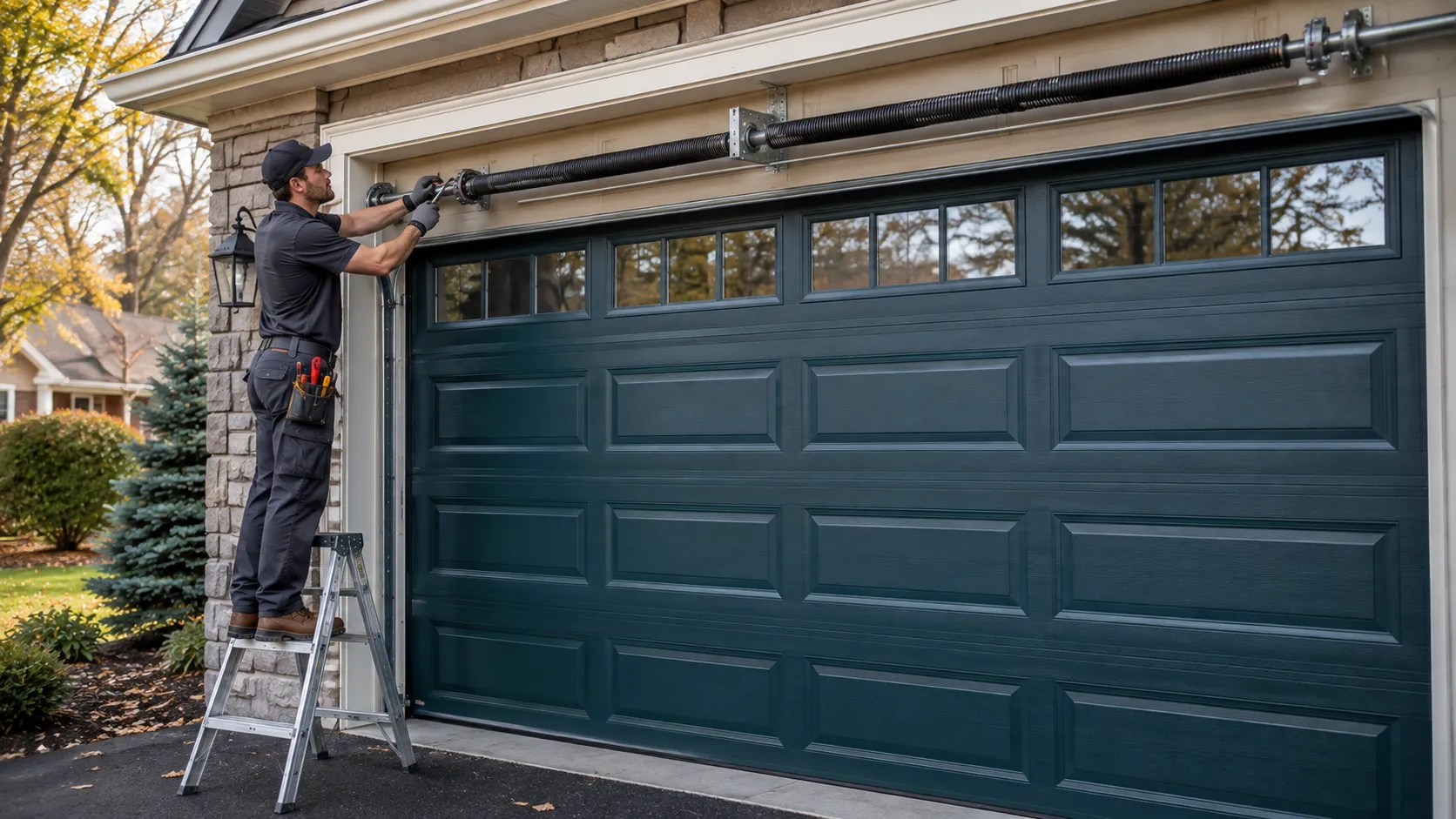
Most garage door calls in Evanston break down into three jobs: a torsion spring that let go, an opener that stopped talking to the wall switch, or a track that's bent enough to bind the rollers. On a standard double door we're pulling the old spring off the header, matching wire size and wind direction to the drum, and winding the new one under tension with bars - not a job to eyeball. Single-car doors on the older side of town often still run on hardware sized for lighter, thinner panels than what's sold today, so we bring a range of spring sizes rather than guess and drive back for the right one.
Opener repair is usually a logic board, a stripped gear on the drive, or a sensor that's drifted out of alignment - that last one is common after a door's been serviced or a shelf near the track has shifted. Track and roller work means checking the whole run for square, not just tightening the bent spot, because a track that's off by even a half inch at the top will keep chewing through rollers no matter how many times you replace them.
One limit worth saying plainly: if the door itself is warped or delaminating - common on older wood-composite panels once they've taken enough moisture - we're not going to spend your money chasing hardware fixes on a door that needs replacing instead.

The area
The Symptom
The call we get most from Evanston homeowners is a door that won't budge, or one that opens a few inches and stops. That's almost always a broken torsion spring - the door got too heavy for the opener to lift on its own, and the opener's overload protection kicked in rather than burn out the motor. Right behind that is a door that reverses on its own partway down, which usually traces to a photo-eye sensor that's out of alignment or a limit switch setting that's drifted.
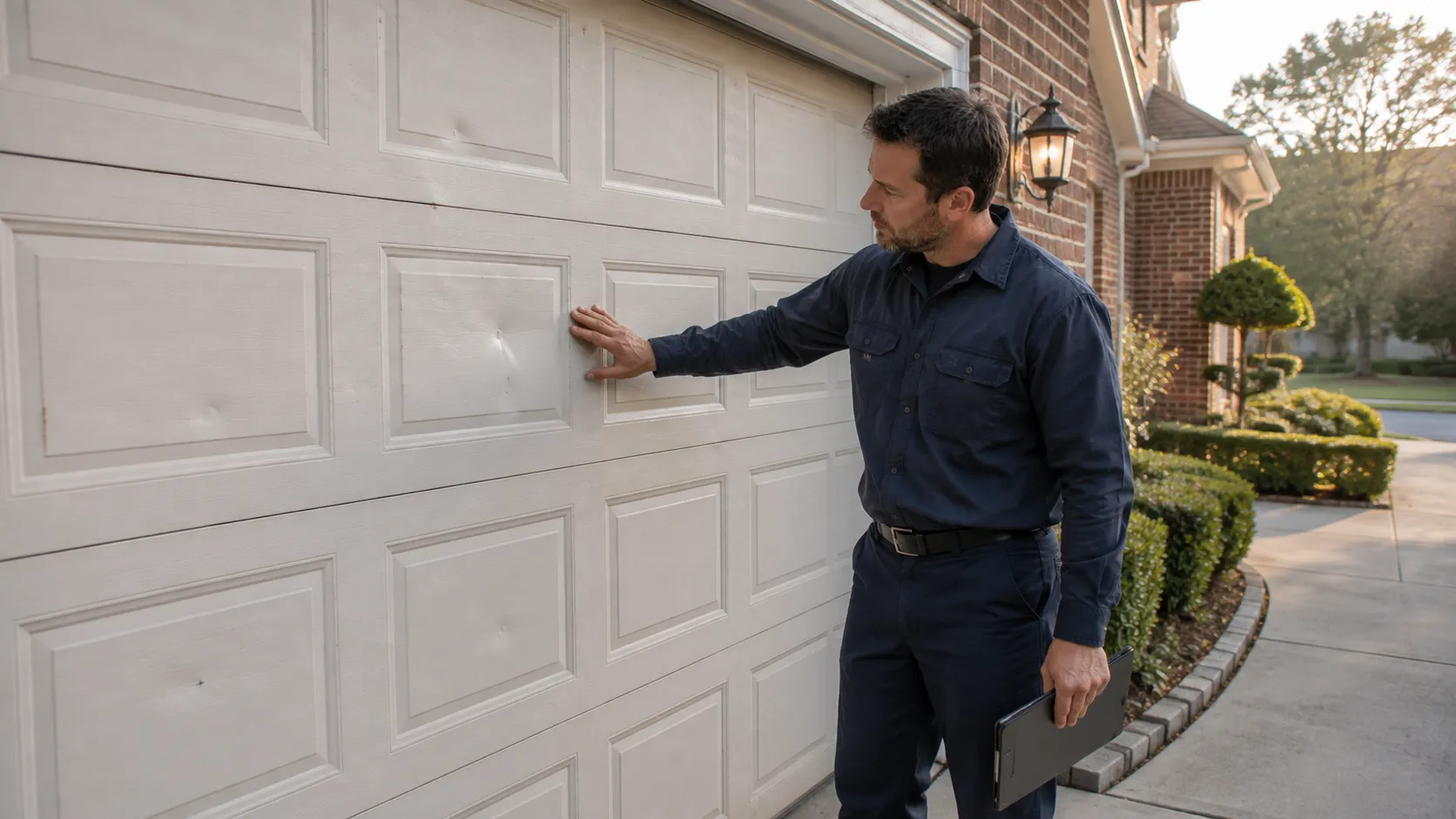
A quieter but just as common symptom: a door that's noticeably harder to lift by hand than it used to be, even before it fails outright. That's the spring losing tension gradually rather than snapping, and it's worth a call before it goes all at once and drops a heavy panel. Given the age of housing across this service area, we also see original steel track that's rusted at the mounting brackets, which shows up as a grinding or scraping sound rather than a full stop.
We don't get many calls about doors that simply won't close all the way - that one's usually a settled slab or a track bracket pulled loose from old lumber, not a door problem at all.
What we find
Why This Fails Locally
Housing here runs mostly older stock - the median build year across the area sits around 1959, with most of it going up between 1938 and 1992. That matters for garage doors because a lot of these houses still carry original or first-replacement hardware: torsion springs sized decades ago for panel weights that don't match what's on the shelf at a big box store today, and track brackets fastened into framing that's had sixty-plus years to shrink and shift.
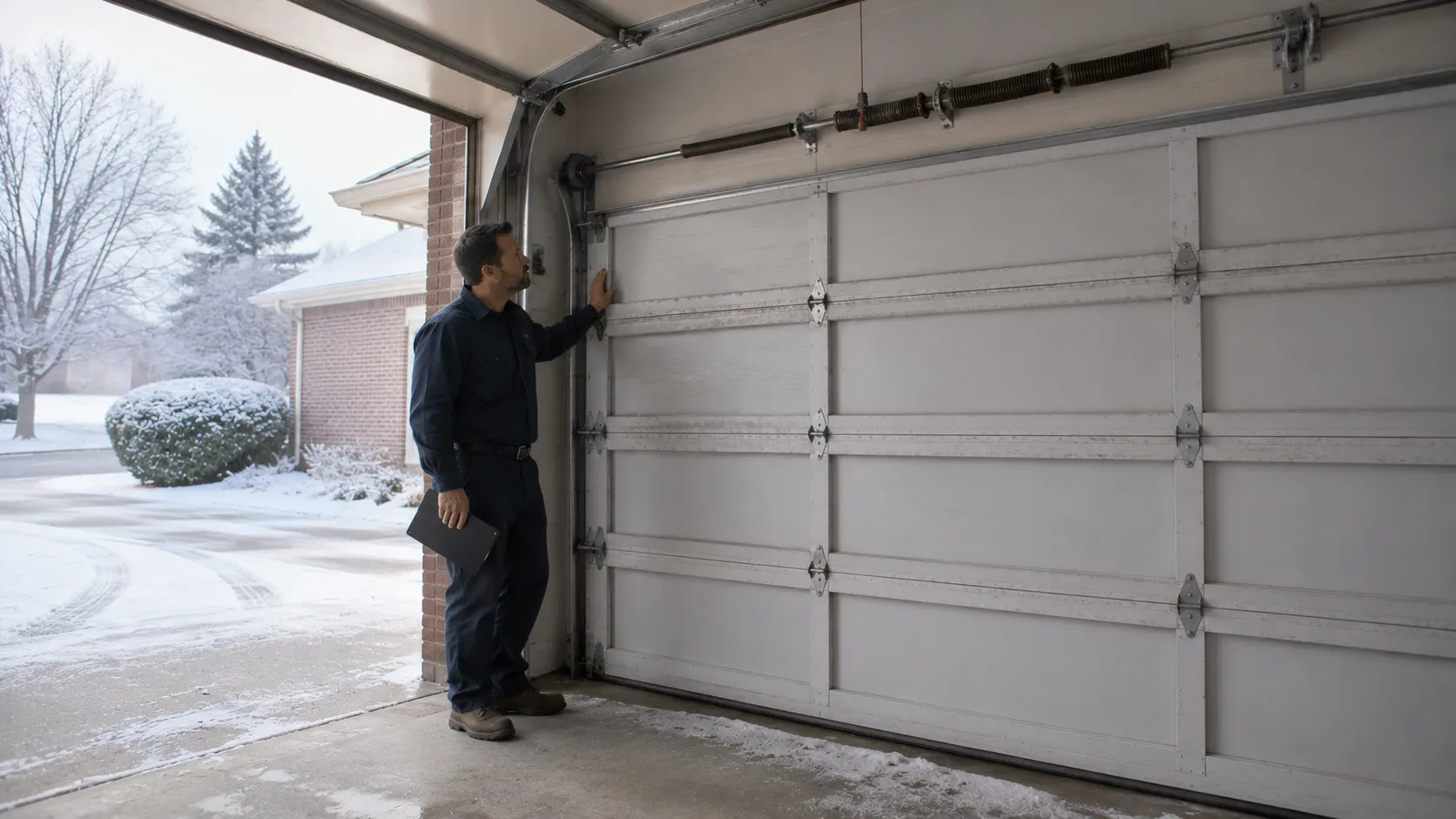
The cold-moderate climate band this area sits in adds a second layer to it. Steel torsion springs lose a bit of tension in a hard freeze and regain it as things warm, and that repeated flex is exactly what fatigues a spring that's already old. Lubricant that was fine in October gets stiff in January, which is when we see the jump in stuck-door and hard-lift calls. It's not that the door failed because of one cold night - it's thousands of expansion-contraction cycles on hardware that was never rated to last this long in the first place.
With close to 130,000 owner-occupied houses across this broader service area and household income here running well above the regional norm (F7 - median around $91,000), we see a mix of folks who want the original door kept alive and folks who'd rather replace the whole unit once repair costs start climbing. Both are reasonable calls depending on the door's age and condition.
How we work
What Is on the Truck
Because Evanston sits close to a cluster of similarly older suburbs - Kenilworth, Golf, and Winnetka are all within five miles, Rogers Park is just two miles south - we stock spring sizes and track hardware that cover the older builds common across this whole stretch, not just what's popular in new construction. That means torsion springs in a wider range of wire diameters than a shop that only serves newer subdivisions would bother carrying.
We carry standard rollers (nylon and steel), replacement cables, common photo-eye sensor pairs, and the brackets and hinges that fit older track profiles. Opener boards and drive gears for the major residential brands are stocked for same-visit swaps in most cases. What we don't carry on the truck is full replacement panels or custom-sized doors - those get ordered once we've measured, and lead time depends on the manufacturer, not on us.
If a job turns out to need a part we don't have on hand - an obsolete drum size or a discontinued opener logic board, which does happen on doors installed decades ago - we'll tell you that on site rather than mid-repair, and talk through whether it's worth sourcing the part or replacing the unit instead.
Questions
Common questions
Why did my garage door spring break in the middle of winter?
Torsion springs lose and regain tension as steel contracts and expands with temperature swings. In this area's cold-moderate climate, that repeated flex over decades fatigues a spring that's already old - which is common given how much of the housing stock here dates to the 1938-1992 range. It's cumulative wear finally catching up, not one cold night causing the break.
Do you carry parts for older garage doors, or just newer ones?
We stock a range of torsion spring sizes and older track hardware because so much of the housing in and around Evanston is original or first-generation replacement stock. If a part turns out to be genuinely obsolete - an old drum size or a discontinued opener board - we'll tell you on site rather than guess.
How do I know if I need a repair or a whole new door?
If the panel itself is warped, delaminating, or rusted through, hardware repairs won't fix the underlying problem and we'll say so rather than run up a bill. If it's a spring, opener, track, or roller issue on a sound door, repair is almost always the right call.
Ready when you are
Need a garage door sorted in Evanston?
Evanston Garage Door Pros repairs and installs garage doors, springs and openers in Evanston, IL and the surrounding area.