
Guide
What Wind Does to a Wide Door in Evanston
Why wide garage doors in Evanston's pre-1960 housing stock take wind damage differently, when it's a DIY fix, what it costs, and what the cold climate adds to the problem.
Local detail
The Situation
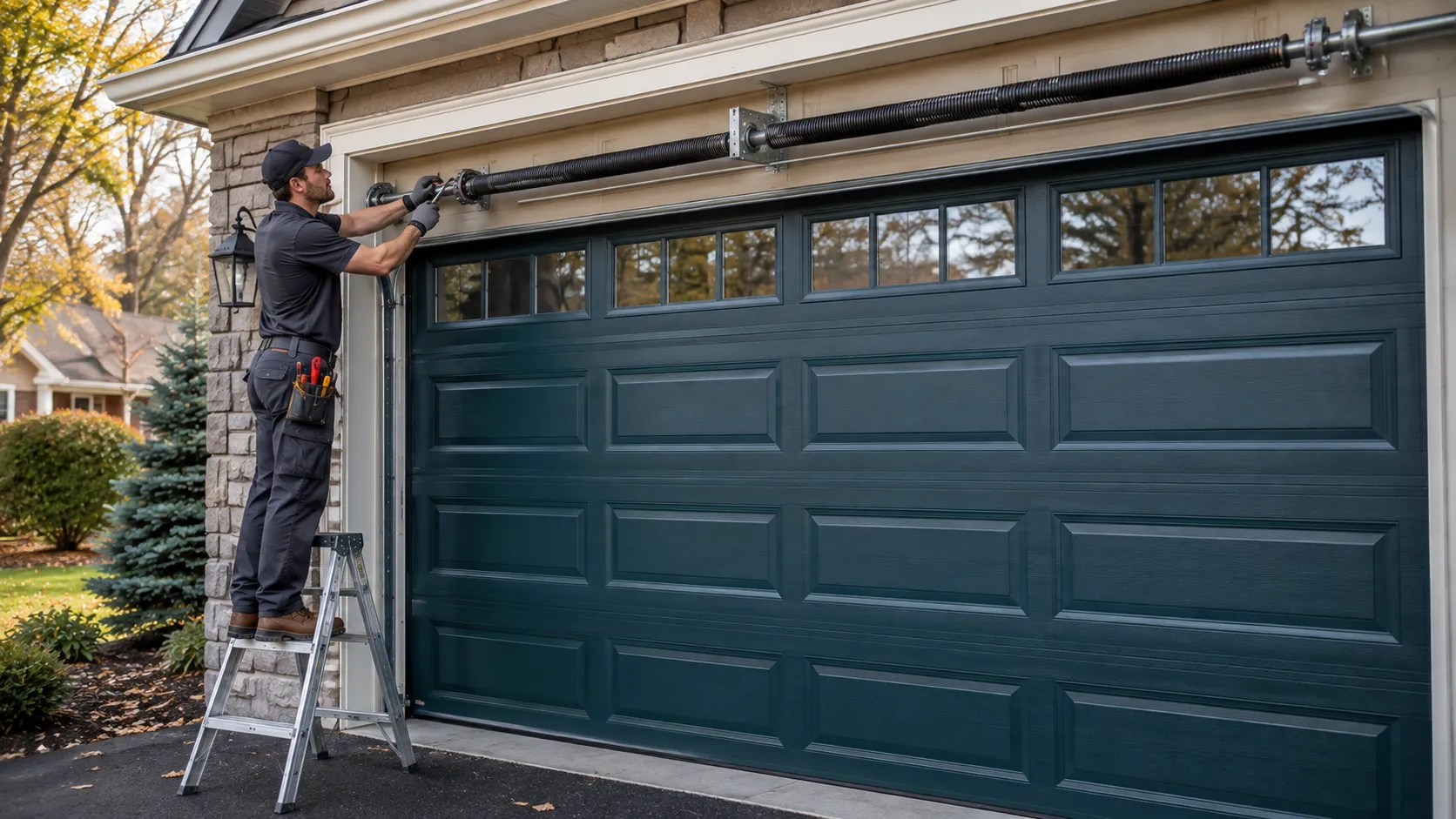
Most of the houses on Evanston's blocks went up between 1938 and 1959, with a median build year around 1959. That matters more than people think when it comes to wind and a wide garage door. Garages from that era were built for single, narrower openings - a lot of them got widened decades later to fit a two-car door, and the bracing behind the jamb often didn't get upgraded to match. So you end up with a wide panel hanging on a frame sized for something smaller.
A wide door has more surface area for wind to push against, and more distance for that push to flex across before it hits a support point. On a door built to spec for its opening, that's manageable. On a retrofit opening in an older Evanston garage, the flex shows up as a track pulling loose from the wall, a top panel bowing inward, or hinges working themselves out of the screws over a season or two. It's not dramatic the first time. It's the tenth gust, not the first one, that bends the track.
This is a structural issue as much as a door issue, and it's specific to houses of this age with this kind of retrofit history - not something every town's housing stock shares.

The area
When It Stops Being a DIY Job
Tightening a loose hinge or re-seating a roller in the track is fine to do yourself. Once wind has actually moved the track away from the jamb - even a quarter inch - you're past that. A track that's been pulled and pushed back into rough alignment by hand will look straight and still be out of true, and a wide door running on a track that's slightly off will bind, then jump, then eventually come off the rollers entirely, usually with the door partway open.
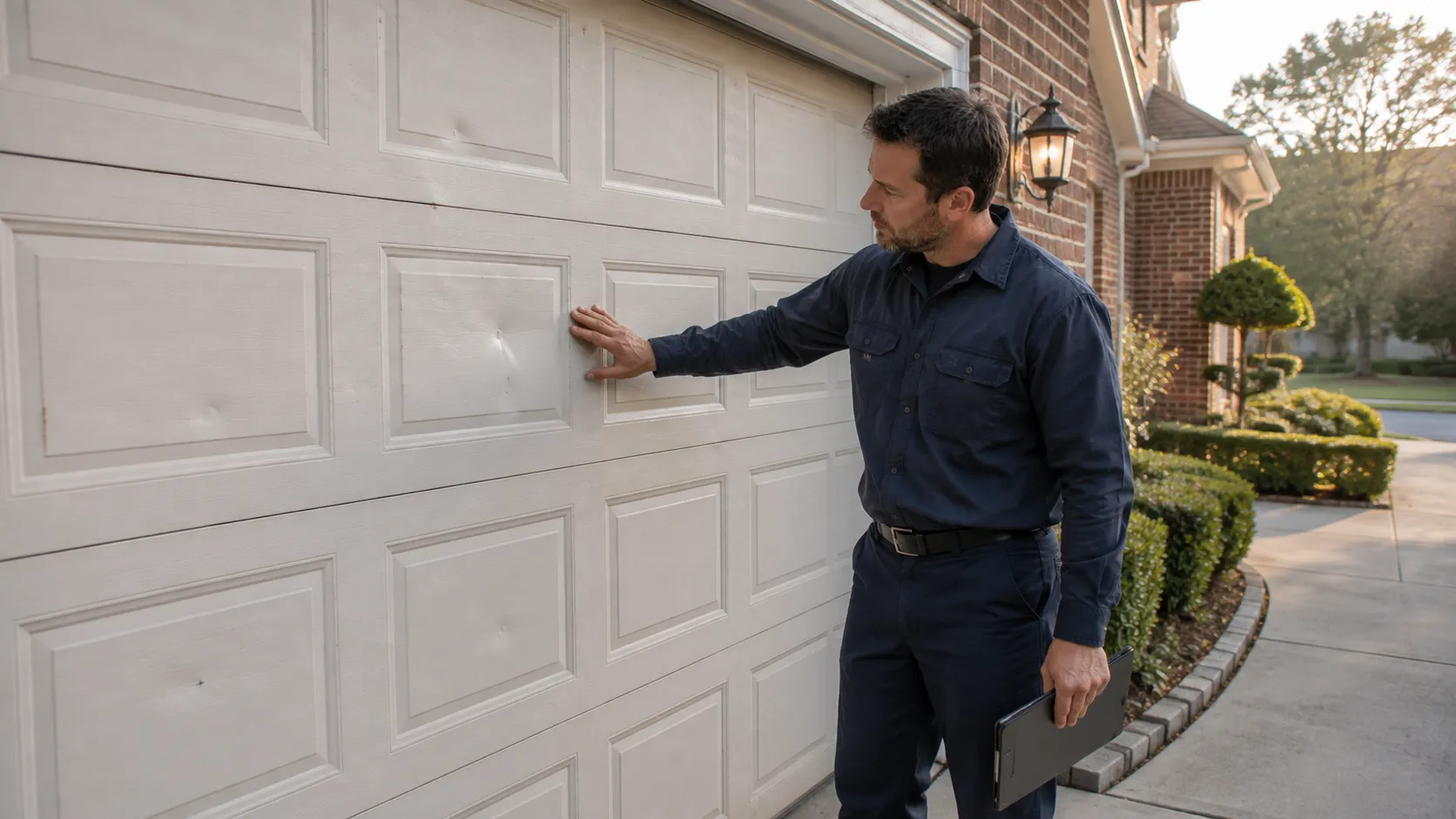
The other line is the panels themselves. A bowed top panel on a wide door isn't cosmetic - it changes how the whole door sits against the weatherstrip and shifts the load distribution across the rest of the panels below it. Trying to muscle a bowed panel back into shape usually just moves the stress point somewhere else on the same door.
If you're dealing with houses of this vintage - original opening widened, older bracing behind the trim - start by checking whether the wall studs around the track are still tight to the frame. If they've separated even slightly, that's not a bracket tightening job. That's a call.
What we find
The Cost of This Job
I don't have a set price to quote here - cost on this kind of repair depends on whether it's the track, the panel, or the bracing behind the jamb, and those are three different jobs with three different price points. What I can tell you is how to think about it.
On a house from this era, repairing a bent track on a retrofit-wide opening often costs about the same as reinforcing the jamb properly the first time - so patch jobs on these openings tend to repeat. A single bowed panel can sometimes be replaced on its own if the door is a common width; if it's an older or oddly-sized wide door original to a widened opening, matching panels gets harder and a full door replacement starts to make more sense than chasing parts.
Given the income and housing profile in this part of the service area, most owners we see choose to reinforce the opening once rather than repair the same wind damage every year or two. That's not a sales pitch - it's just the math on a door that keeps failing at the same point.
How we work
What the Weather Here Does to It
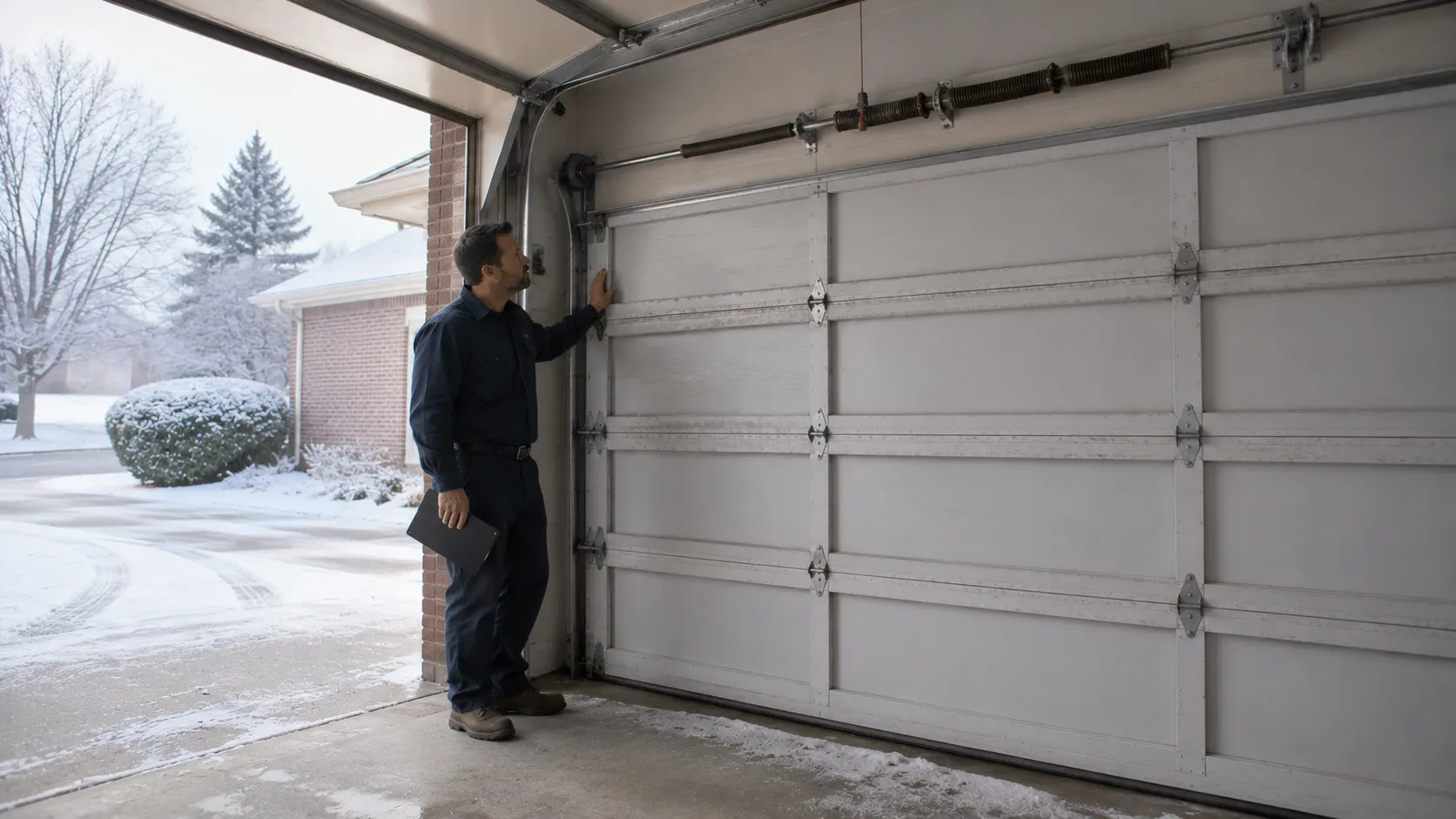
Evanston sits in a cold, moderate climate band, which means real seasonal swings - steel contracts in winter cold and expands again in warmer months. On a wide door, that contraction pulls the panel seams tighter right around the same time wind gusts are putting lateral pressure on the same door. The two forces land in the same spot: the seam nearest the weakest bracing point.
On a house built in the 1938 to 1992 range, especially one closer to the 1959 median, that seam is often sitting on original or early-replacement hardware that was never rated for a wide span in the first place. It's not that the cold breaks the door by itself, and it's not that wind alone would either - it's the combination, repeated every winter, that eventually finds the weak point.
If your door already sticks or drags more in January than it does in July, that's a sign the panel or track is under more stress than the hardware was built to handle. Worth a look before the next windy stretch, not after.
Questions
Common questions
Why does my garage door only act up when it's windy and cold at the same time?
Steel panels contract in cold weather, pulling the seams tighter, right when wind is pushing laterally against the panel. On a wide door with older or retrofit bracing - common in Evanston's pre-1960 housing stock - those two forces stress the same weak point at once, which is why problems tend to show up in winter storms specifically.
Is a bowed panel on my garage door something I can fix myself?
No. A bowed panel has already shifted the load distribution across the rest of the door, and pushing it back by hand usually moves the stress somewhere else instead of fixing it. It also affects how the door seals, which matters more once the seam is already compromised.
My garage opening looks wider than the original house plan - why?
A lot of Evanston garages built in the 1938 to 1959 range were originally sized for a single narrower door and got widened later for a two-car door. The bracing behind the jamb wasn't always upgraded to match, which is why these openings are more prone to wind-related track and panel damage than a door built new to its current width.
Ready when you are
Need a garage door sorted in Evanston?
Evanston Garage Door Pros repairs and installs garage doors, springs and openers in Evanston, IL and the surrounding area.