
Guide
What We Look At First on an Evanston Garage Door Call
In Evanston's pre-1960 housing, a technician checks the torsion spring, track alignment, and weatherstripping first, before touching the opener or panels.
Local detail
The Situation
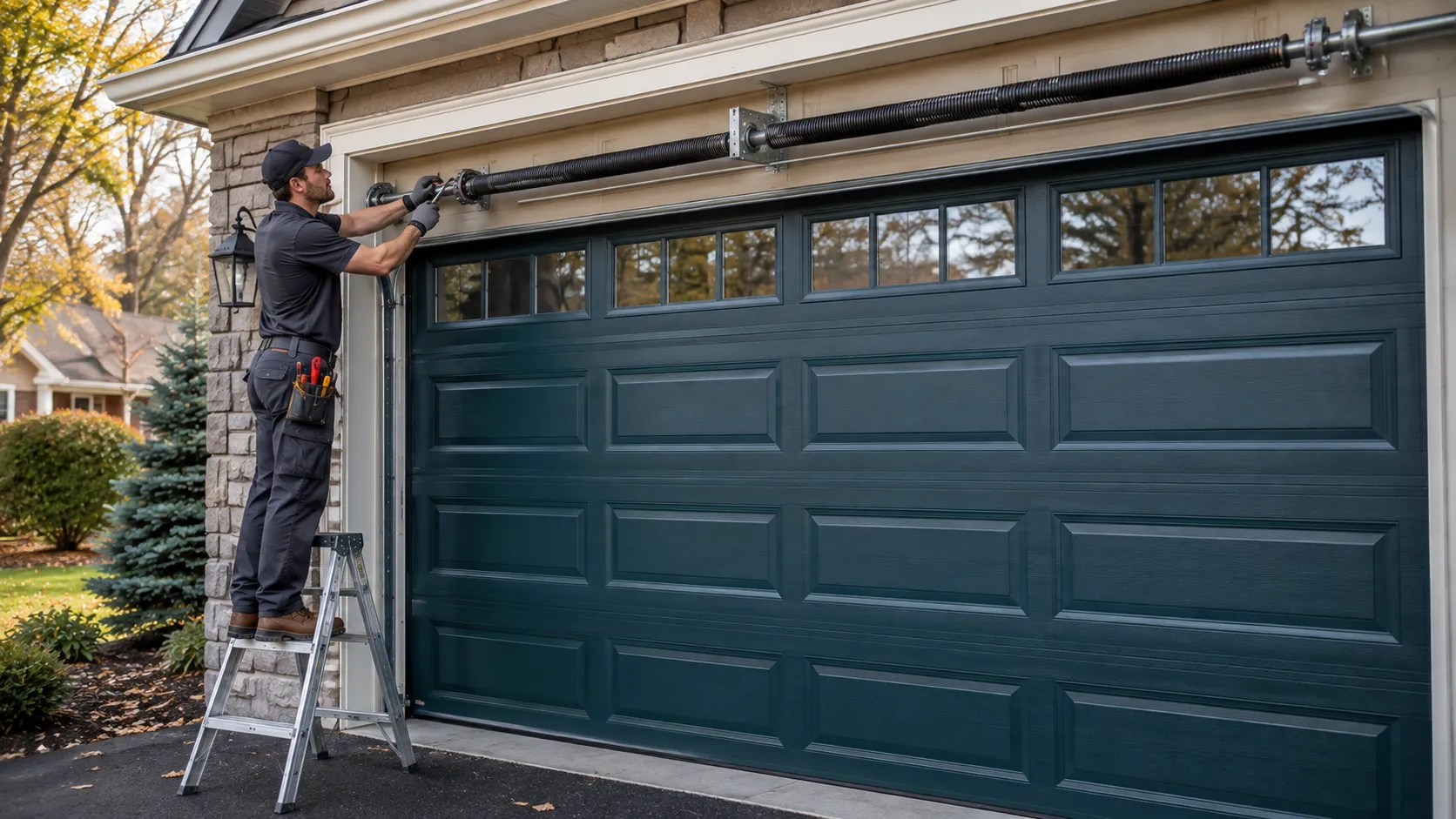
Most of the housing stock in this part of the North Shore corridor went up between 1938 and 1992, with the median build year sitting around 1959. That's not a guess - it holds across the 54 named areas that make up this service territory, from blocks close to Rogers Park two miles southeast up through Kenilworth, Winnetka, and Golf a few miles north. A door on a house built in 1959 is not the same job as a door on a house built in 2005.
The tracks were sized for a lighter panel, the header framing often wasn't built for a heavier insulated door, and the opener - if it's been swapped at all - may be bolted into wood that's aged sixty-plus years. When we get a call, we're rarely walking into a blank slate. We're walking into a system that's had one or two partial upgrades layered on top of original 1950s bones, and figuring out which part is original and which part got patched later is the first job before any tool comes out.

The area
When It Stops Being a DIY Job
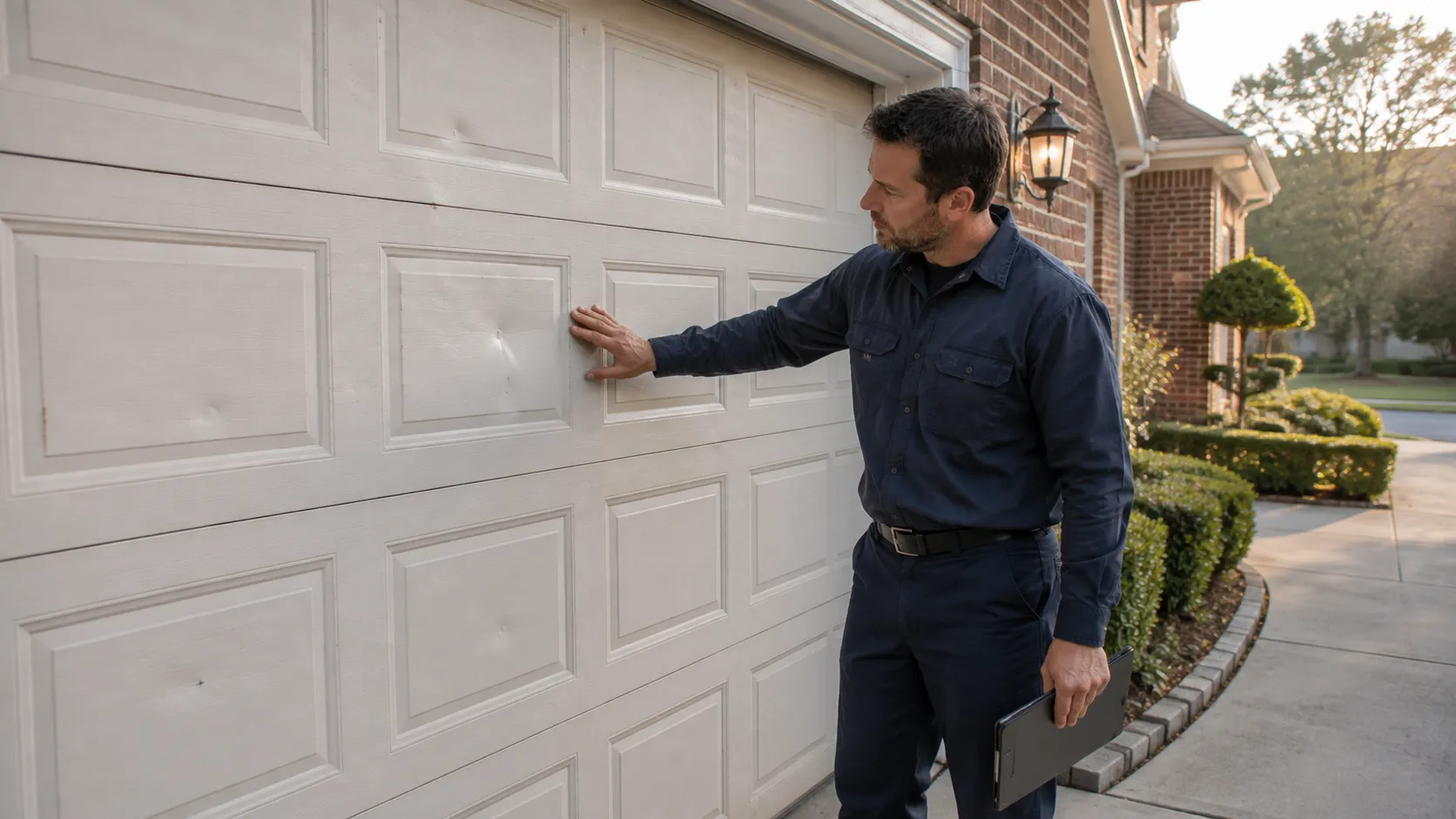
A loose bolt or a dirty roller, most owners can handle. What changes the calculation here is the age of the hardware behind the panel. On houses from the 1938-1992 build window, a lot of torsion spring setups are original or first-generation replacements, sized for a door weight and drum configuration that isn't always labeled anymore. Once a spring is off its winding cone, or a cable has jumped its drum, that's a job for someone who's opened a hundred of these old side-mounted systems, not one.
The other tell: if the door is racking in the track rather than moving straight, on a house this old that's usually the jamb settling over sixty-plus years, not just a bent track - and forcing the door back into place without correcting the frame just breaks it again in a month. Our honest limit: we don't do structural carpentry to re-square a header. If the opening itself has shifted, that's a call to a carpenter first, us second.
What we find
The Cost of This Job
We're not going to quote a number here that doesn't hold up house to house, because it doesn't - a lot of what drives cost on this side of town is the age mismatch between the opening and modern parts. Standard doors and standard torsion springs are stocked and priced predictably.
A door sized to an opening built before current lumber and rough-opening standards is not always standard, and matching an odd width or a non-current panel height adds time and sometimes a special order. With median household income across this service area sitting around $91,000 and roughly 129,751 owner-occupied houses in the broader area, most of what we see is people maintaining a long-term home rather than flipping a new build - which means more repairs, fewer full teardowns, and a real incentive to fix a spring or a section rather than replace the whole door when the rest of it is sound.
How we work
What the Weather Here Does to It
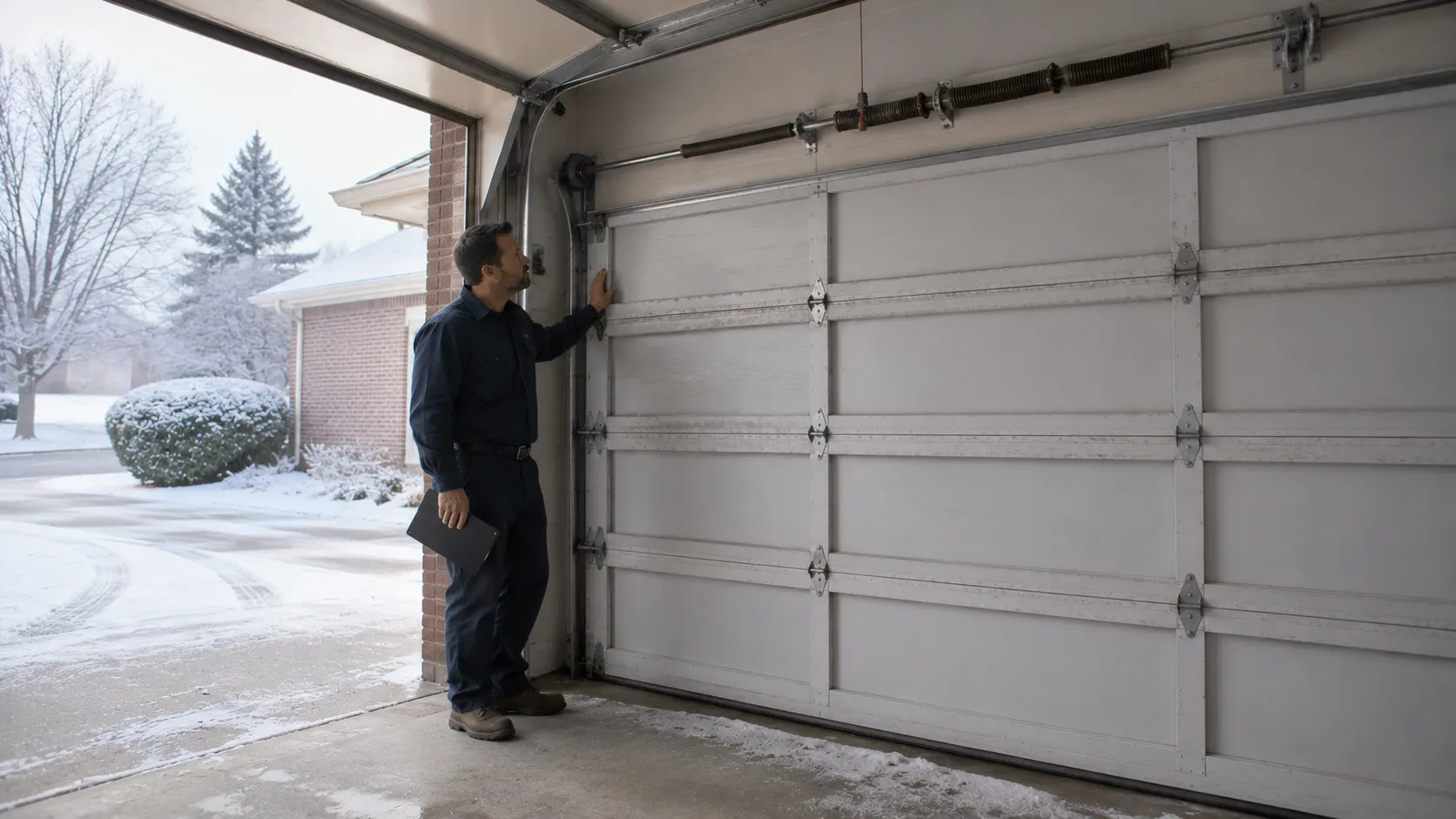
This is a cold, moderate climate, and that shows up in specific ways on an older steel door. Winter contraction stiffens the torsion spring's coil tension slightly and thickens standard grease on the rollers and hinges, which is why a door that ran quiet in September starts groaning in January - it's not new damage, it's the same hardware behaving differently at a lower temperature.
On doors matched to houses from the 1938-1992 stock, the weatherstripping along the bottom seal is usually the first thing to fail after a hard freeze-thaw cycle, because the vinyl was never rated for decades of that swing. We check the bottom seal and the astragal for cracking on every cold-weather call, because a gap there lets meltwater run under the door and re-freeze against the track overnight, which is what actually causes the door to bind or refuse to open on the coldest mornings.
Questions
Common questions
Why does my garage door only stick in winter?
On the older housing stock common through this area, cold-weather stiffening of the spring and thickened lubricant on rollers is the usual cause, not a broken part. We check spring tension and lubrication first before assuming something's failed, since a lot of winter sticking resolves once the door is re-lubricated for the season.
Is it worth replacing an old door instead of repairing it?
Depends on the panel and the frame, not just the door's age. If the opening was built to a non-standard size, as many are on houses from the 1938-1992 era here, repair often costs less and avoids a custom replacement order. We'll tell you honestly when the springs or track are worth fixing versus when the door itself is the weak link.
Do you handle doors on older, non-standard openings?
We work on a lot of them, since that's the majority of what's out there in this service area. What we don't do is reframe a header or re-square a jamb - if the opening itself has shifted with the house, that's carpentry work we'll flag before touching the door.
Ready when you are
Need a garage door sorted in Evanston?
Evanston Garage Door Pros repairs and installs garage doors, springs and openers in Evanston, IL and the surrounding area.