
Guide
What a Service Call Actually Covers in Evanston
Evanston homes mostly date from 1938-1992, median 1959, and that age shows up on every service call. Here's what a tech actually checks and why.
Local detail
The Situation
Most of the housing stock in this part of the North Shore went up between 1938 and 1992, with the median build year sitting at 1959. Across the 54 named areas that make up this service territory, the pattern holds: pre-1960 construction is the rule, not the exception. That matters for garage doors because a door installed on a house built in the Eisenhower era has usually been replaced once, maybe twice, but the track brackets, the header framing, and sometimes the opener rail are original to the structure. A service call here isn't just "look at the door." It's figuring out what decade of hardware you're actually standing in front of.
This area sits close in - Rogers Park is about 2 miles to the southeast, Kenilworth 3 miles out, Golf and Winnetka around 5. That density of older, established neighborhoods means a tech sees a lot of repeat patterns: same brackets, same spring styles, same wear points, just on different streets. We work off what's actually on the door, not a guess based on the house's age alone, but the age tells us where to look first.

The area
When It Stops Being a DIY Job
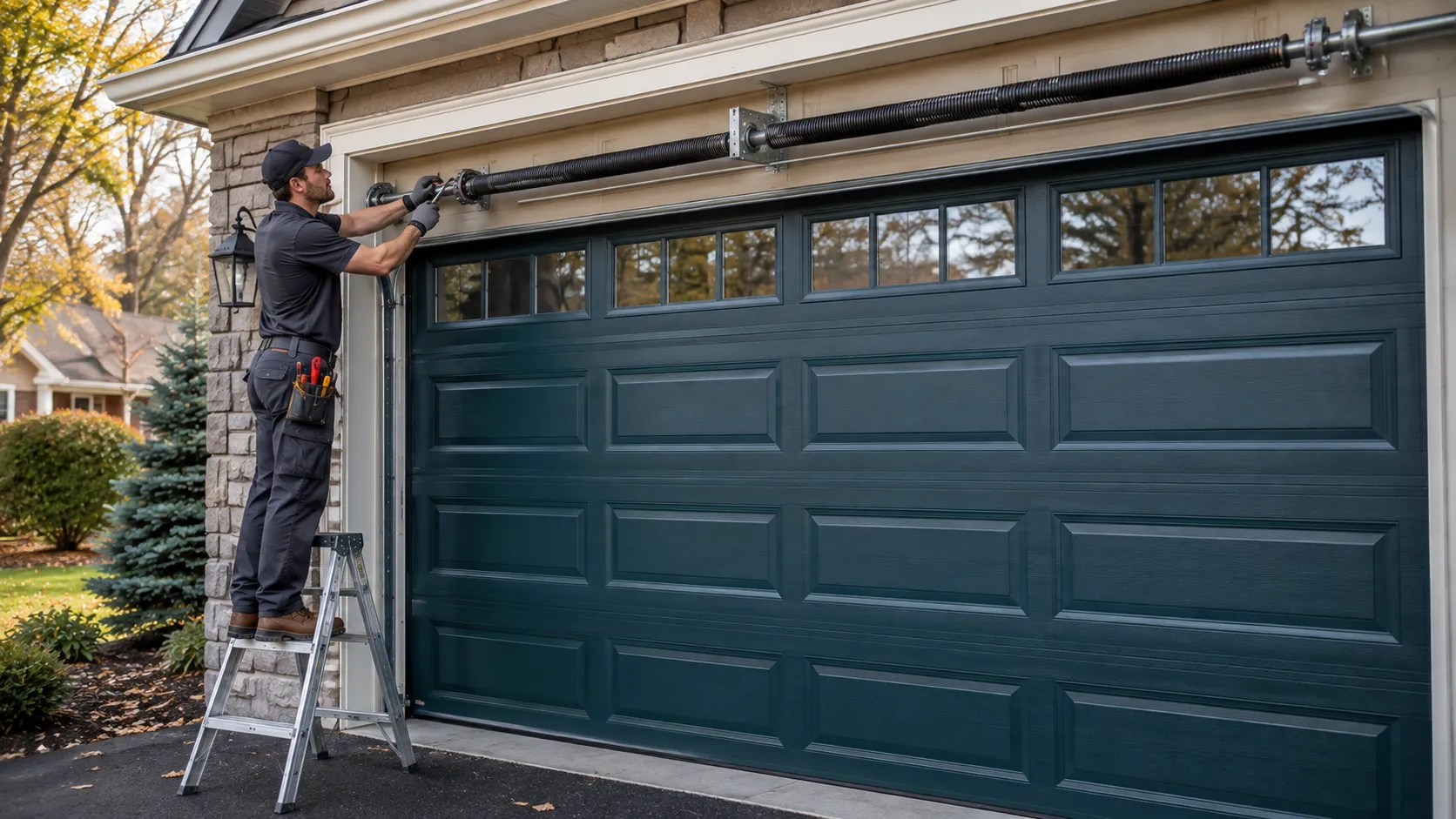
A loose roller or a track that's knocked slightly out of alignment is fair game for an owner with a socket wrench and some patience. Where it stops being a weekend project is anything involving the torsion spring assembly - and in a housing stock this old, that assembly is often original hardware that's been repainted or patched rather than replaced. Springs under tension can put someone in the ER, and on a 1950s or 1960s door the mounting hardware itself may be undersized for a heavier modern replacement panel, which changes the job from "swap a spring" to "rebuild the header." We also see openers bolted into framing that predates the opener by decades - lag bolts into century-old joists don't always hold the way they should.
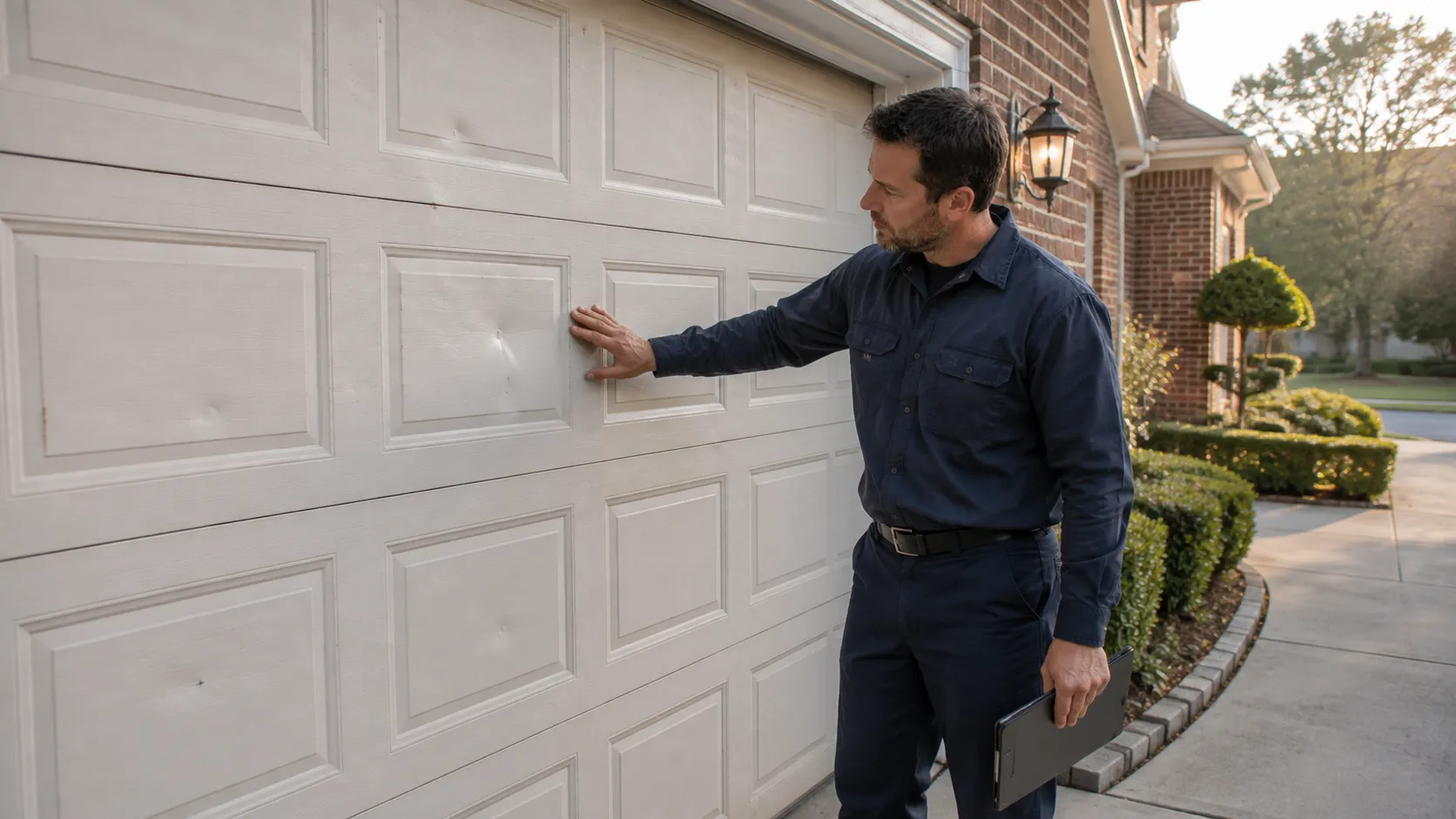
If your door is original to a house built before 1960, and something beyond a bent hinge or a squeaky roller is wrong, that's the point to call rather than pull it apart yourself. One honest limit: if the frame itself has shifted or rotted, that's a carpentry problem before it's a garage door problem, and we'll tell you that instead of forcing a door into a bad opening.
What we find
The Cost of This Job
We're not going to hand you a number here that isn't tied to what's actually wrong with your door, because the range on this kind of work depends heavily on what decade of hardware you're dealing with. A door on a house built in the 1980s is usually a straightforward parts swap. A door on a house from the 1940s or 50s original framing can mean custom bracket work, because standard replacement hardware doesn't always bolt straight into openings sized to older codes.
Median household income in this service area runs around $91,003, and across the roughly 278,872 households and 129,751 owner-occupied houses we could be called to, we see the full range - from a quick spring swap to a full header rebuild on an older frame. What drives the number up isn't the brand of door, it's whether the opening and hardware behind it are original or already updated. We'll tell you which one you've got before we quote anything.
How we work
What the Weather Here Does to It
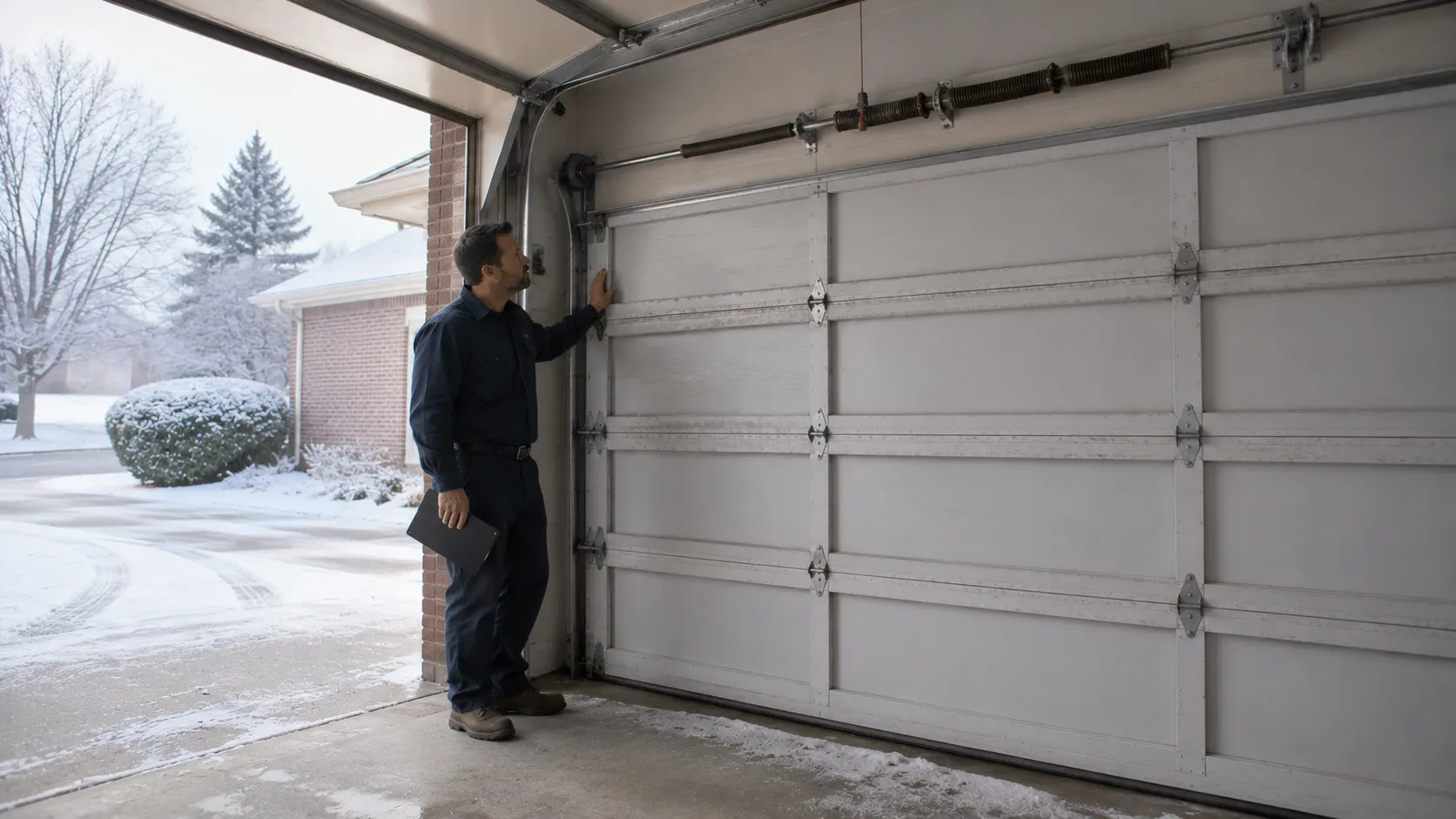
This area sits in a cold, moderate climate band, and that shows up in specific ways on doors that are already decades old. Steel torsion springs lose tension faster through repeated freeze-thaw cycles, and on hardware original to a 1950s or 60s build, that fatigue is already stacked on top of age. Nylon rollers stiffen and crack in sustained cold, and on original tracks - which are often narrower than what's manufactured today - a stiff roller binds instead of just squeaking. Openers with older gear-drive mechanisms, common in houses from this era, slow down noticeably in winter as the grease inside thickens; that's not a sign of failure by itself, but it's often the first symptom before something breaks.
We don't recommend chasing every seasonal noise with a repair. Some of what you hear in January is just old hardware doing what old hardware does in the cold, and it'll quiet down again once temperatures come back up. The calls worth making are the ones where the door won't move at all, or where a spring has visibly let go.
Questions
Common questions
Is it normal for my garage door to sound different in winter?
Yes, especially on original hardware from a pre-1960 build. Cold thickens the grease in older gear-drive openers and stiffens nylon rollers, so you'll hear more noise without anything actually being broken. If the door still opens and closes fully, it's usually not urgent.
How do I know if my door hardware is original to the house?
If your house dates to the 1940s or 50s and the tracks look narrower than modern replacements, or the mounting brackets show old paint layers, that's a good sign it's original. We can confirm this on a service call before recommending any repair.
Can you just replace the spring without touching the rest of the door?
Often yes, but on older frames the spring mount itself may need reinforcing first. We check the header and bracket condition before quoting a spring-only repair, since forcing new tension onto old hardware isn't a lasting fix.
Ready when you are
Need a garage door sorted in Evanston?
Evanston Garage Door Pros repairs and installs garage doors, springs and openers in Evanston, IL and the surrounding area.