
Guide
The 1940s-1960s Housing Stock Behind Most Evanston Garage Doors
Most Evanston garage doors date to the 1940s-1960s, before insulation standards existed. Here's what that means for repair, replacement, and winters here.
Local detail
The Situation
Evanston's housing stock runs from 1938 to 1992, but the median year built sits at 1959, and that number matters more than it looks. A door installed on a house from that era went in years, sometimes decades, before any building code required an insulated garage door or an insulated wall between the garage and the living space. The original doors on these houses were single layer steel or wood, no foam core, no thermal break at the track. Across the 54 named areas that share this same pattern of pre-1960 construction, you'll find the same story on block after block: a garage that was never meant to hold heat, attached to a house that now runs central air and forced heat right next to it.
If your door has been replaced once already, it may still be a basic non-insulated model, because for a long stretch after these houses were built, insulated doors were the upgrade, not the standard. So the age of the house doesn't always tell you the age of the door, but it tells you what the opening and the framing around it were built to expect - which matters a lot once you start talking about swapping in anything thicker or heavier than what came out.

The area
When It Stops Being a DIY Job
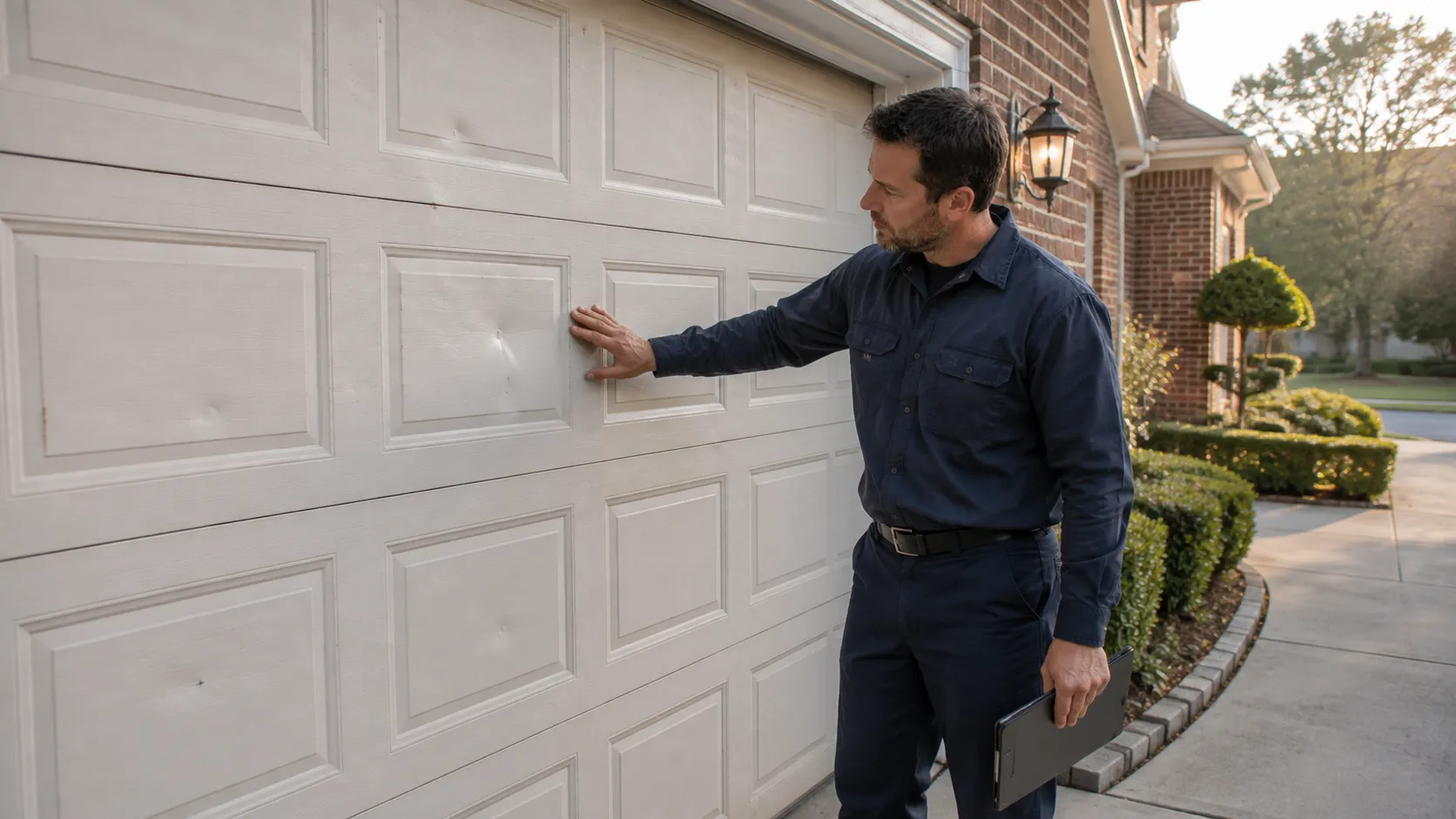
Weatherstripping and a bottom seal are DIY territory, and they help. What isn't DIY: an opening that has racked slightly out of square after 60-plus years of settling, which is common on housing from this era and which no amount of new weatherstripping will fix, because the seal needs a true frame to press against. If the jambs aren't square, an insulated retrofit panel won't seat, and you'll be back to a cold draft within a season.
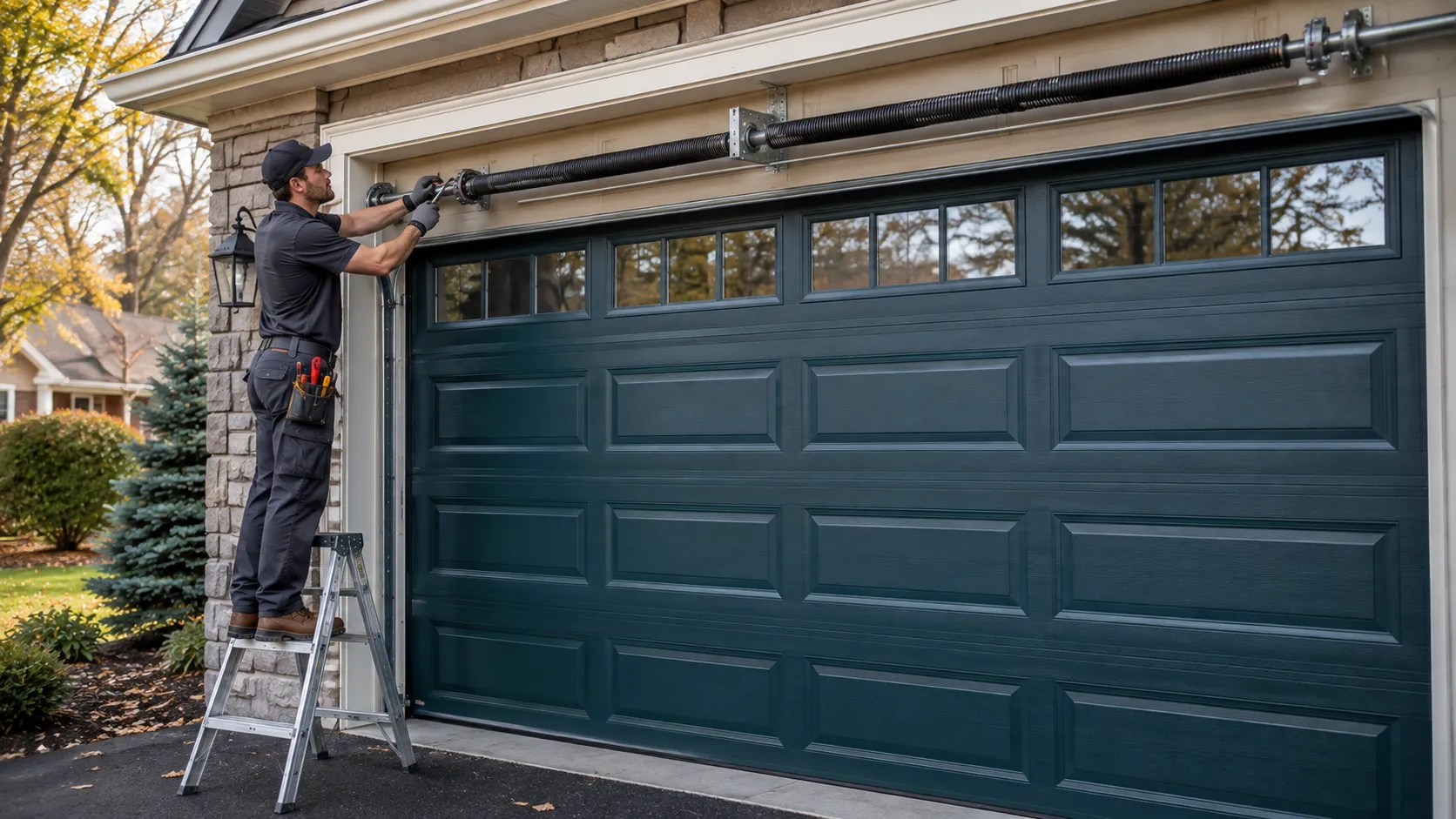
The other line is the spring and cable system. Original hardware on a house from the 1940s-1960s wave was sized for a lighter, uninsulated door. Swap in a heavier insulated panel door without resizing the torsion spring and you've got a door that's hard to lift by hand and hard on the opener motor - that's not a weekend fix, that's a spring change done by someone who can calculate the new lift weight correctly. One honest limit here: if the track and jamb are original and out of true, we're not going to just bolt on a new door and call it solved. That job starts with squaring the opening, and it costs more than the door itself does.
What we find
The Cost of This Job
There's no single number that fits every door here, and we're not going to invent one. What we can say: across this service area, median household income runs $91,003, and there are 129,751 owner-occupied houses, most of them carrying original or near-original garage openings from that 1938-1959 stretch. That's a lot of households weighing the same choice - patch the door that's there, or replace it with something built to a modern R-value.
The honest math usually comes down to what's original versus what's already been touched. A door that's had its hardware upgraded once already is often a repair candidate: new spring, new rollers, new seal, and you're done. A door that's still running its original panel and original track is a harder sell for a patch job, because you're not just fixing wear, you're trying to seal a design that was never built to hold heat in the first place. In that case, spending money on insulation strips and a new bottom seal on a 60-year-old panel is often money spent to buy a year or two, not a fix.
How we work
What the Weather Here Does to It
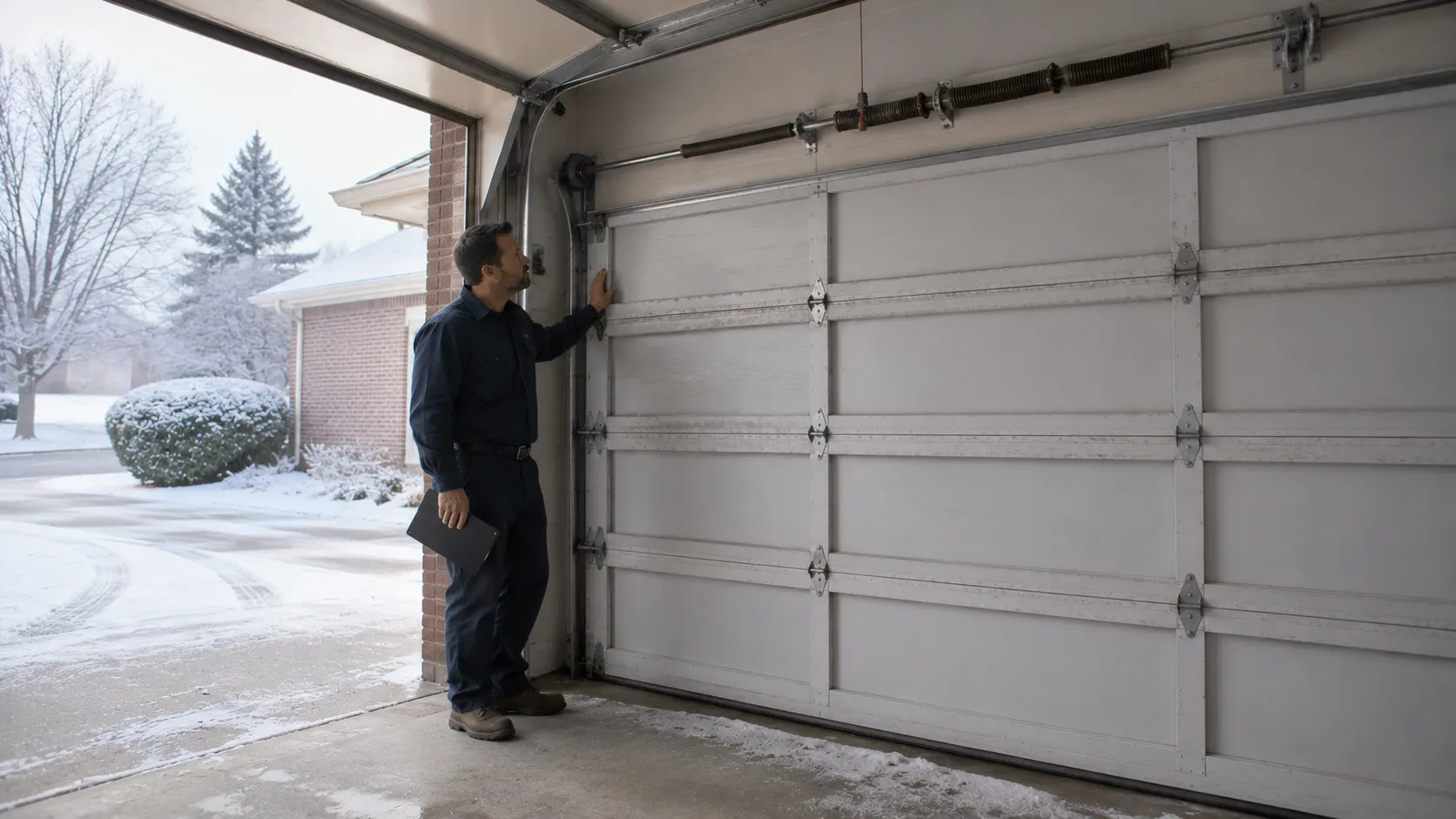
Evanston sits in a cold-moderate climate band, and an uninsulated steel or wood panel doesn't slow that down at all - it just transfers it. On an attached garage, that cold face radiates straight through the shared wall, which is why houses from this build era so often report a cold utility room or a chilly spot on the floor above the garage. It's not a mystery once you know the door has no thermal break.
Cold also does mechanical damage that has nothing to do with insulation. Steel track brackets on houses this age were fastened to jambs that have shifted slightly over the decades, and repeated freeze-thaw cycling works those fasteners loose a little more each winter. Nylon rollers original to a 1950s-60s install go brittle and crack in cold long before they wear out from use. None of this is unique to any one street - it's what a cold-moderate climate does to hardware that's been in the same opening since Eisenhower was president, and it's why a door that closes fine in October can start binding or dropping unevenly by February.
Questions
Common questions
How do I know if my garage door is original to the house?
If your house was built in the 1940s through the 1960s and the door has never been replaced, it's almost certainly a single-layer panel with no insulation core, original tracks, and hardware sized for that lighter weight. Look for a wood or thin steel panel with no foam backing visible from inside - that's the tell.
Should I insulate an old door or just replace it?
If the panel and track are original from the 1938-1959 build wave, insulation strips buy time but don't fix a frame that's shifted out of square. If the jamb is still true and the hardware's sound, added insulation and a new seal can be worth it. If both the panel and the opening are original, replacement usually holds up better long-term.
Why does my garage feel colder than it used to?
Original hardware ages unevenly in a cold-moderate climate - seals compress, rollers crack, and jambs shift slightly with decades of freeze-thaw. None of that shows up as a sudden problem; it shows up as your garage feeling colder each winter until the gap under the door or along the sides becomes obvious.
Ready when you are
Need a garage door sorted in Evanston?
Evanston Garage Door Pros repairs and installs garage doors, springs and openers in Evanston, IL and the surrounding area.