
Guide
The Noises Your Evanston Garage Door Is Making, and What They Actually Mean
Grinding, popping, or banging garage door in Evanston? See what's normal wear on the pre-1960 housing stock here and what means a spring or track failure is close.
Local detail
The Situation
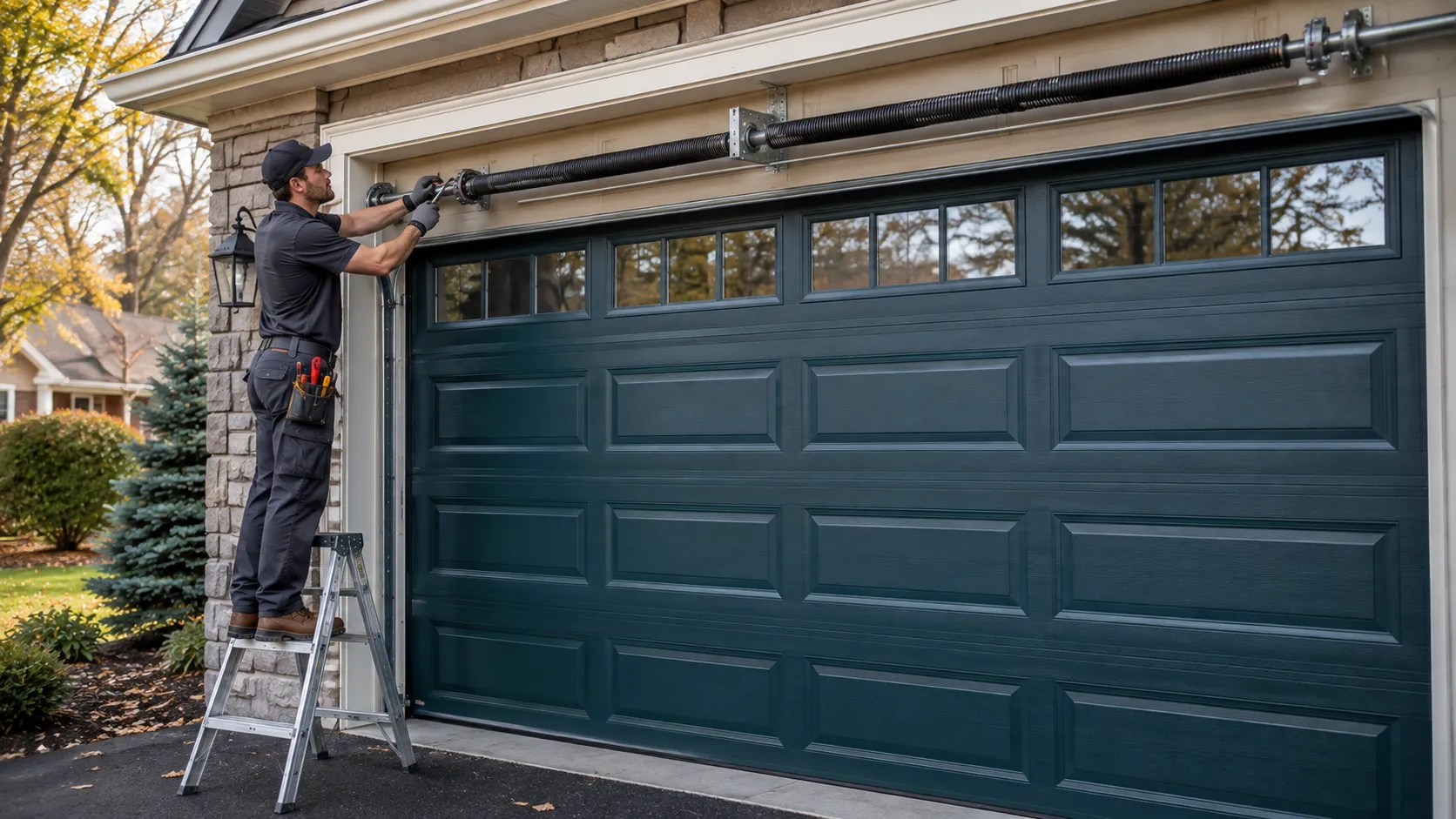
Evanston's housing stock mostly went up between 1938 and 1992, with a median build year around 1959, and that shows up in the garages. A lot of these doors and openers have been swapped out once or twice since the house was built, but the tracks, the header framing, and sometimes the springs are original to a house pushing sixty or seventy years old. That means the noise your door makes isn't random. A rhythmic thump once per rotation is usually a flat spot on a roller that's outlived its bearing.
A sharp bang, followed by the door going dead heavy, is almost always a torsion spring letting go - common on the older single-spring setups still hanging in a lot of these garages. A grinding whine from the opener, separate from the door itself, points to a worn drive gear, which on units old enough to still be in a lot of these houses means a part you can't just order same-day. None of these noises fix themselves, and on a house this old, waiting usually means the failure happens at a worse time, like a January morning.

The area
When It Stops Being a DIY Job
A squeaky hinge, you handle with a can of white lithium grease. A door that's suddenly crooked in the frame, or a cable that's frayed and visibly unwinding off the drum, that's not a tightening job - that's a torsion spring under two hundred pounds of stored tension, and on the older extension-spring setups still common in this pre-1960 stock, there's no safety cable holding it if it snaps. If your door came off a roller and is riding half in, half out of the track, stop opening and closing it.
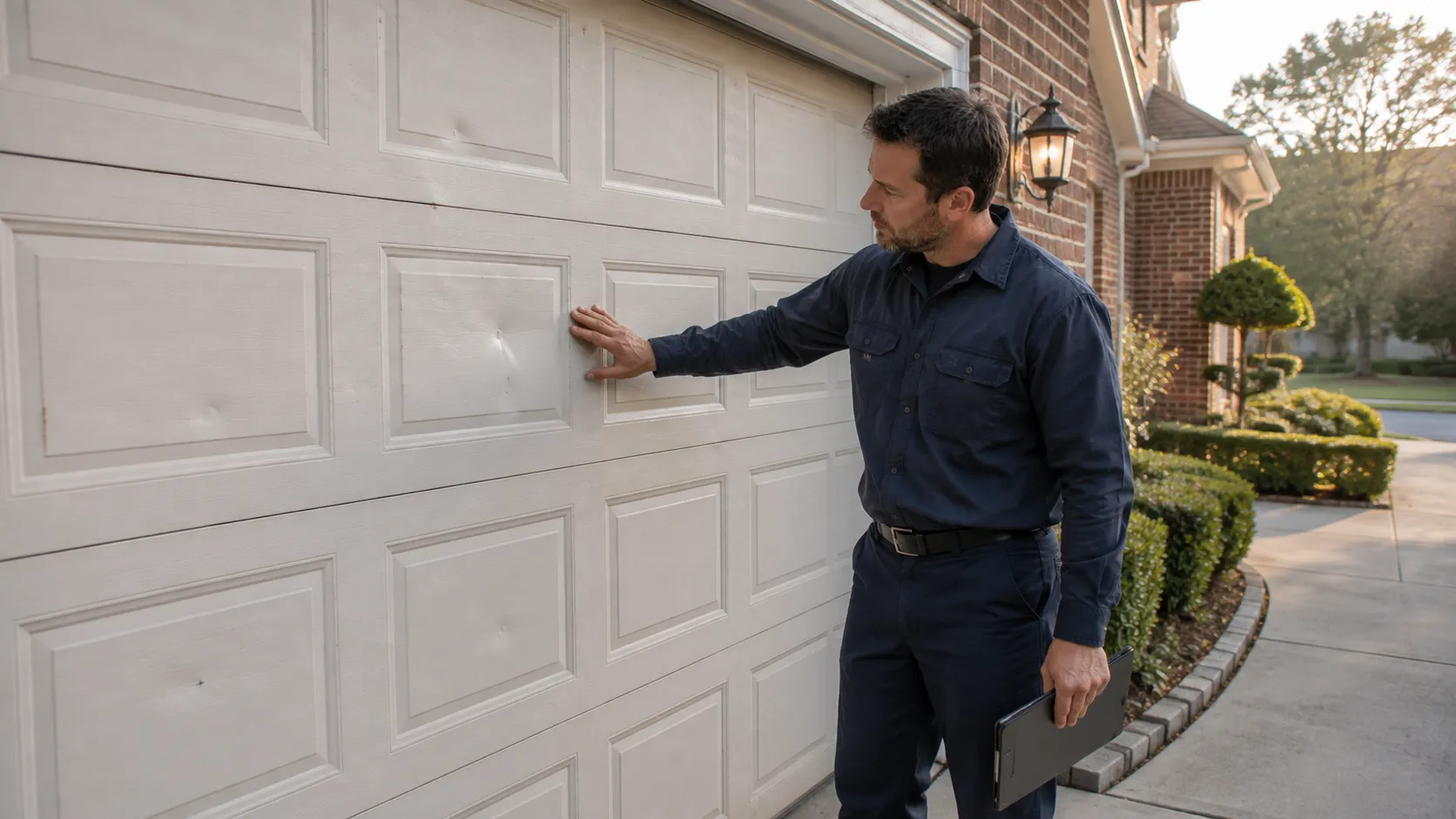
The same goes for a door that reverses on its own partway up: on original 1950s-era framing that's shifted slightly over the decades, that's often a track alignment problem, not a sensor problem, and it takes someone who's actually opened up hardware this old to tell the difference. We'll say plainly that a lot of what people call in for turns out to be something they could've caught earlier with a five-minute look at the springs and cables.
What we find
The Cost of This Job
We're not going to make up a number here - cost depends on what's actually broken and what's behind your walls, and on a house built in the 1940s or 50s that can mean nonstandard door widths or header depths that a big-box replacement door doesn't fit without extra framing work. What we can tell you is that spring replacement on the older single-spring torsion systems still found on a lot of these garages tends to run different than the newer dual-spring setups, mostly because of how much harder those old springs are to source.
If your opener is original or close to it, replacement parts for some of those older gear-driven units aren't something we can grab off a shelf, which adds time to the job even when the labor itself is straightforward. The honest answer is we quote it after we see the door, not before.
How we work
What the Weather Here Does to It
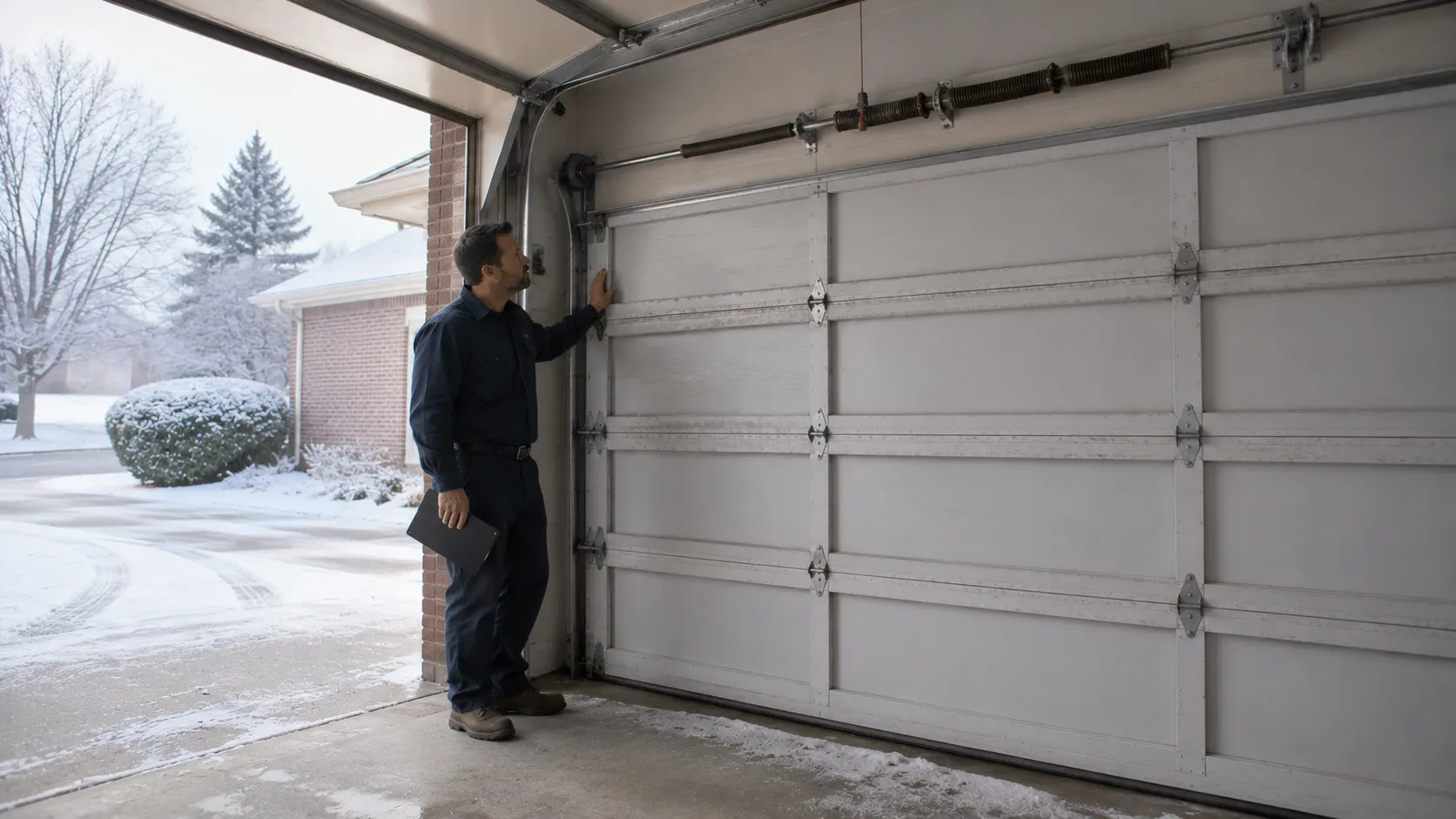
Evanston sits in a cold, moderate climate band, and that swing between summer humidity and hard winter freezes is rough on garage door hardware that's already decades old. Steel contracts in the cold, which is why a door that ran quiet in August can start groaning in January - the tolerances tighten up, and any roller or hinge that was already marginal starts binding. Lubricant that's fine in warm weather gums up or thins out at low temperatures, which is part of why a lot of the grinding calls come in during the coldest stretch of winter.
Wood jambs on the older houses in this stock swell and shrink with the season too, which can throw off door alignment just enough to make the opener strain and start making that dead-lift groan. None of this is unique to any one house here, but it's consistent across a housing stock this old in a climate that swings this hard, and it's why noise complaints cluster the way they do.
Questions
Common questions
My garage door only makes noise in the winter, is that normal?
On houses in this area built mid-century, yes, it's common. Cold tightens metal tolerances and thickens grease, so rollers and hinges that run quiet in summer can start groaning or grinding once temperatures drop. It doesn't mean ignore it, but a winter-only noise on an older door usually points to lubrication or a roller needing attention rather than a full failure.
Is a loud bang from the garage always a broken spring?
Usually, yes, especially on the older single-spring torsion setups still found on a lot of houses in this area. A loud bang followed by the door feeling much heavier to lift is the classic sign. Stop using the opener and don't try to force the door until someone's looked at the spring - it's under real tension.
Why don't you just give me a price over the phone?
Because on houses this old, what's behind the noise varies a lot - original hardware, nonstandard door sizes, and header framing all change the job. We'd rather look at the actual door than quote blind and be wrong.
Ready when you are
Need a garage door sorted in Evanston?
Evanston Garage Door Pros repairs and installs garage doors, springs and openers in Evanston, IL and the surrounding area.