
Guide
Is Your Old Evanston Garage Door Worth Repairing
A look at when a pre-1960 Evanston garage door still earns its keep, and when the cold and the age of the hardware make replacement the smarter call.
Local detail
The Situation
Most of the housing stock in this area went up between 1938 and 1992, with a median build year of 1959, and across the 54 named areas we work in the pattern holds: pre-1960 construction dominates. That means a lot of Evanston garages still carry the doors and tracks that came with the house, or a straightforward replacement installed decades ago on the original framing. These aren't the doors going up in new construction now.
The steel gauge is heavier, the track is narrower, and the hardware often predates the small parts that hardware stores stock today. A door from that era isn't automatically junk. Plenty of them were built solid and just need the moving parts brought back into spec.
But a door that old has usually been through one or two spring replacements already, and the question worth asking before you sink more money into it is whether the panel, the track, and the frame underneath are still square and sound, or whether the age of the whole assembly is starting to work against any repair you make. That's the judgment call this page is trying to help with, not a generic checklist.

The area
When It Stops Being a DIY Job
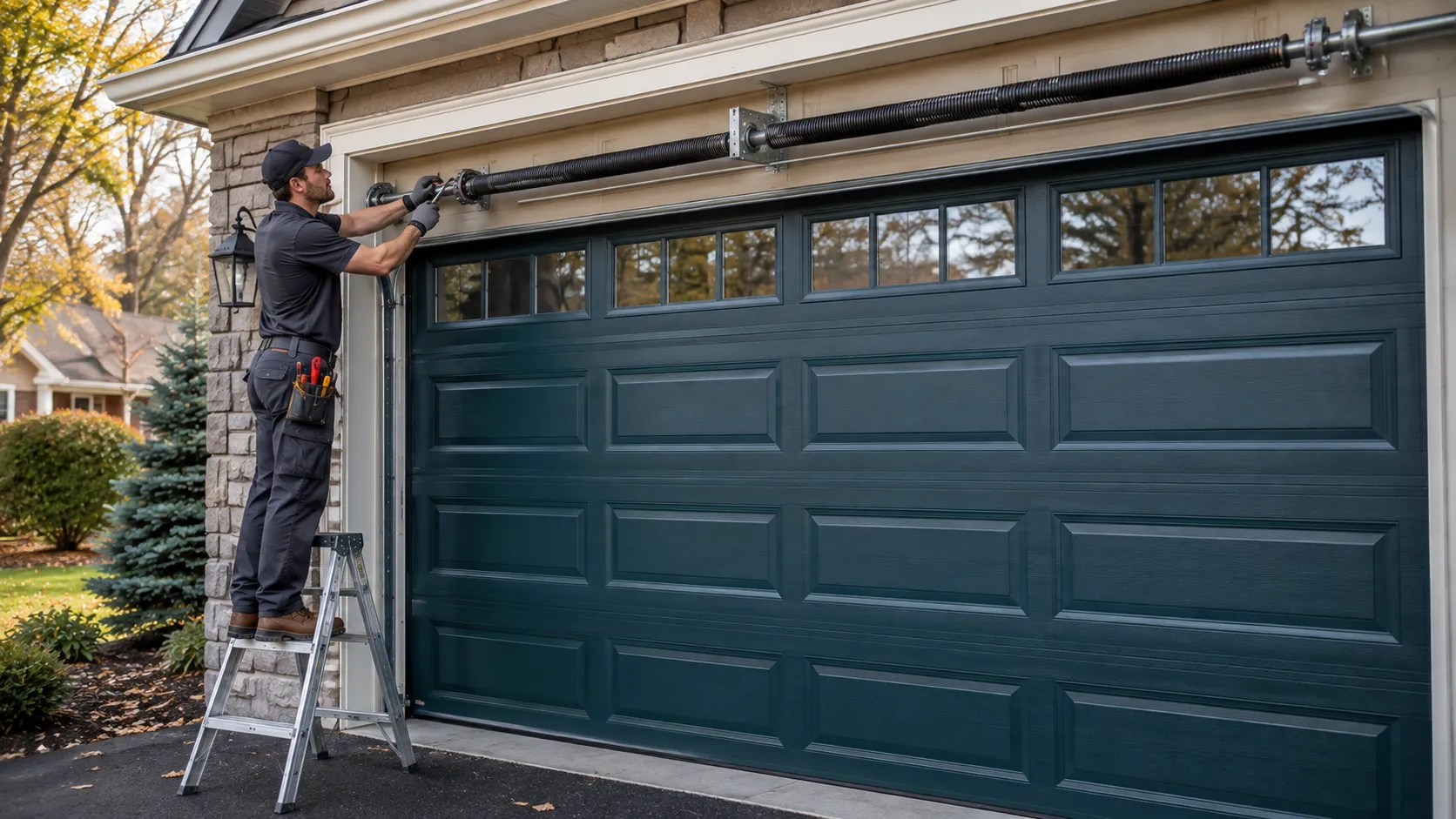
A torsion spring on a door built to 1959-era spec often runs a different wind and cable drum size than what's sold off the shelf now, and getting that wrong on a door this old is how people lose fingers or crack a panel that was otherwise fine. If the track is bent, if the bottom bracket has rusted into the roller, or if the opener bracket has pulled loose from a jamb that's shifted with the house over sixty-plus years, that's not a tightening job. Cold makes it worse: a track that's slightly out of alignment in October can bind hard once the steel contracts in a real cold snap.
If the door won't move freely by hand with the opener disconnected, stop there. That's the line between a Saturday fix and a call. We'll say plainly what we won't do: we don't recommend forcing an original spring system back into service once the drums or shafts show pitting, because the failure mode on that hardware is sudden, not gradual.
What we find
The Cost of This Job
We don't have a rate sheet to hand you here, and pricing that fixed jobs to a number without a technician putting eyes on your door isn't a real quote anyway. What we can tell you is what drives the cost either way: whether the drum and shaft are original 1950s-era stock or a later retrofit, whether the track needs full replacement or just realignment, and whether the panel itself is steel that's held up or steel that's started to bow at the seams. Median household income across this service area runs a little over $91,000, and we see that reflected in how people decide here - most owners want the honest number on repair versus replace before they commit either way, not a push toward the bigger job.
If a door is structurally sound and the failure is springs, cable, or rollers, repair usually wins. If the frame's racked or the panel's delaminating, replacement stops being the expensive option and starts being the sane one.
How we work
What the Weather Here Does to It
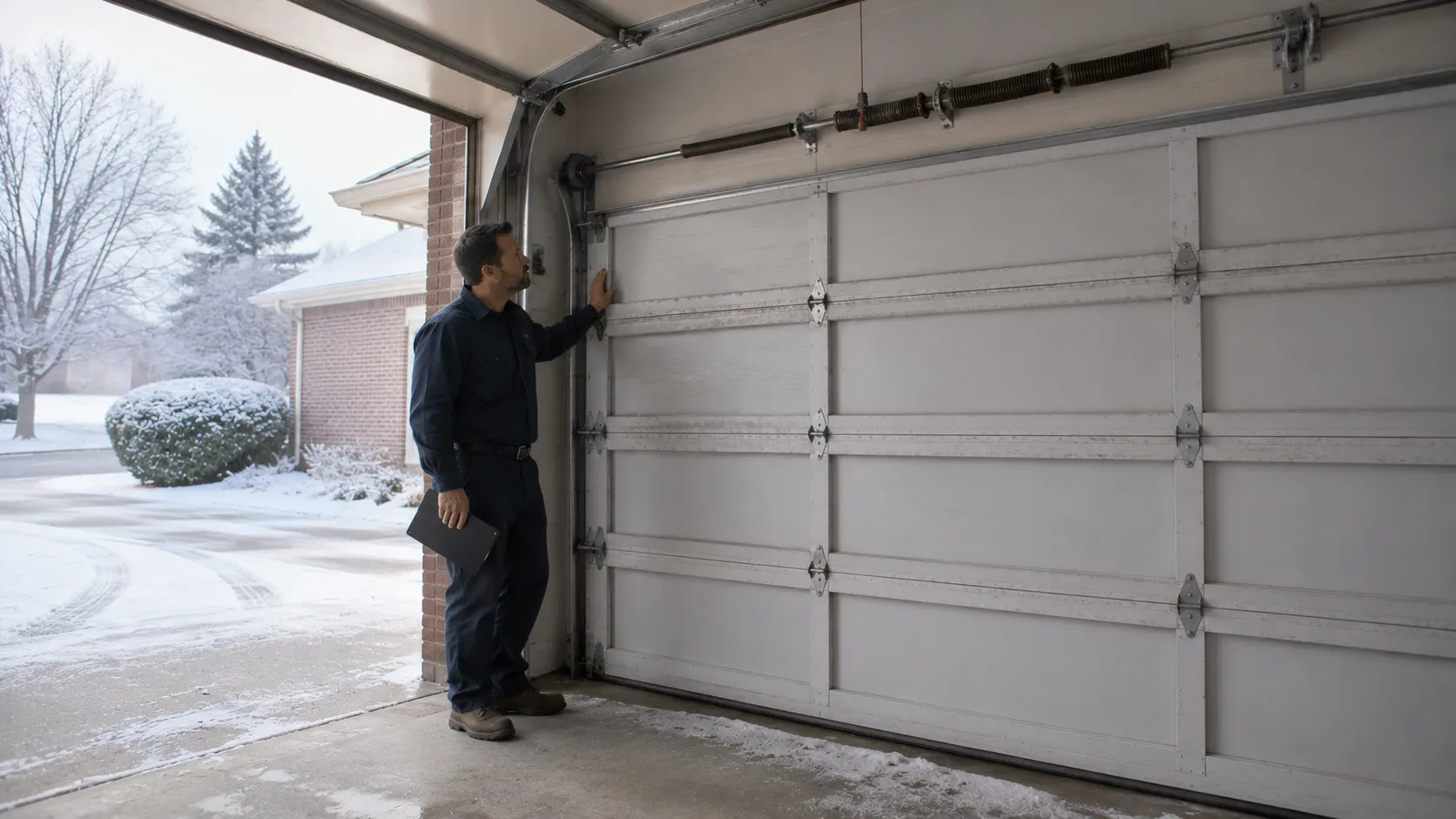
This area sits in a cold, moderate climate band, and that matters more for an older door than people expect. Steel contracts in the cold, and on a door with decades of wear in the track and rollers, that contraction is often what turns a door that worked fine in September into one that binds or won't seat right once temperatures drop. Nylon rollers original to a 1960s-era door have usually gone brittle by now and crack under exactly that kind of seasonal stress.
Weatherstripping on an old door has almost always compressed flat, which doesn't just let cold air into the garage, it lets moisture sit against the bottom panel edge where rust starts. None of this means an old door is doomed every winter. It means the cold is the stress test that tells you, honestly, whether the repair you did last year actually held.
Questions
Common questions
How do I know if my Evanston garage door is original to the house?
If your house dates to the 1938-1992 range that's typical for this area, and especially if it's closer to the 1959 median, check the spring and track hardware for a manufacturer stamp or plate. Original torsion hardware from that era tends to use drum and shaft sizes that don't match current stock parts, which is a strong sign the door itself is original.
Is it worth fixing a door if the panel has surface rust but still opens fine?
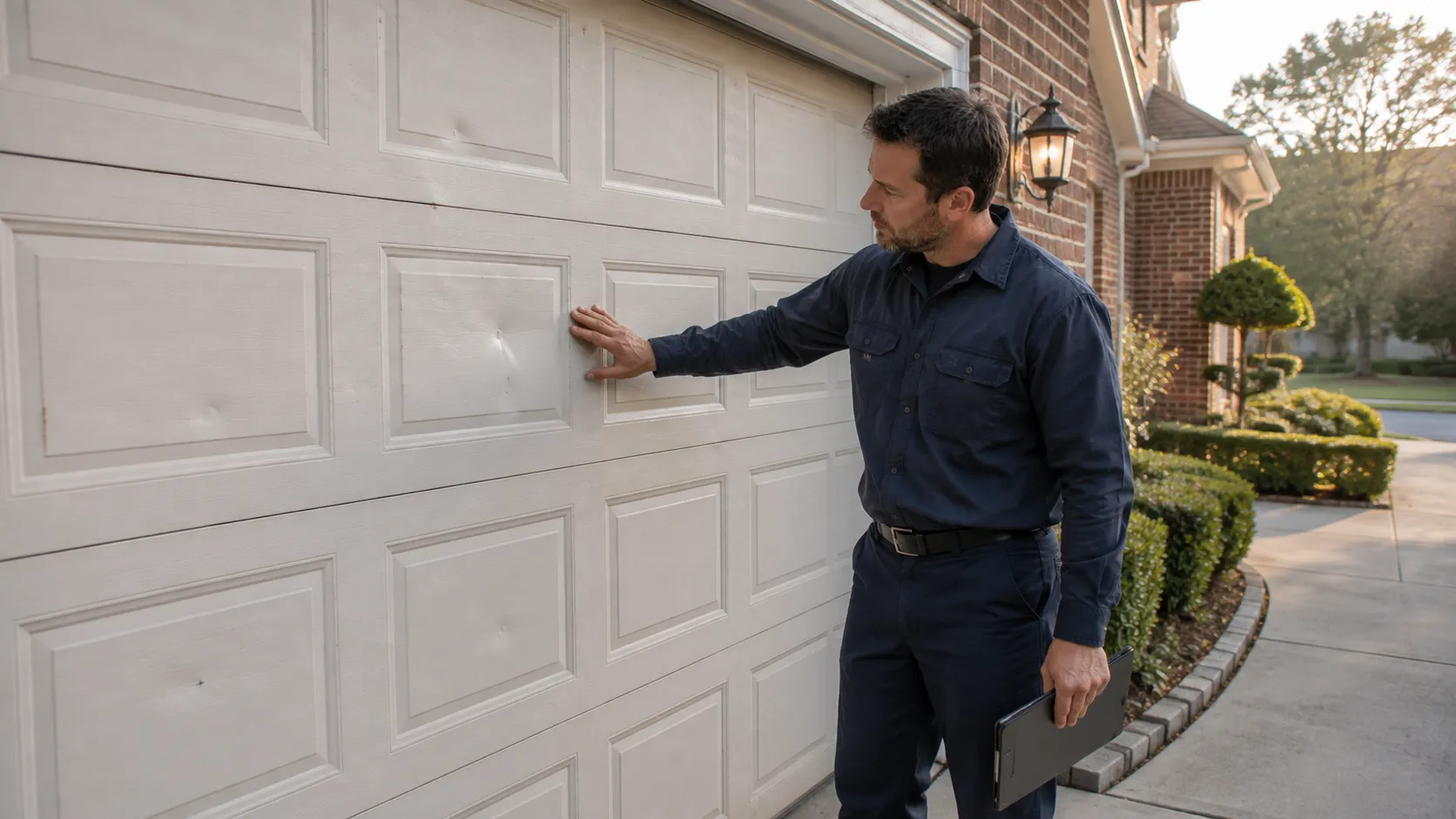
Surface rust on a panel that still opens smoothly and seats square is usually a cosmetic problem, not a structural one, and worth fixing rather than replacing. The concern is rust at the bottom panel seam where old weatherstripping has compressed and trapped moisture - that spreads faster than surface rust elsewhere on the door.
Does the cold actually cause new problems or just expose old ones?
Mostly the latter. Cold makes steel contract and nylon rollers stiffen, which turns marginal wear in the track or rollers into a binding door. If a door worked fine all summer and started sticking once it got cold, that's usually wear that was already there, not new damage from the weather itself.
Ready when you are
Need a garage door sorted in Evanston?
Evanston Garage Door Pros repairs and installs garage doors, springs and openers in Evanston, IL and the surrounding area.