
Guide
Detached or Attached: Why It Changes the Job in Evanston
Evanston's housing stock runs 1938 to 1992, and whether your garage is attached or detached changes the door, the opener, and the cold-weather fix. Here's what that means for your job.
Local detail
The Situation
Most of Evanston's houses went up between 1938 and 1992, with a median build year around 1959, and that era split roughly down the middle on garage placement. Blocks closer to the lake and near Kenilworth and Winnetka tend to run older detached garages set back from the house, often reached by a narrow drive along the side lot line. Newer construction, and remodels done later in that same window, brought the attached garage into fashion, tucked under or beside the house with a shared wall.
That split matters more than people think. A detached garage on a property built in the 1940s or 50s usually has its own unheated structure, sometimes with a header too short for a modern insulated door without trimming the opening. An attached garage from the same era often shares a wall with a heated room, which changes how much insulation actually pays off and where condensation shows up first.
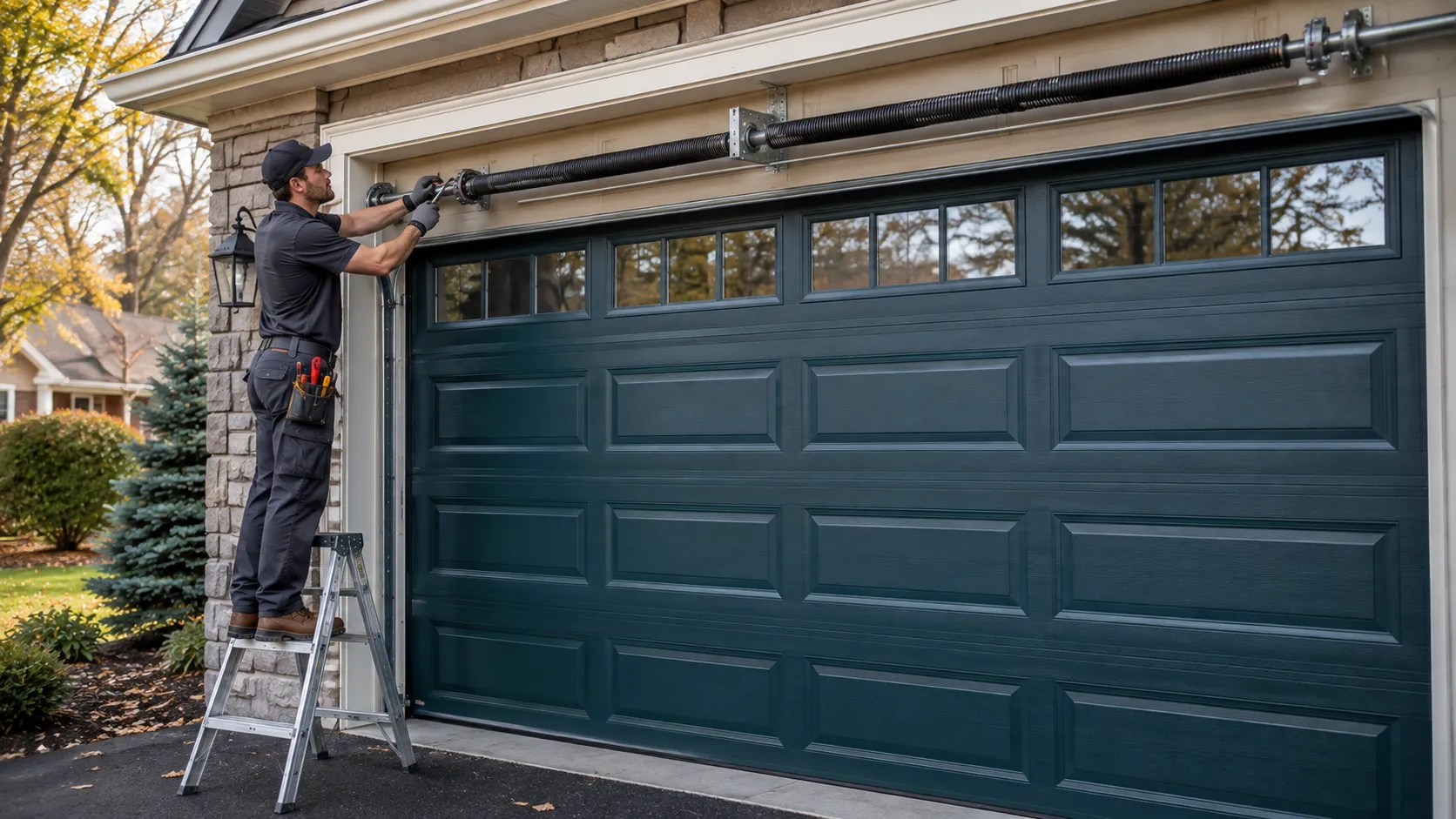
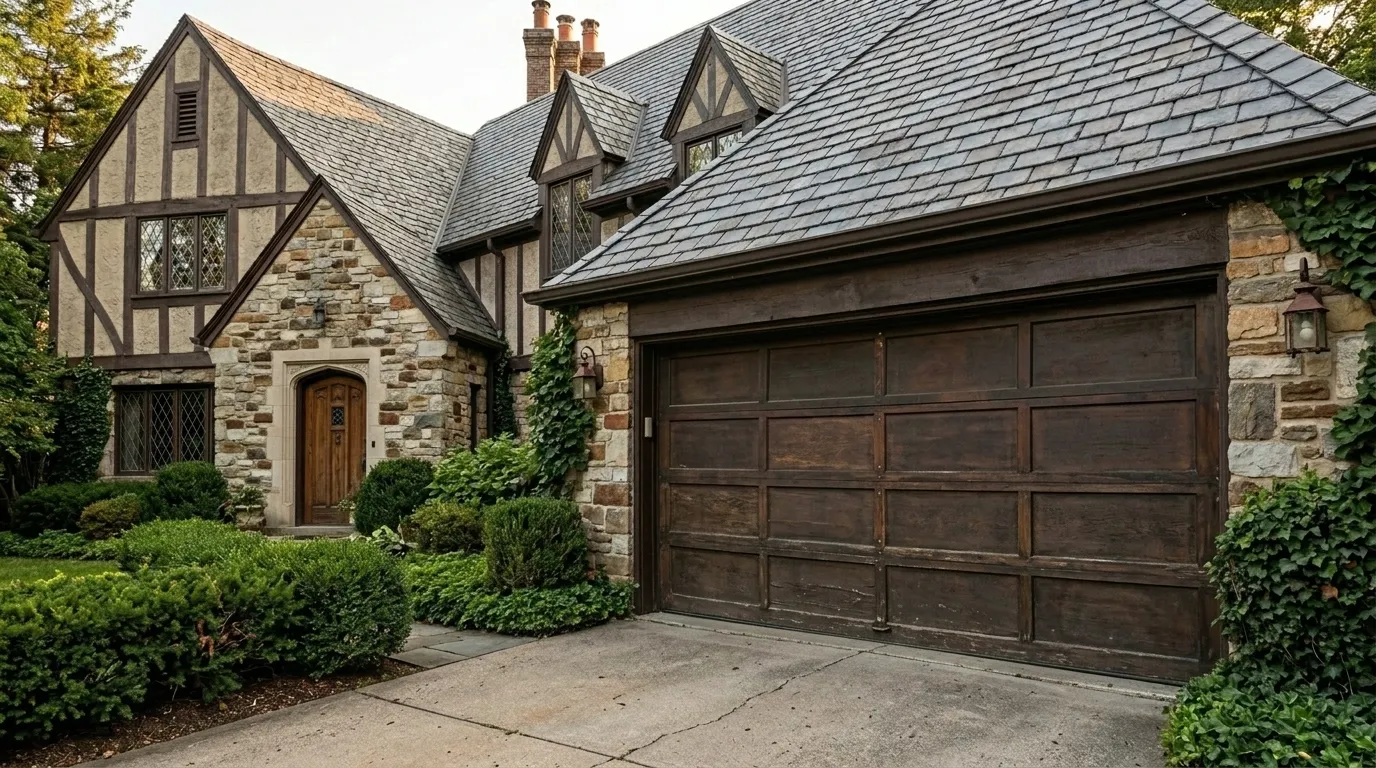
We still see original single-panel or older sectional doors on some of the detached units in the older sections of town - hardware nobody stocks anymore. On attached garages the concern is usually less about the door itself and more about what's on the other side of that shared wall.

The area
When It Stops Being a DIY Job
A detached garage with no heat source and no shared wall is a simpler box: if the door binds or the spring goes, you're dealing with the door and the tracks and not much else. That's often a job a careful homeowner can watch a pro do once and understand.
An attached garage changes the stakes. Given that a chunk of Evanston's housing dates to the 1938-1992 window, a lot of these attached setups have wiring, framing, and sometimes ductwork run through or near the garage ceiling that wasn't built to current code. Once you're pulling an opener bracket out of a joist that's also carrying a bedroom above it, or a track anchor that's tied into the same wall as a furnace closet, that's not a Saturday project anymore.
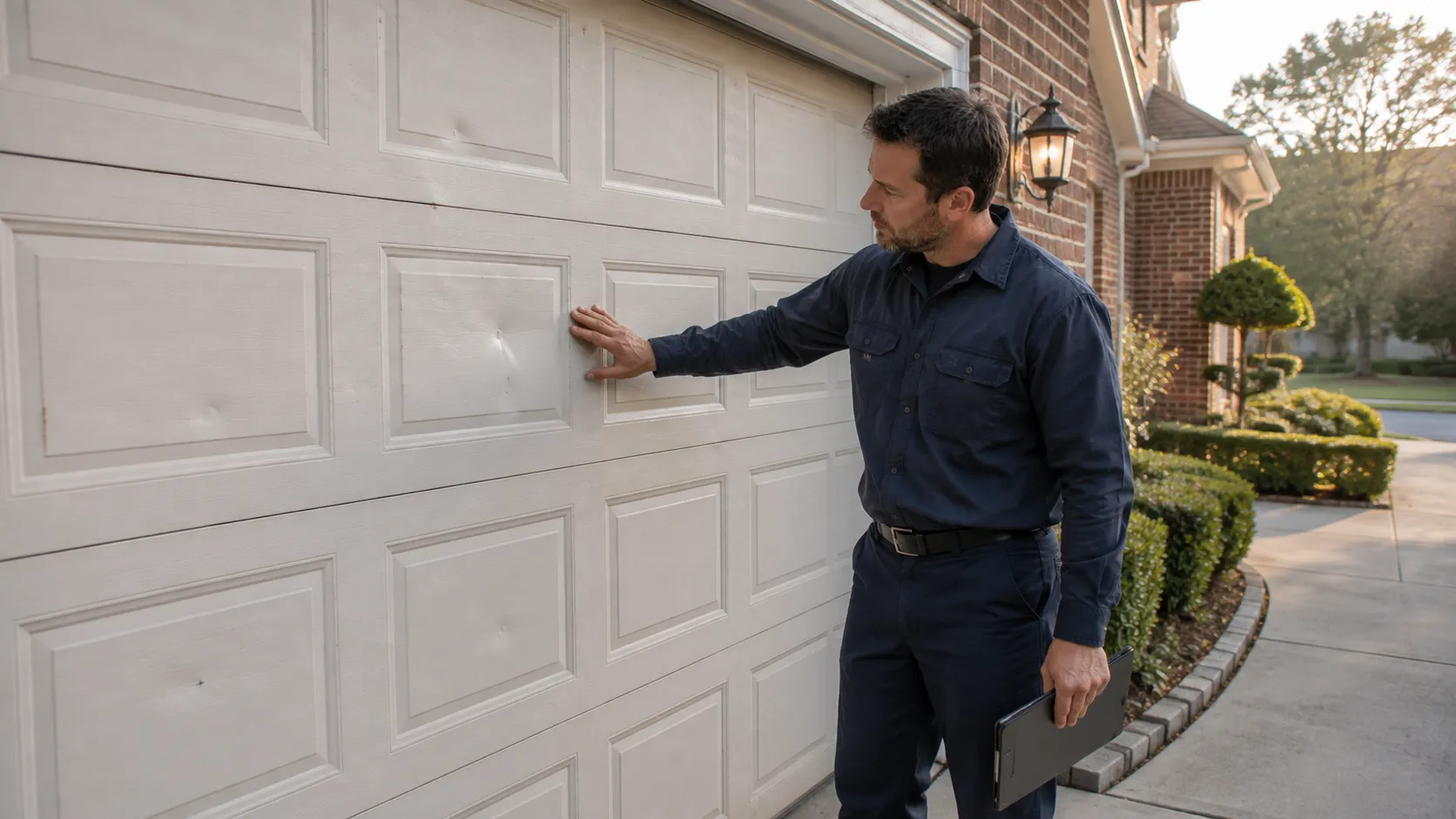
The other line: if the door won't close and the garage is attached to living space, don't leave it. An unsecured attached garage is a direct path into the house. On a detached garage the same failure is inconvenient but not urgent in the same way. We'll always tell you honestly which situation you're in before we quote anything.
What we find
The Cost of This Job
With median household income in the service area at $91,003, most of the estimates we write in Evanston land in a middle range - not the cheapest patch job, not a full teardown. What changes the number more than the door itself is whether we're working on a standalone detached structure or cutting into an attached garage tied to the house.
Detached jobs tend to price more predictably: the opening is what it is, the wiring is usually simple, and there's no drywall or insulation on the other side to protect. Attached garage jobs, especially on houses from the older end of that 1938-1992 range, more often turn up a surprise once the old door comes off - a header that needs shimming, weatherstripping that was never sized right, or a wall that's colder than it should be because there's no insulation behind the old panel.
We won't quote a firm number without seeing the opening in person, but we'll tell you upfront which of those two categories your garage falls into and why that changes the estimate.
How we work
What the Weather Here Does to It
Evanston sits in a cold, moderate climate band, and that plays out differently depending on where the garage sits. A detached garage with no shared wall swings with the outside temperature all winter - the door itself takes the brunt of freeze-thaw cycling on the seals and the bottom astragal, and steel panels contract enough in a hard cold snap that an old, slightly warped door starts binding on the track right when you need it least.
An attached garage holds a little residual heat from the house, but that's a mixed blessing: warm, moist air from the shared wall meets a cold steel door and you get condensation on the inside face, which over years works on the bottom panel and the hardware faster than dry cold ever would.
Either way, in a house from the 1938-1992 stock that makes up most of Evanston, the weatherstripping and hardware on an original or older door were rarely sized for the cycling we get today. We check the astragal and the bottom seal on every cold-weather call, because that's usually where the winter failure actually starts, not the spring.
Questions
Common questions
Does an attached garage need a different door than a detached one in Evanston?
The door panel itself can be the same, but attached garages usually benefit from a better insulated core and tighter perimeter seal because they share a wall with heated space. On a detached garage in Evanston, we look harder at the header and track condition first, since a lot of these older structures were never insulated to begin with.
Why does my attached garage door sweat in winter but my neighbor's detached one doesn't?
Warm air from the house side of an attached garage meets a cold steel door face and condenses. A detached garage stays close to outside temperature on both sides of the door, so there's less of that temperature gap to cause sweating. It's a common difference we see across Evanston's older housing stock.
Is it worth replacing an old door on a detached garage from the 1940s or 50s?
Sometimes the smarter move is repair, not replacement, especially if the structure and header are sound and the issue is a spring or a section of track. If the opening itself is undersized for modern doors or the frame has shifted, replacement usually makes more sense. We'll tell you honestly which side of that line your garage is on.
Ready when you are
Need a garage door sorted in Evanston?
Evanston Garage Door Pros repairs and installs garage doors, springs and openers in Evanston, IL and the surrounding area.