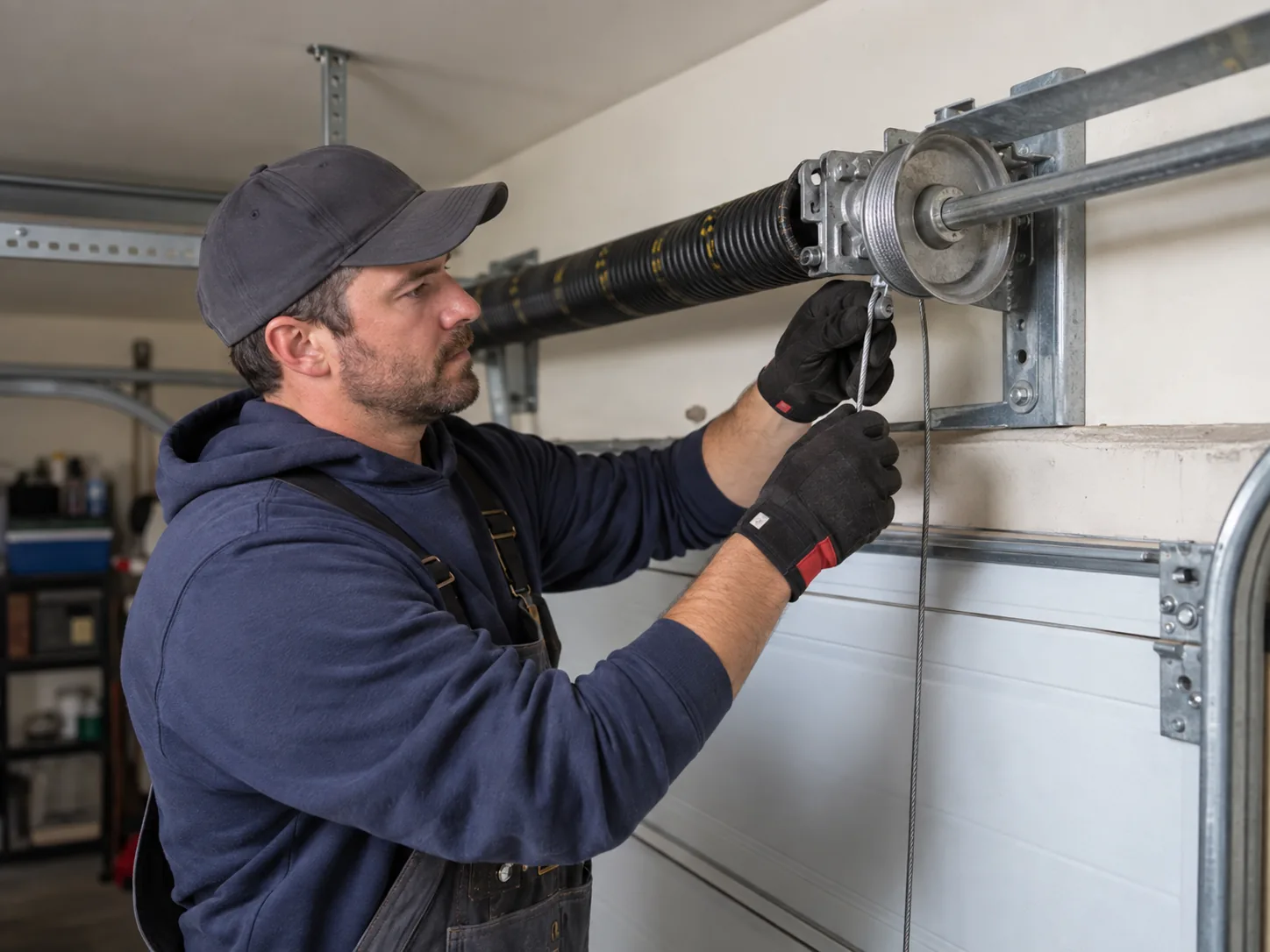
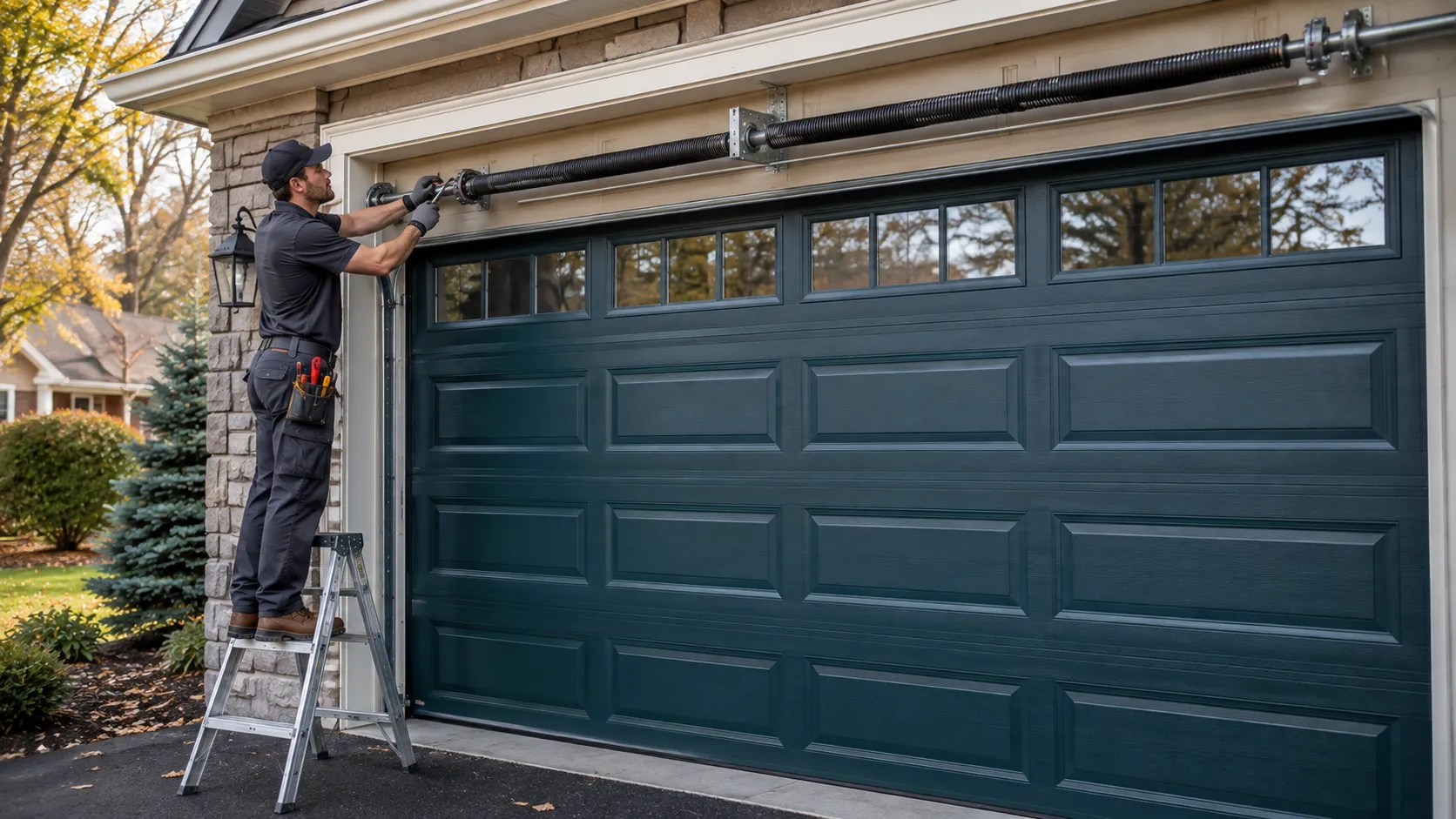
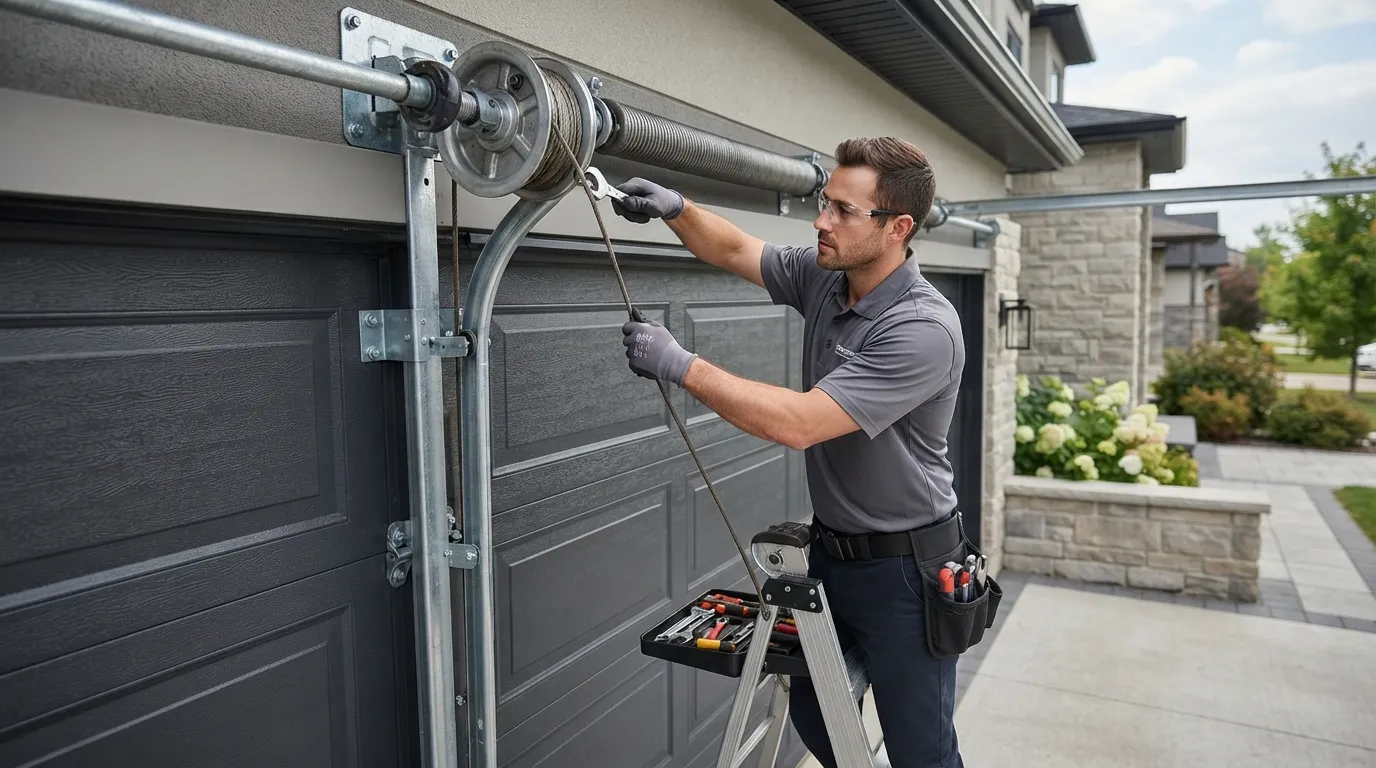
Garages in this part of Westchester mostly went up when the rest of the housing stock did, in a run that runs 1938 to 1992 with a median around 1959 - and Westchester itself sits right at 1957. That means a lot of original torsion hardware, sized for doors that are lighter and narrower than what gets installed today, still doing the job it was built for decades ago.
The area's winters sit in a cold-moderate band, which matters more for springs than people think. Cold steel loses tension faster under repeated cycling, and a spring wound for a lighter door in 1957 has had a lot of cold mornings to work through since. When it finally goes, it usually goes on the coldest day of the stretch, because that's when the steel is least forgiving.
We don't see this as a Westchester-specific defect - it's a predictable outcome of pairing older torsion hardware with a climate that cycles hard between warm and cold. Newer doors in the same town, on newer hardware, don't show the same pattern yet.