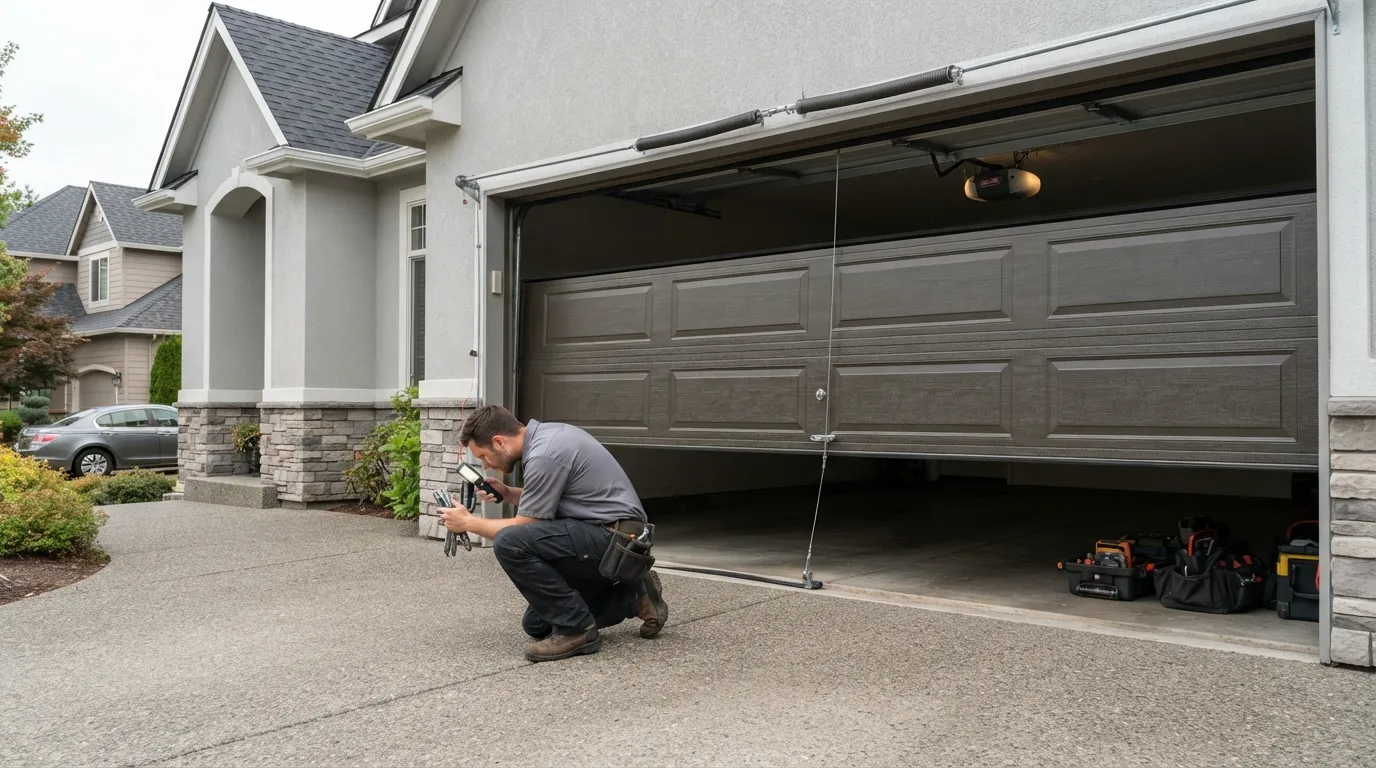
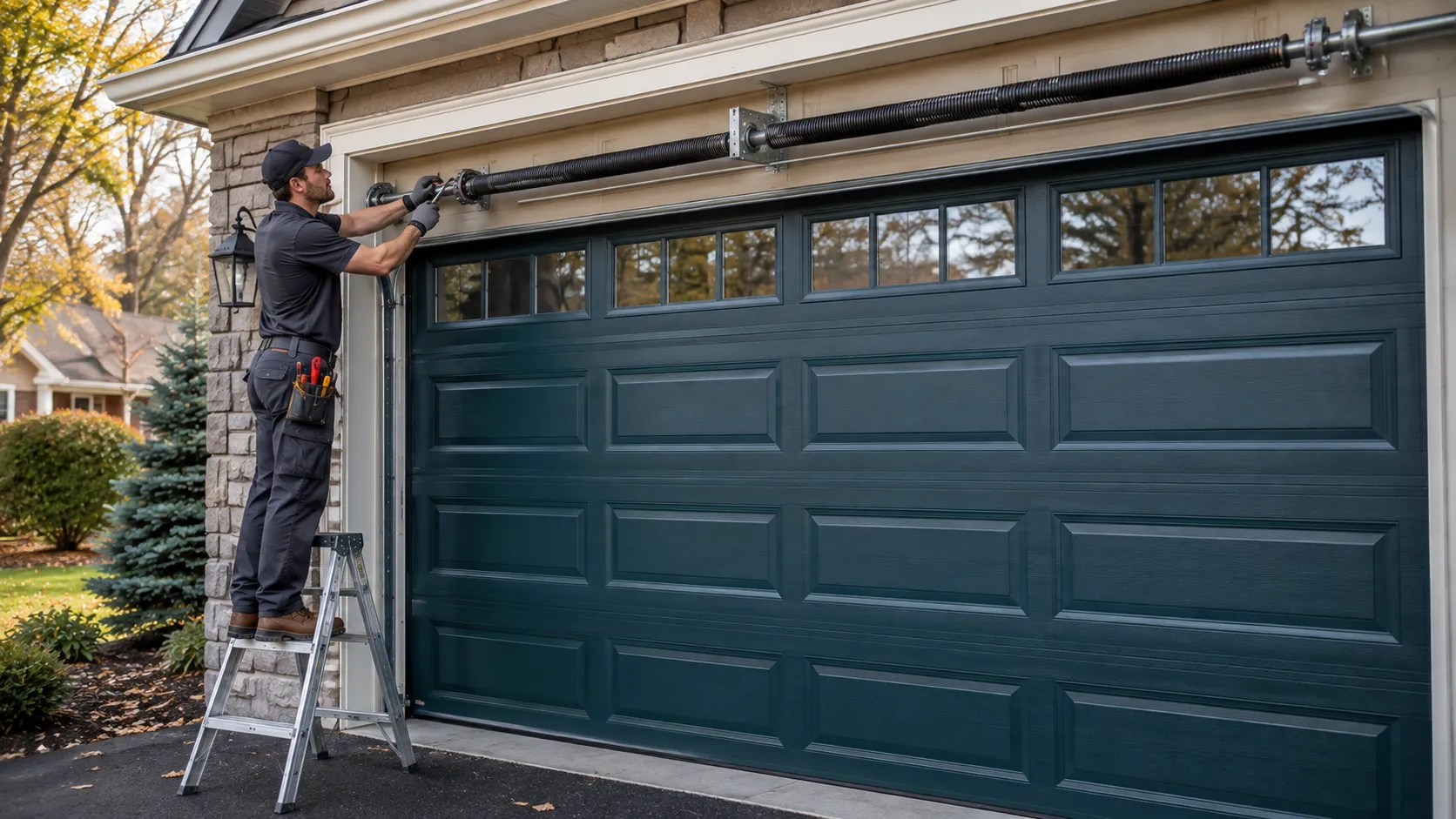
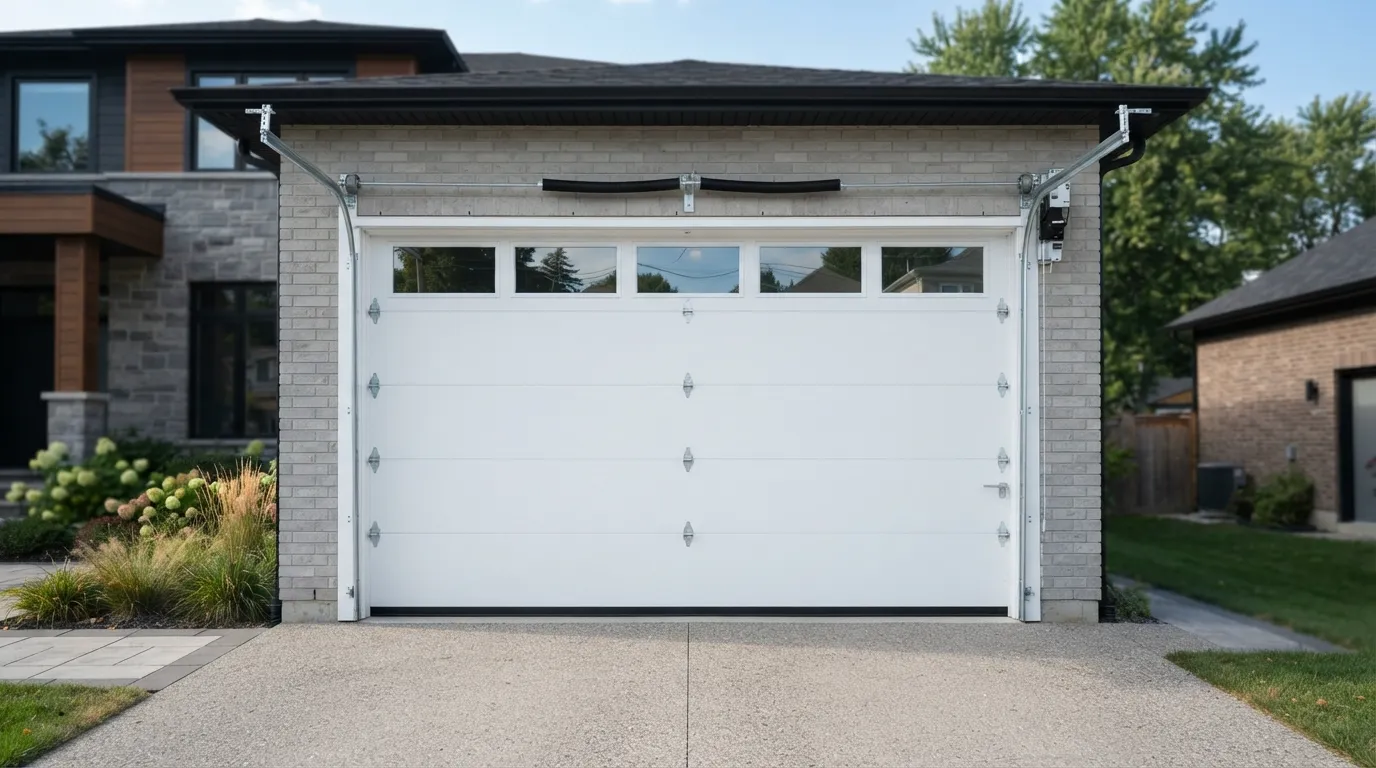
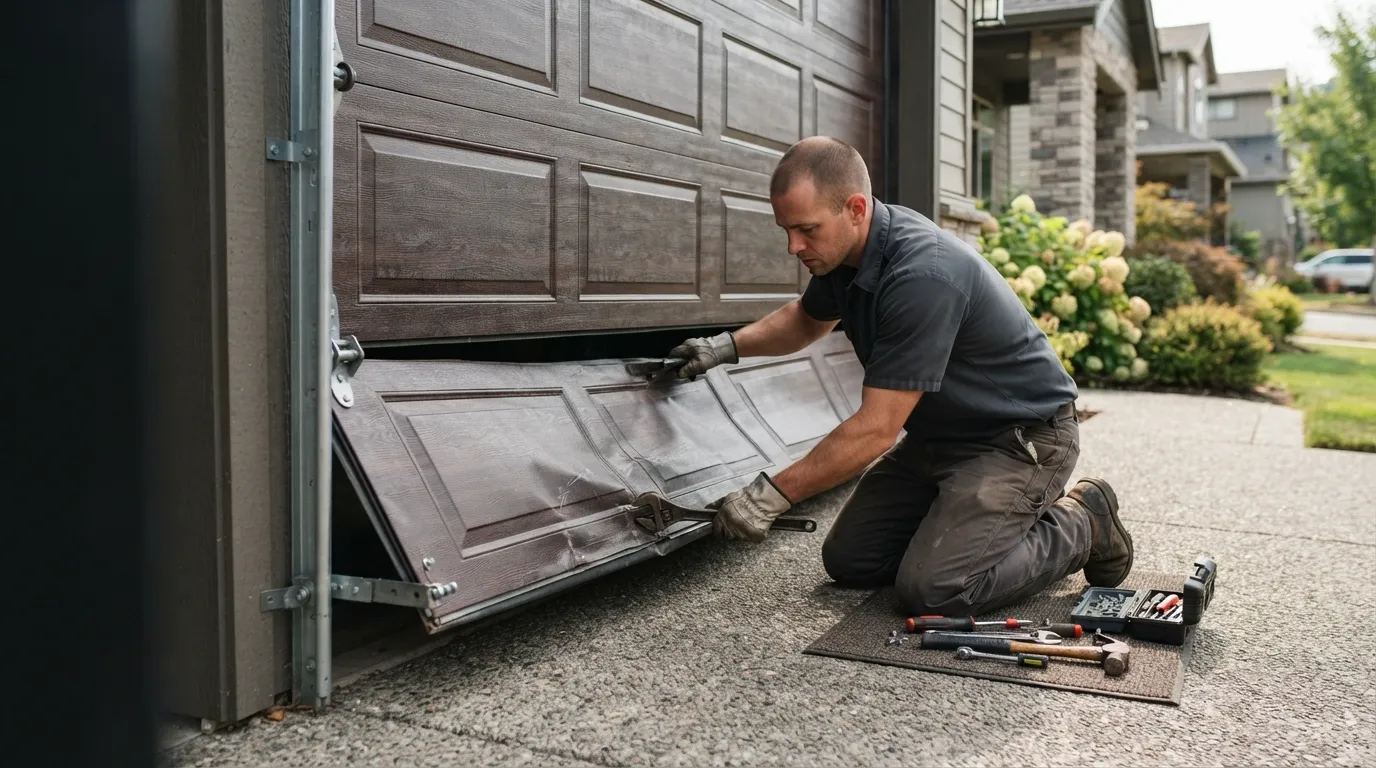
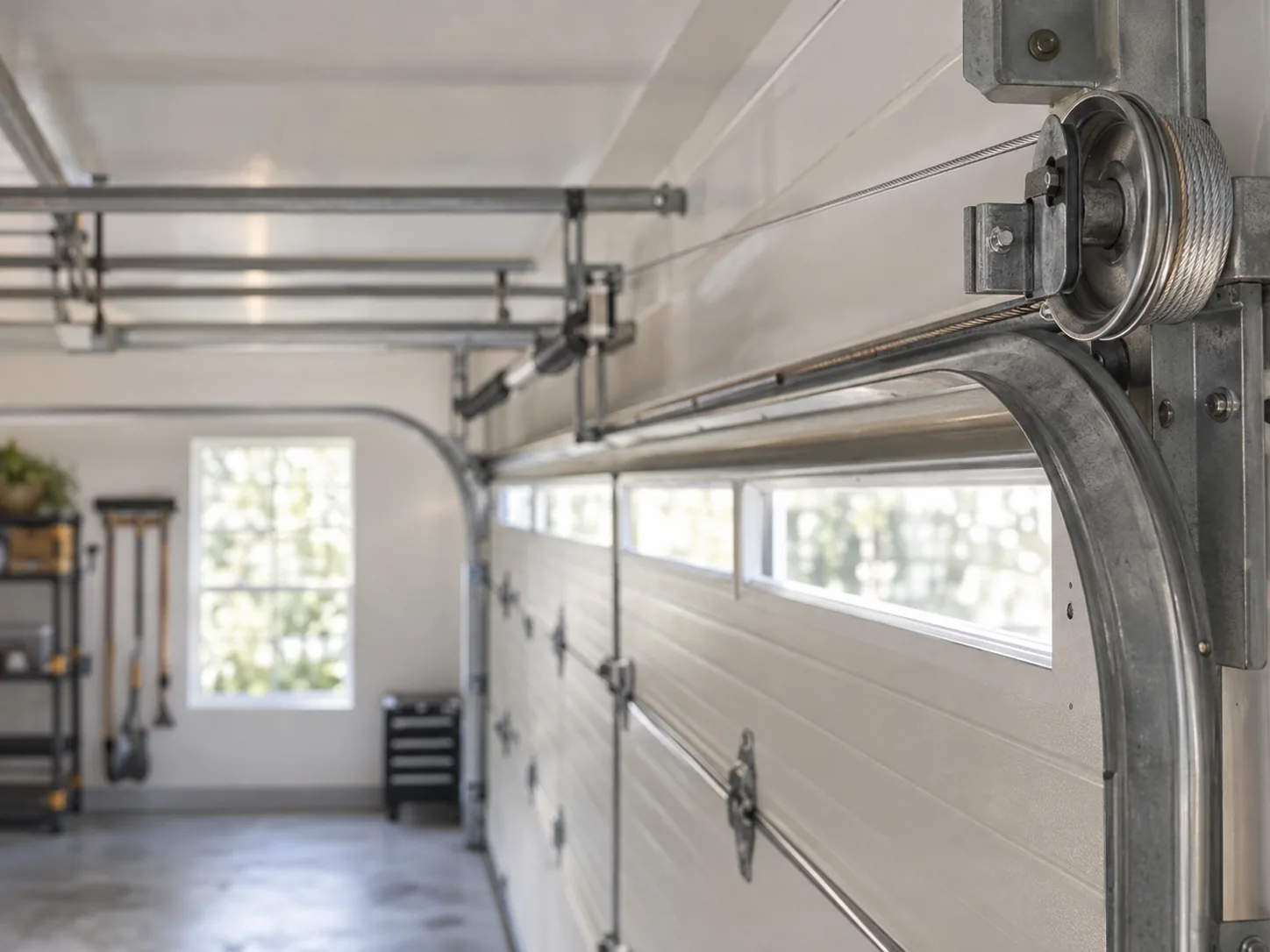
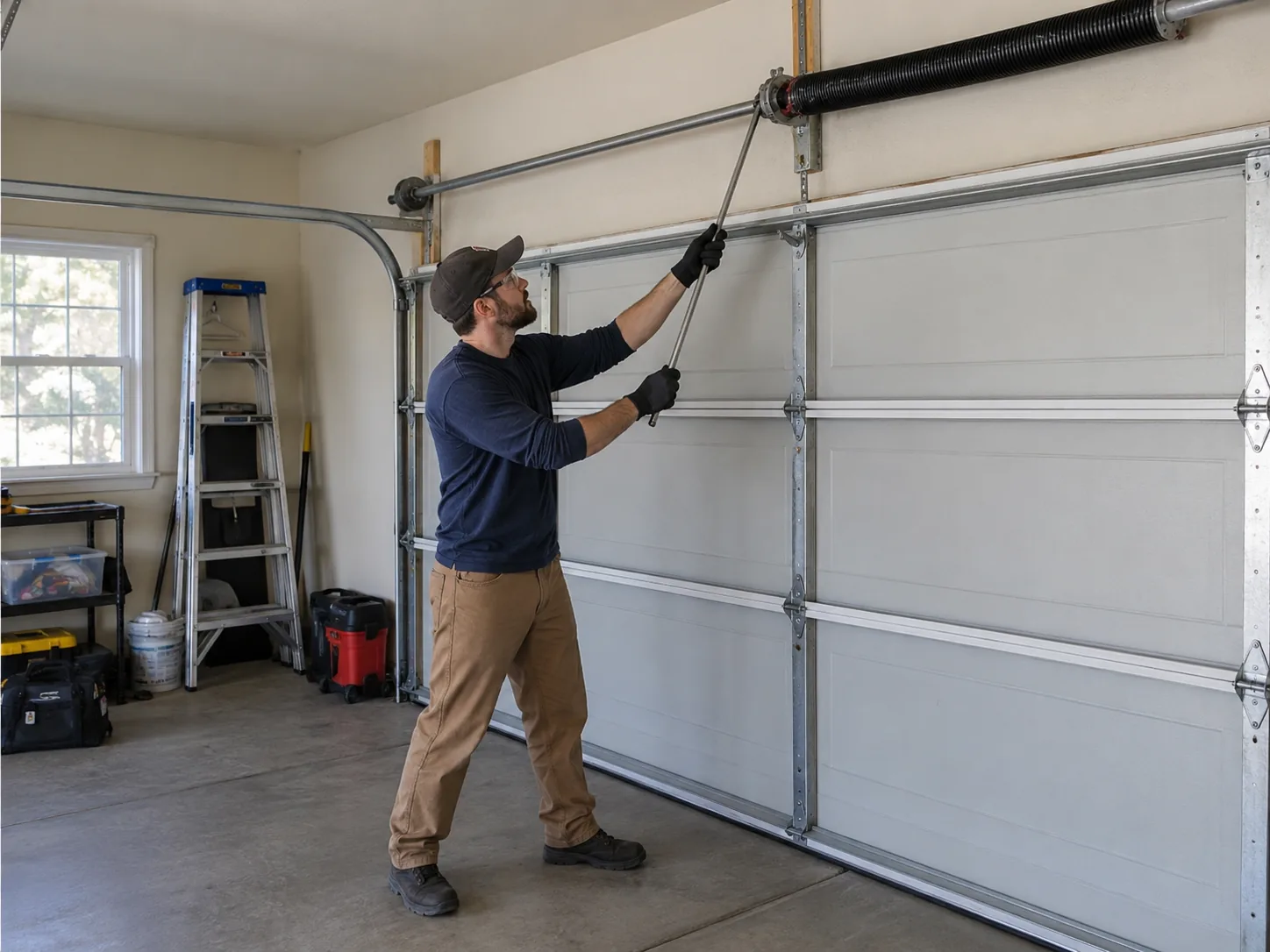
Housing here runs mostly older stock - the median build year across the area sits around 1959, with most of it going up between 1938 and 1992. That matters for garage doors because a lot of these houses still carry original or first-replacement hardware: torsion springs sized decades ago for panel weights that don't match what's on the shelf at a big box store today, and track brackets fastened into framing that's had sixty-plus years to shrink and shift.
The cold-moderate climate band this area sits in adds a second layer to it. Steel torsion springs lose a bit of tension in a hard freeze and regain it as things warm, and that repeated flex is exactly what fatigues a spring that's already old. Lubricant that was fine in October gets stiff in January, which is when we see the jump in stuck-door and hard-lift calls. It's not that the door failed because of one cold night - it's thousands of expansion-contraction cycles on hardware that was never rated to last this long in the first place.
With close to 130,000 owner-occupied houses across this broader service area and household income here running well above the regional norm (F7 - median around $91,000), we see a mix of folks who want the original door kept alive and folks who'd rather replace the whole unit once repair costs start climbing. Both are reasonable calls depending on the door's age and condition.