Westchester, Evanston

Garage Door Repair for Westchester's 1950s Housing Stock

Garage door repair in Westchester, IL, built mostly in the 1950s, where original torsion hardware still runs. Evanston Garage Door Pros covers the trip.

Garage Door Repair for Westchester's 1950s Housing Stock in Evanston
Serving Evanston, ILBackground-checked techsHonest, upfront pricingFast local response

Pricing

The Cost of This Job

We can't quote a number here without seeing the door, and we won't pretend otherwise. What we can tell you is what drives the cost up in a town like this one: age.

1957 original hardware stock

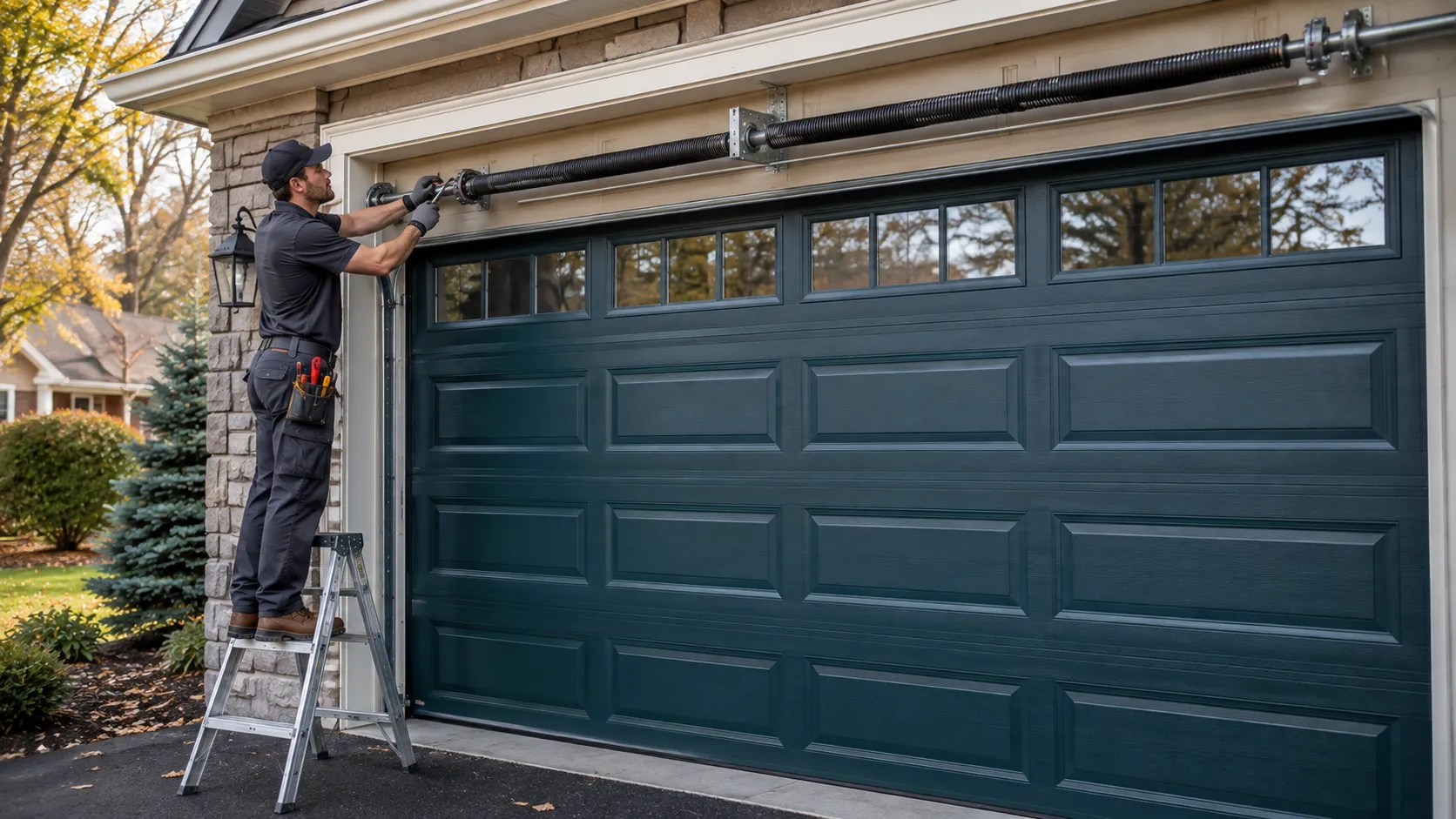
Most houses in Westchester went up around 1957, and a lot of the garages still carry the hardware that came with the build - side-mounted torsion springs, steel track that's been re-shimmed more than once, hinges that don't match anything on a supplier's shelf today.

Old hardware labor time

Matching or adapting old hardware takes longer than swapping a modern kit, and that labor time is what moves the price, not the drive out from Evanston. A straightforward spring swap on a newer door costs less than untangling sixty-plus-year-old track brackets that were never meant to come apart clean.

Original hardware phone call

If your door is original to the house, tell us that on the call - it changes what we bring on the truck and how long the job runs. We'd rather ask twice than show up short a part.

Local causes

Why This Fails Locally

With a median build year around 1957, Westchester sits squarely in the pre-1960 housing band that covers most of this side of the region. That matters because the doors and openers installed on houses from that era were engineered for a different set of expectations than what's sold now - lighter panels, single torsion springs rated for less cycling, and steel that's had six decades of Illinois winters to work on it. The area sits in a cold, moderate climate band, and repeated freeze-thaw swings are hard on spring temper and on the grease in old rollers. Add a small market - about 7,084 households - and you get a town where the same handful of original door models show up on repeat calls: same spring size, same worn end bearing, same brittle plastic idler pulley that cracked in the cold. None of that is unique to any one street. It's a function of when the neighborhood was built and how long that hardware has been asked to keep working.

Why This Fails Locally
Doing It Yourself

DIY or pro

Doing It Yourself

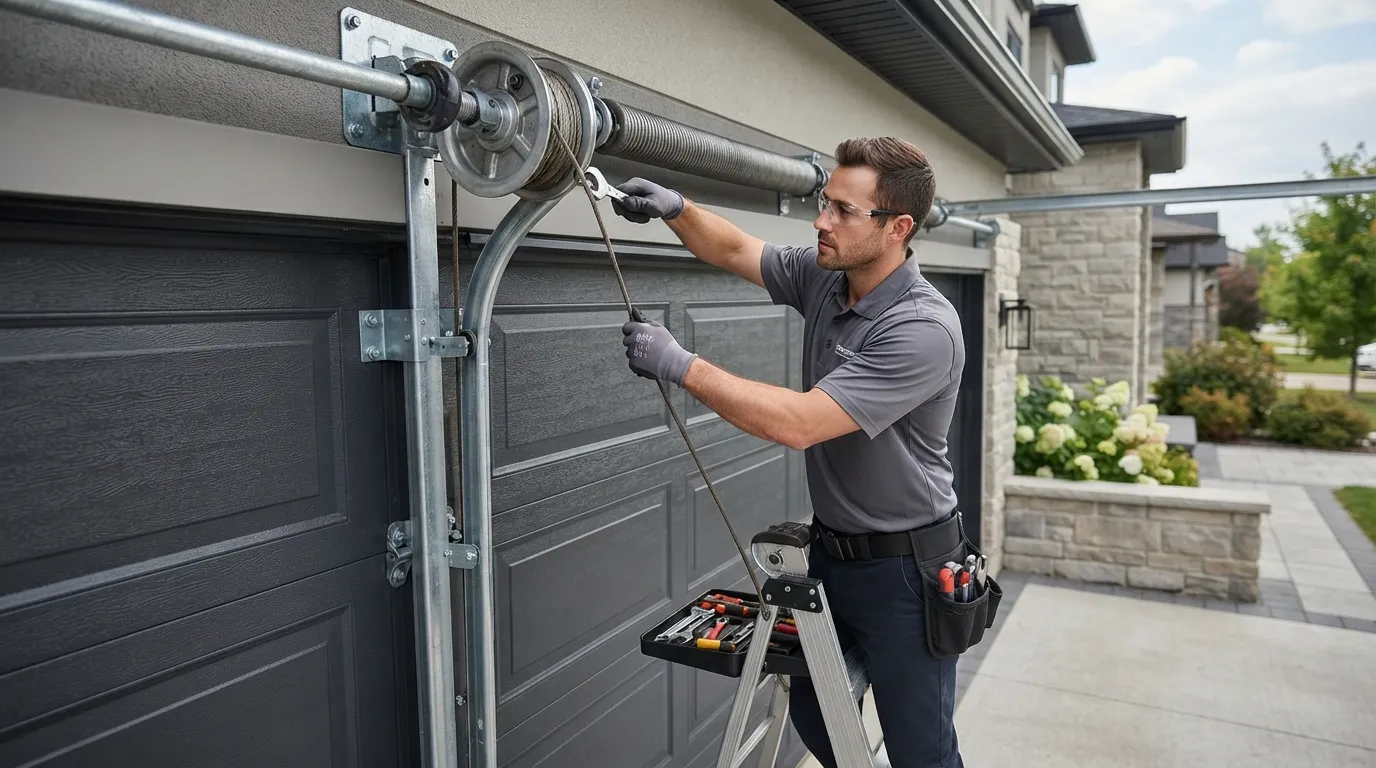
A torsion spring under tension can break a hand or worse, and that risk doesn't go down because the door is old - if anything it goes up, since original hardware from a 1957 build often has no safety cable and the winding cones may be rusted to the shaft. Cable replacement, spring adjustment, and anything involving the torsion bar are jobs we tell homeowners to leave alone, full stop. What you can reasonably do yourself: lubricate rollers and hinges, tighten loose lag screws on the track brackets, check that the photo-eye sensors are aligned and clean, and test the auto-reverse by setting a piece of wood under the door. If the door reverses immediately or won't reverse at all, stop there and call - that's a safety system, and on hardware this old it may not be reacting the way a newer unit would. We'd rather talk you through a five-minute check on the phone than have you climb a ladder toward a wound spring.

The repair

What the Repair Takes

On a door this age, the first ten minutes are usually spent figuring out what we're actually working with, because the hardware on a 1957-era garage doesn't always match what's in a current parts catalog.

  1. Hardware measurement protocol

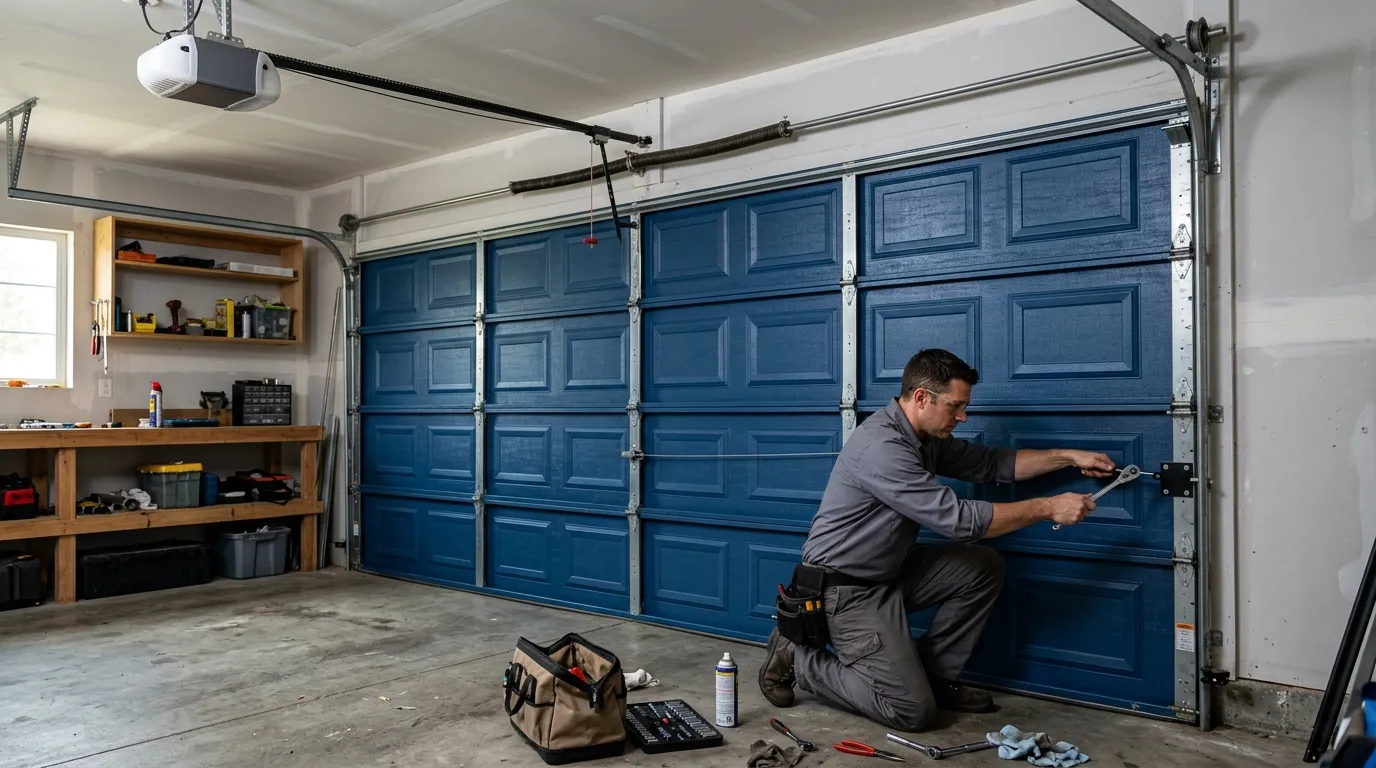
    Track gauge, drum size, and spring wire diameter all shifted over the decades, so we measure before we assume anything fits. If the original torsion bar and brackets are sound, we'll often replace just the spring and cables and leave the rest - no reason to touch what isn't broken.

  2. Bent track replacement choice

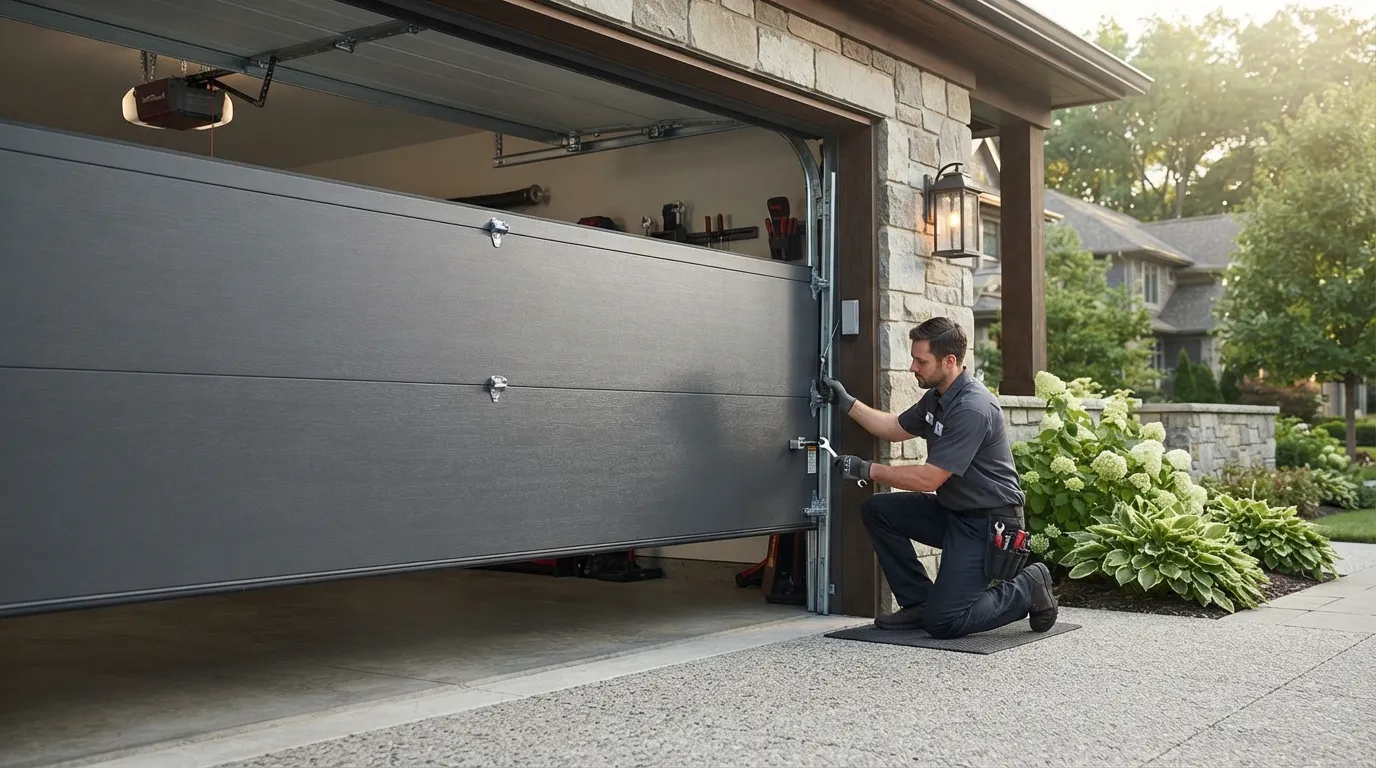
    If the track itself has been bent or re-drilled one too many times, replacing that section is usually faster and safer than trying to true it up again. We travel out from Evanston for these calls, roughly seventeen miles each way, so we bring a stocked truck rather than guess and make a second trip.

  3. Warped wood door retirement

    One honest limit: if the door itself is warped wood original to the house, repair sometimes costs more than replacement makes sense - we'll tell you when we think that's the case rather than keep billing hours on a door that's done.

Symptoms

The Symptom

The call we get most from this part of town starts the same way: the door is slow to close, or it shudders partway down, or the opener strains and reverses on its own.

Spring tension gradual loss

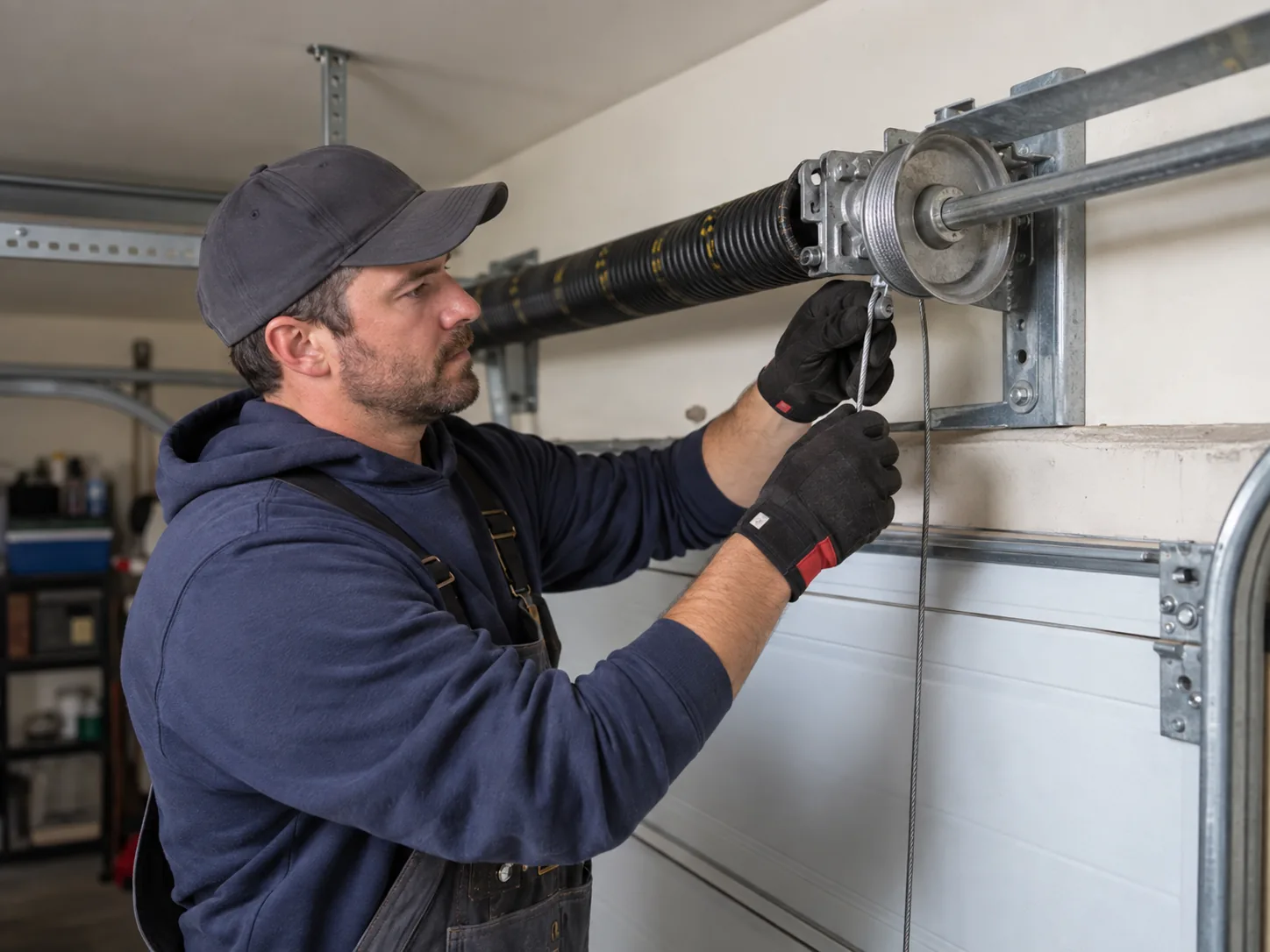
On a house built around 1957, that's very often a spring that's lost tension gradually rather than snapped outright - the door feels heavier by hand, and the opener is doing work it wasn't sized for. Sometimes it's the opposite: a loud bang and the door won't budge, which is the spring finally letting go after years of slow fatigue.

1950s track combined wear

Either way, the age of the hardware tells you something the symptom alone doesn't - a door on original 1950s track is more likely to be fighting worn rollers and a tired spring at the same time, not just one clean failure.

Integrated spring roller check

That combination is why a quick spring-only fix sometimes doesn't hold, and we check the track and rollers as part of any spring call rather than treat them as separate jobs.

Booking

How to Book

Give us a call and tell us the door is in Westchester - we travel out from Evanston, about seventeen miles, so we schedule that drive into the day rather than treat it as an add-on.

Housing age phone mention

If you know the house was built in the 1950s or the door looks original, mention that too; it helps us bring the right spring sizes and track hardware on the first trip instead of a second one.

Service area coverage link

You can see the areas we cover from Evanston, including this one, at our Westchester service area page, and if what you need is broader information on how we handle garage door repair generally, that's covered on our Evanston garage door repair page.

Age and symptom assessment

For this town specifically, the short version is: tell us the symptom, tell us the age if you know it, and we'll tell you honestly whether it's a spring call or something bigger.

Questions

Common questions

Why does my garage door in Westchester still have such old parts on it?

Because most houses in town date to around 1957, and garage hardware from that era was built to last - a lot of the original torsion springs, track brackets, and hinges are still in service decades later. They weren't defective, they just weren't designed to be replaced on a schedule, so they run until they don't.

Do you have a location in Westchester?

No. We're based in Evanston and travel out to Westchester for calls, about a seventeen-mile drive. We schedule that into the appointment rather than treat it as extra, but we won't claim a local depot or a response time we can't back up.

Is it worth repairing a door this old instead of replacing it?

Often yes - a spring or cable swap on sound original track is usually cheaper than replacement. But if the panels themselves are warped or the track has been re-drilled past the point of holding alignment, repair can end up costing more over time than a new door would. We'll tell you which situation you're in before we start.

Ready when you are

Need a garage door sorted in Evanston?

Evanston Garage Door Pros repairs and installs garage doors, springs and openers in Evanston, IL and the surrounding area.

Call Now(224) 353-7694