
1957 non-standard opening
What we can tell you is what drives the number up in Westchester specifically: a house built around 1957, which is the median year for this area, usually has an opening sized for hardware nobody makes anymore.
Westchester, Evanston
Westchester homes went up mostly around 1957, with hardware sized for doors that don't match today's stock. Evanston Garage Door Pros installs correctly sized replacements for this housing stock.
Pricing
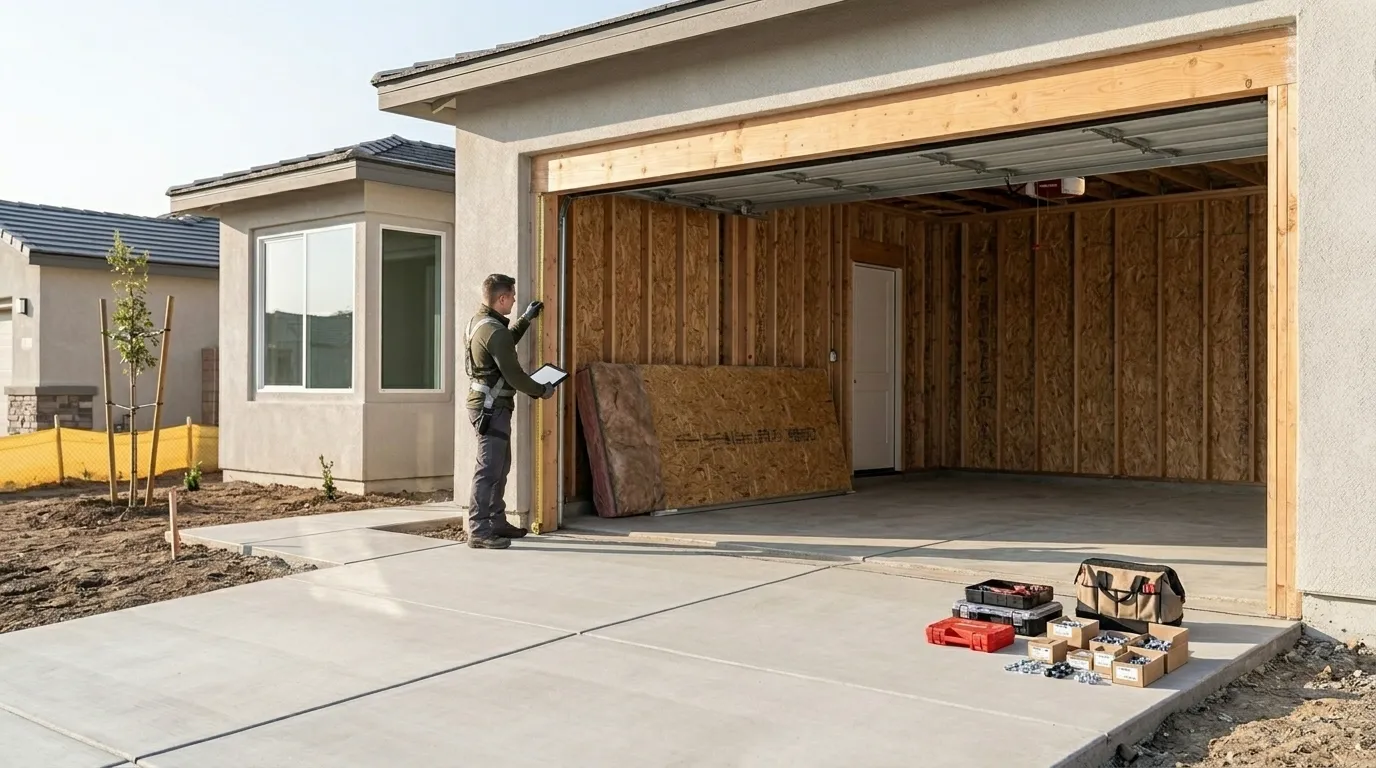
We don't have a set price to quote you here - every install runs on the door size, the track configuration, and whether the opening needs framing work before a new door goes in.
What we can tell you is what drives the number up in Westchester specifically: a house built around 1957, which is the median year for this area, usually has an opening sized for hardware nobody makes anymore.
That means the job isn't just "drop in a new door," it's often re-framing the jamb or swapping the track spacing to fit a current standard-size unit. Homes here also tend to run narrower single-car openings than what got built through the 60s and 70s elsewhere in the region, so a straight swap sometimes isn't possible.
We'll give you a real number after we see the opening, not before. If you're comparing quotes, ask what each one assumes about the existing frame - that's usually where the difference hides.
Local causes
A door installed when a Westchester house went up new in the late 1950s was built to a different set of assumptions than what you'd put in today. Spring sizing, track depth, and even the panel gauge were matched to lighter doors and lower-torque openers - because openers barely existed yet for most of that stretch. Fifty-plus years on, that original hardware is either long gone (replaced piecemeal, badly matched) or it's still there and failing exactly because it was never built to run an opener at all. Either way, the fix isn't a new panel bolted onto old track. In a cold-moderate climate like this one, the extra stress of temperature swings on old brittle springs and dried-out rollers speeds up the failure - a door that's marginal in October is often stuck by January. That combination - 1950s framing plus decades of thermal cycling - is why a same-era neighbor's door and yours can look identical but need completely different replacement hardware.

DIY or pro
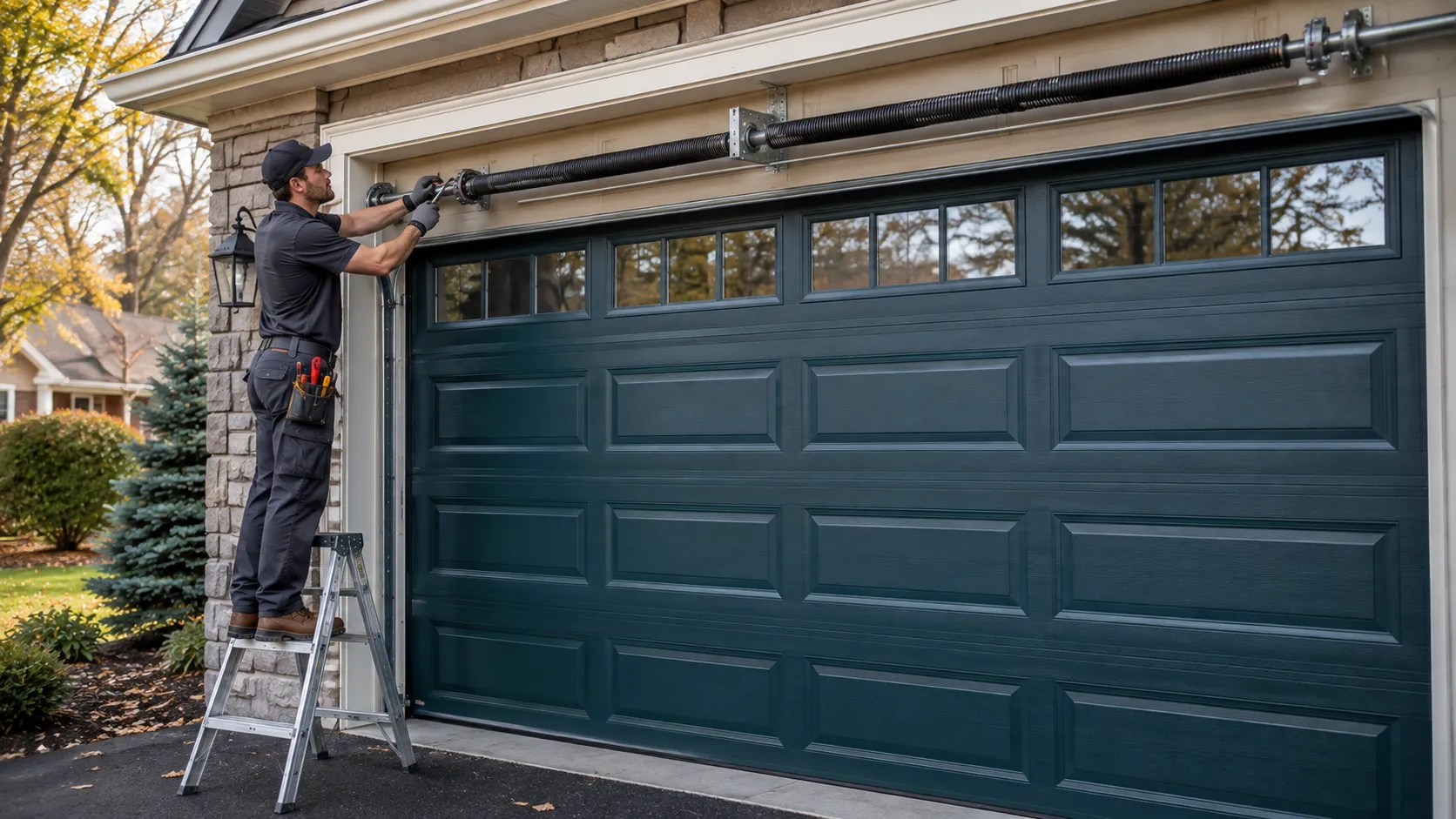
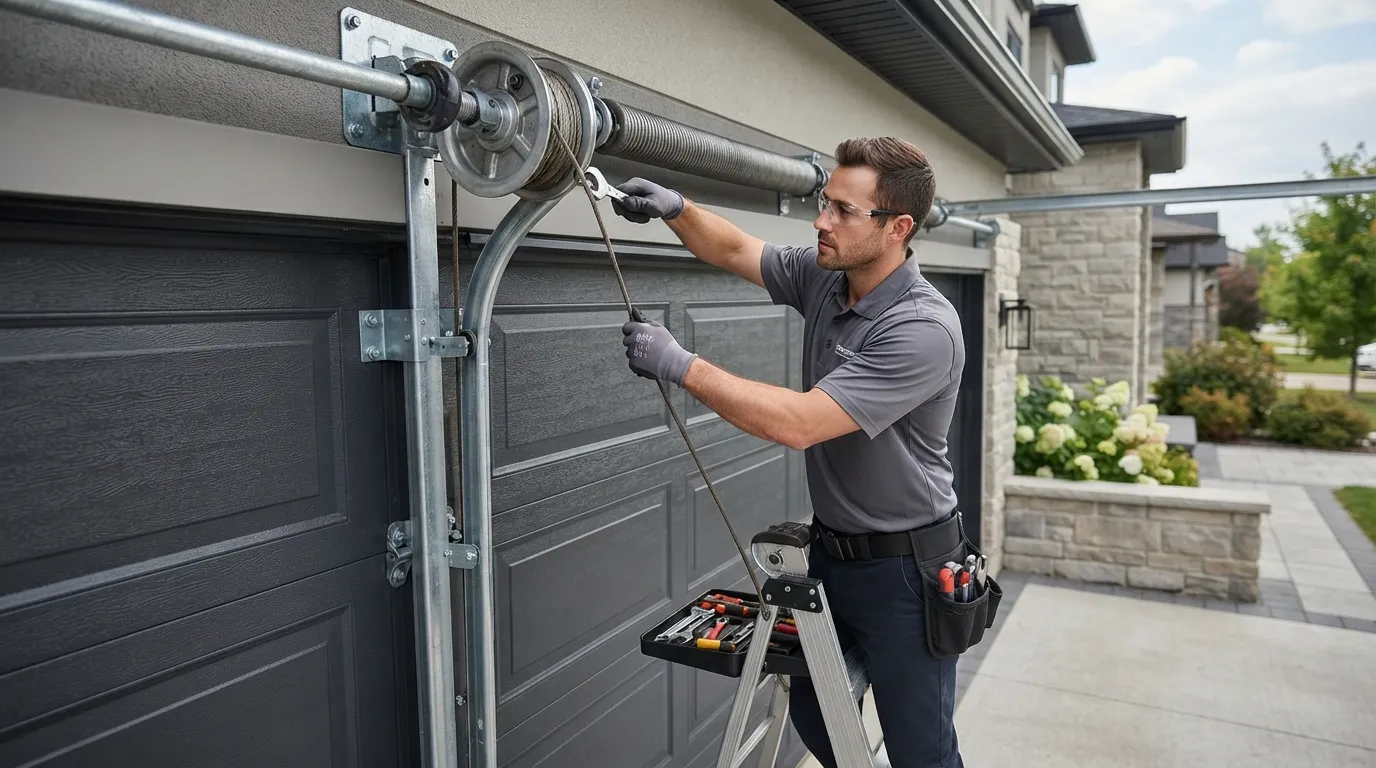
You can hang a garage door yourself if you've got the tools and the patience, but torsion spring work on anything from this era is not a place to save money by guessing. Original 1950s openings often used spring wind counts and drum sizes that don't match what's sold off the shelf today, and mis-matching them means the door either won't lift evenly or the spring lets go under load. We're not going to tell you every homeowner needs a crew for this - a simple weatherstrip swap or roller replacement is reasonable DIY. But full door replacement on a house this age usually means the jamb, the track, and the spring all need to be re-sized together, and that's three chances to get it wrong at once.
The repair
For a straightforward swap - same rough opening, modern door, matched spring and track - figure on a single visit once the door and hardware are on the truck.
Where a Westchester job runs longer is the framing: if the opening needs squaring up or the jamb has settled (common in houses from this build period), that adds time before the new door goes in at all.
We're honest about lead time on parts too - some sizes for older, narrower openings aren't stock items, and if yours needs one, we'll tell you what the wait looks like before we schedule the install, not after.
Symptoms
The complaint we hear most from this stretch of houses isn't a dead opener - it's a door that's gotten heavy to lift by hand, or one that opens crooked, one side dragging ahead of the other. That's the tell of original or early-replacement hardware finally giving out on a door this age, not a simple adjustment. If your house was built anywhere near 1957, and the door's original or close to it, uneven lift is usually the spring losing tension unevenly across a track setup that was never matched to today's parts. At that point patching the spring alone just moves the failure a few months down the road - the track and door usually need to come out together.
Booking
We run this job out of Evanston and cover Westchester as part of our southwest coverage - it's about a 17-mile trip out, so we schedule these as full visits rather than same-day drop-ins. Tell us the door's rough age and whether it's original to the house if you know it; that alone changes what we bring on the truck. Check the area page for what else we cover on this side of the region, or go straight to the main installation page for how we handle new-door jobs generally.
Questions
If your home was built close to 1957 - the median build year for this area - and the door's never been replaced, yes, it's likely original or close to it. That hardware wasn't sized for today's openers, which is usually the first thing that fails once you add power lift to it.
Not always. Openings from this era were sometimes framed narrower or with different track spacing than current standard sizes. We measure the actual opening before quoting, because a mismatch here is the most common reason a Westchester job costs more than expected.
No. We travel from Evanston, about 17 miles out, so Westchester installs are scheduled visits, not same-day emergency calls. If your door's stuck shut, we can talk through what to do until we get there.
This area sits in a cold-moderate climate band, and temperature swings dry out and stiffen old rollers and springs faster than in milder regions. A door that's marginal in fall often fails outright by mid-winter, especially on original 1950s-era hardware.
Explore more
Ready when you are
Evanston Garage Door Pros repairs and installs garage doors, springs and openers in Evanston, IL and the surrounding area.