Panel replacement scope factors
What drives the cost on a panel job is whether you're replacing one section or matching an entire run, whether the door is insulated, and whether the manufacturer of your original door still makes that profile.
Westchester, Evanston
Westchester homes center on 1957, two years ahead of the region's median. That build year shapes panel sizing, hardware, and what a color-matched replacement actually takes here.
Popular Services
Pricing
We don't have a flat number to hand you here, and quoting one without seeing the door would be a guess dressed up as a fact.
What drives the cost on a panel job is whether you're replacing one section or matching an entire run, whether the door is insulated, and whether the manufacturer of your original door still makes that profile.
Westchester's median household income runs at $103,561, well above the service area's $91,003 median, and in practice that shows up as more owners choosing full-panel-set replacement over a single mismatched section sitting next to older paint. That's a preference, not a requirement - a single-panel swap is often the cheaper and perfectly sound choice. The other driver is the door's age.
Homes here center on 1957, and doors from that era were often built by companies that no longer exist, which means the panel width or rib pattern on your door may not have a direct match on the shelf today. When that happens, the choice becomes refinish-and-blend, custom-order, or replace the whole door - and each of those carries a different price. We'll tell you which situation you're in before we quote anything.
Local causes
Westchester's housing sits at a median build year of 1957 - two years earlier than the 1959 median across the wider service area this company covers out of Evanston. That gap matters more than it sounds. Doors installed in the late 1950s commonly used panel widths and hinge spacing that later became less standard as manufacturers shifted their product lines through the 1960s and 70s. A dented or rusted panel on one of these doors doesn't always have a same-size replacement sitting in a warehouse. The area also sits in a cold-moderate climate band, and steel panels from that build era, especially on the bottom two sections that take the most weather and road salt spray, tend to show rust-through and stress cracking around the roller stems before the rest of the door shows any wear. That combination - an older panel profile plus a climate that's hard on the lowest sections - is why a panel that looks fine from the driveway can be structurally thinner than it should be right where the rollers pull on it.
DIY or pro
A single dented panel looks like a weekend job until you try to match the finish. Original 1957-era steel doors were painted, not powder-coated the way most replacement panels are today, and a hardware-store touch-up almost never blends against thirty-plus-year-old factory paint that's faded unevenly across the door.
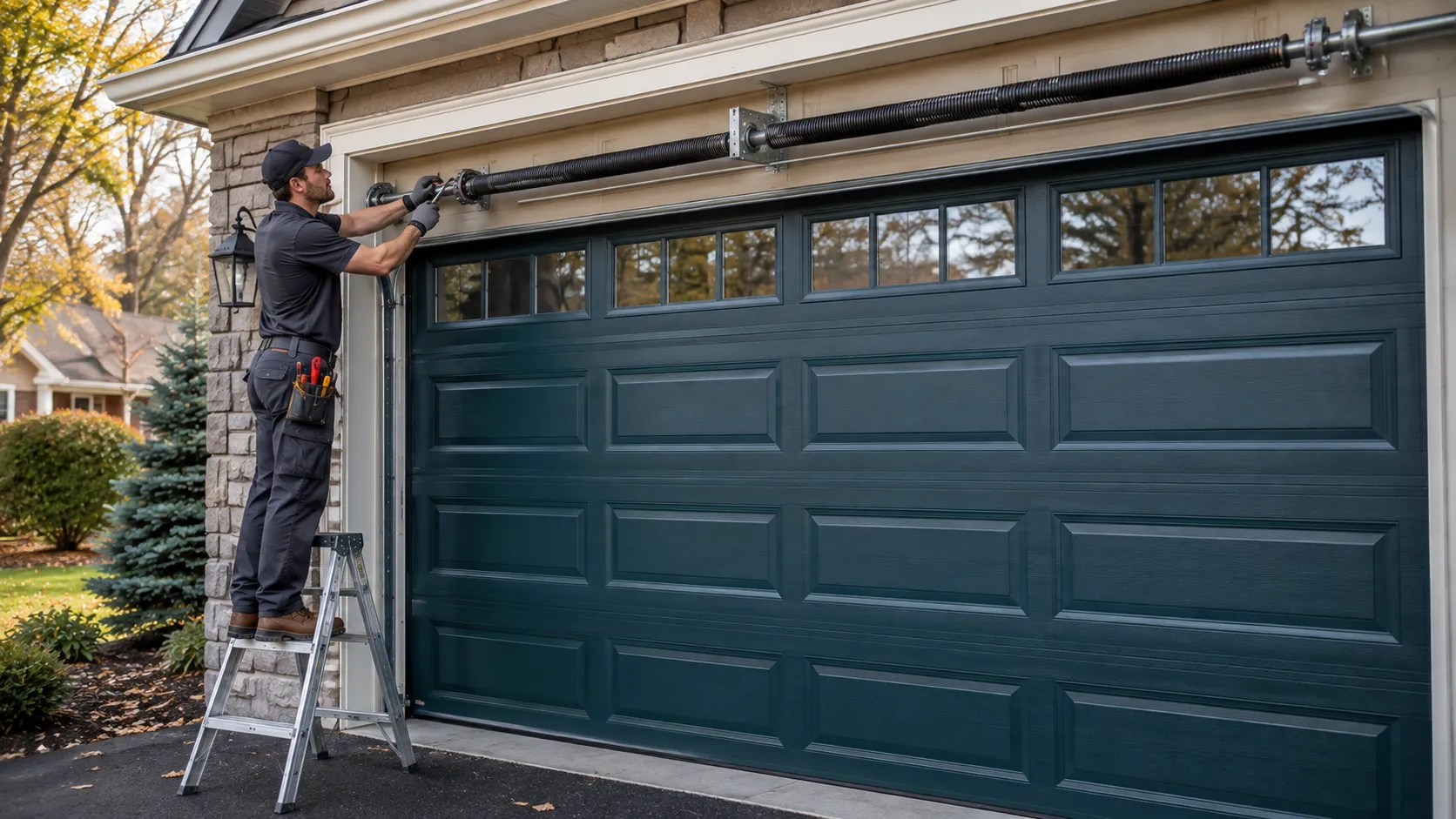
If your door isn't insulated, swapping in an insulated replacement panel next to uninsulated originals will also change the weight balance enough to throw off your spring tension - which turns a panel job into a spring job you didn't plan for.
We'll say plainly: if you're comfortable with a mismatched panel and you're handy with a socket set, a basic non-insulated panel swap on a standard door isn't beyond a capable homeowner.
Where it goes wrong is ordering the wrong panel width for an older door, or reusing hinges that no longer sit flush on a new panel's flange. If in doubt, get the measurements checked before you order anything - a returned custom panel costs more than the swap.
The repair
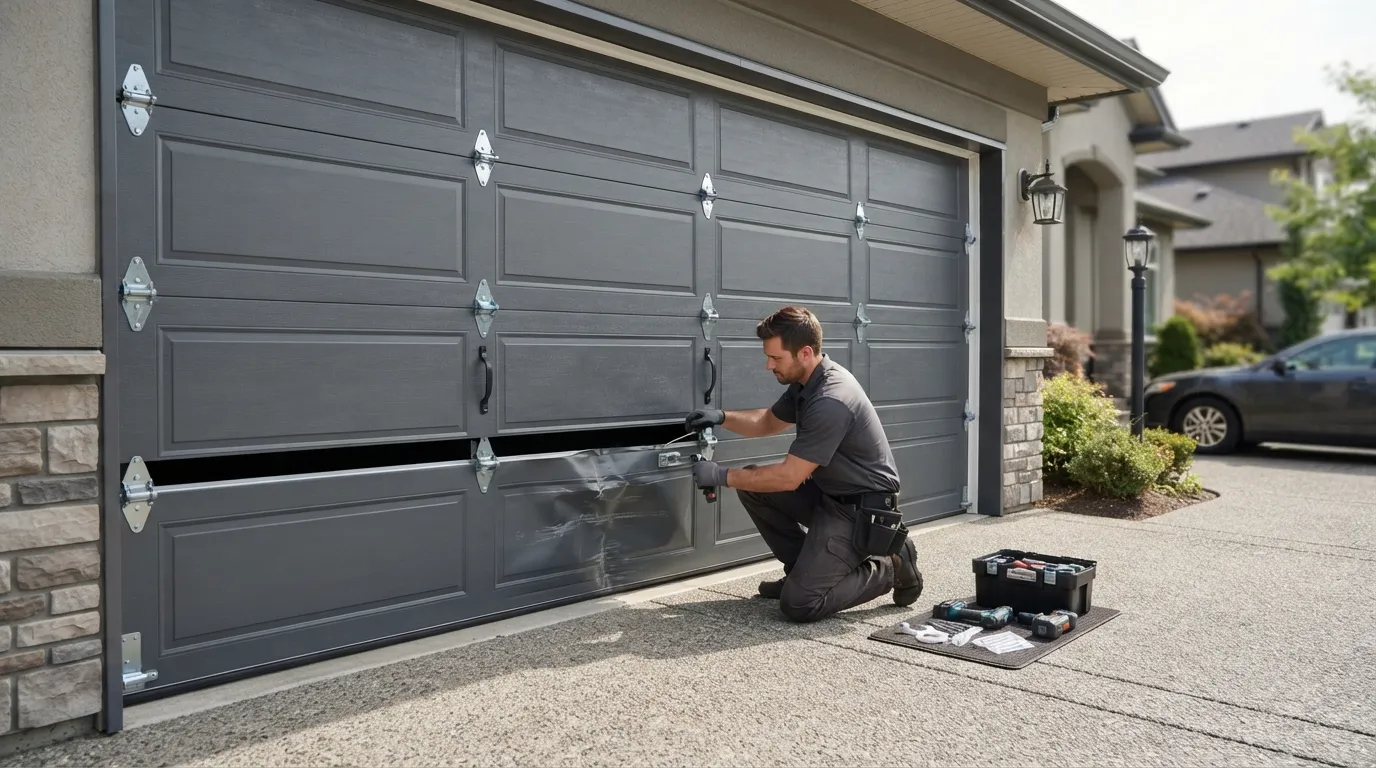
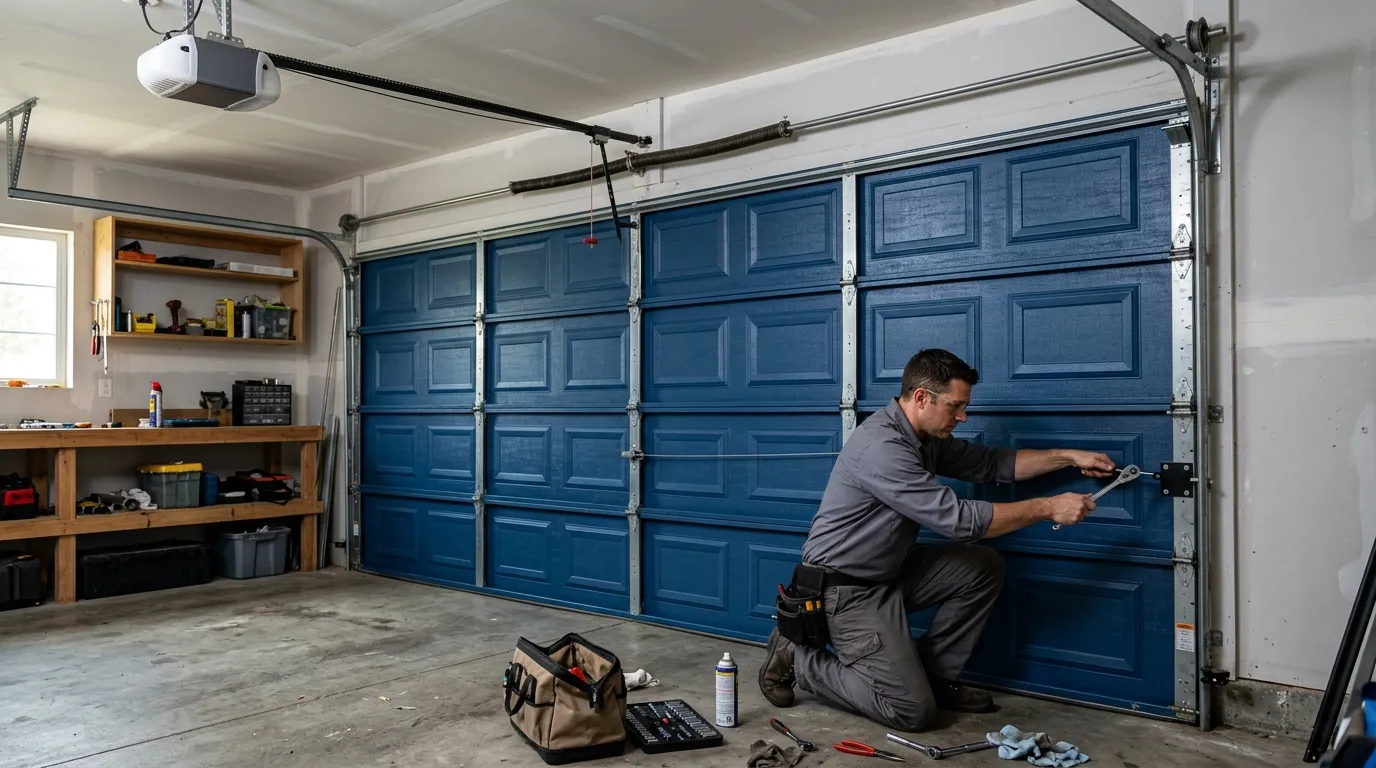
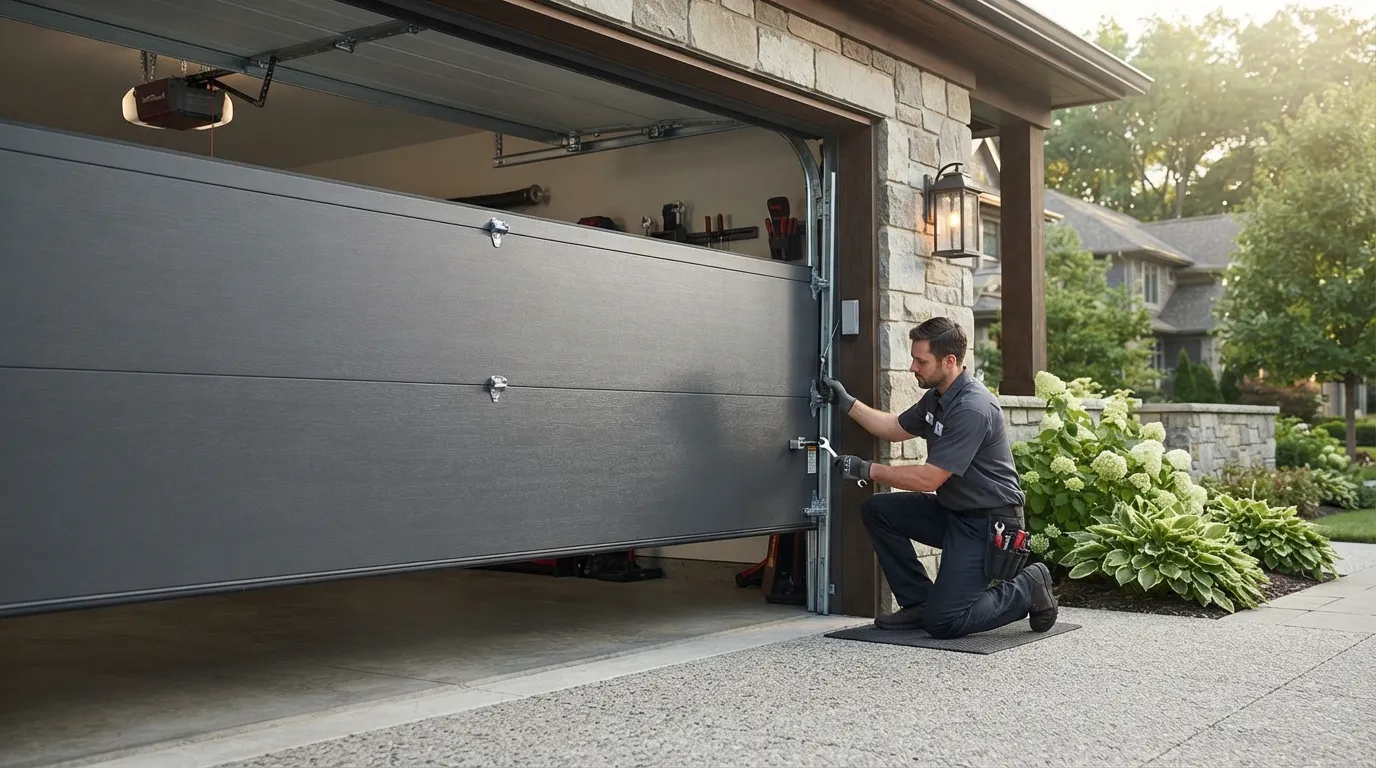
We start by measuring the exact panel width, rib count, and hinge spacing on the door in front of us, because on 1957-era doors those numbers don't always match a modern catalog listing without some cross-referencing. From there it's either a stock panel match or a special order, and special orders take longer - that's the honest limitation on this job. Once the panel's in hand, the work itself is straightforward: remove the end hinges and center hinges holding the damaged section, slide it out along the track without disturbing the sections above and below, fit the new panel, and re-hang the hinges and rollers. On insulated replacements going onto an otherwise uninsulated door, we check the spring tension afterward, since even a few pounds of weight difference across a double door can leave the opener straining or the door drifting open on its own. Last step is a full cycle test - up, down, and a look at how the panel seats against its neighbors - before we call it done.
Symptoms
Most calls for this start the same way: a dent from a car bumper or a thrown snowblower rock, a crack along a rib after a hard freeze-thaw cycle, or a bottom panel that's rusted through near the weatherstrip track.
Sometimes it's less obvious - a door that looks fine but rattles or binds partway through its cycle, which often means a panel has bowed slightly and is catching the track instead of running clean.
On the older doors common through Westchester, we also see panels where the steel has thinned enough at the roller stem that the roller itself has started to pull loose from the panel face, which looks like a hardware problem but is actually the panel failing underneath it. If your door is sticking, dragging, or making a new noise on one section specifically, that's usually the panel talking, not the opener.
Booking
This crew runs out of Evanston, about 17 miles from Westchester, so there's no local branch or drop-in counter here - we schedule the job, drive out, and do the work in one visit once the panel's confirmed. If you want to see how this fits with the rest of what the company covers on this side of the service area, the Westchester area page has that. If your door needs more than a panel - a failed opener, broken spring, or full replacement - the Evanston panel replacement page covers the broader service this job sits under. Have your panel dimensions or at least a couple of photos ready when you call; it shortens the back-and-forth on whether we're looking at a stock match or a special order.
Questions
Sometimes, and sometimes not exactly. Original 1957-era factory paint fades unevenly over decades, so even a correctly matched new panel can look slightly different for a while until it weathers. We'll be upfront about whether we expect a close match or a visible seam before you commit to a single-panel repair versus a full set.
If the panel profile no longer matches anything available, or if the rest of the door shows the same rust and thinning as the damaged section, patching one panel just delays the same call. We'll only recommend full replacement when the numbers actually point that way, not as a default.
No. Panel stock varies by manufacturer and era, and a lot of what's out there for 1950s-profile doors has to be special-ordered. We confirm the exact panel needed on site, then schedule the install once it's in.
It can, especially on a double door where only one section gets replaced. Insulated panels weigh more than the original uninsulated steel, and that shift can put extra strain on the spring and opener. We check the balance after any insulated panel swap and adjust spring tension if it's needed.
Explore more
Ready when you are
Evanston Garage Door Pros repairs and installs garage doors, springs and openers in Evanston, IL and the surrounding area.