
Opening square tolerance
Squaring a rough opening that's out of true by an inch or more is not a bolt-in job - it's carpentry plus door work, and getting the sequence wrong means a door that binds on one side within a season.
Berwyn, Evanston
Berwyn homes date to 1938 on average, older than most of our service area. See what that means for new garage door installation and what we bring on the truck.
Booking
We run new installation jobs into Berwyn from our Evanston shop, about 15 miles out. Because it's a travel job rather than a local branch call, we book installs a set day ahead rather than same-day - we need to know the opening width and headroom before the truck loads, not after.
Call and tell us the age of the house if you know it; on a block built in 1938 the garage almost never matches a modern standard door without some adjustment to the frame or track path, and we'd rather plan for that than find it on site.
We'll ask for the rough opening dimensions, whether the garage is attached or detached, and what's there now - one-piece, sectional, or something older that doesn't roll on a track at all.
If you can grab a phone photo of the header and the side jambs, that saves a trip. We confirm the appointment once we know what we're walking into, because a 1938 opening and a 1985 opening are not the same job even on the same street.
On the truck
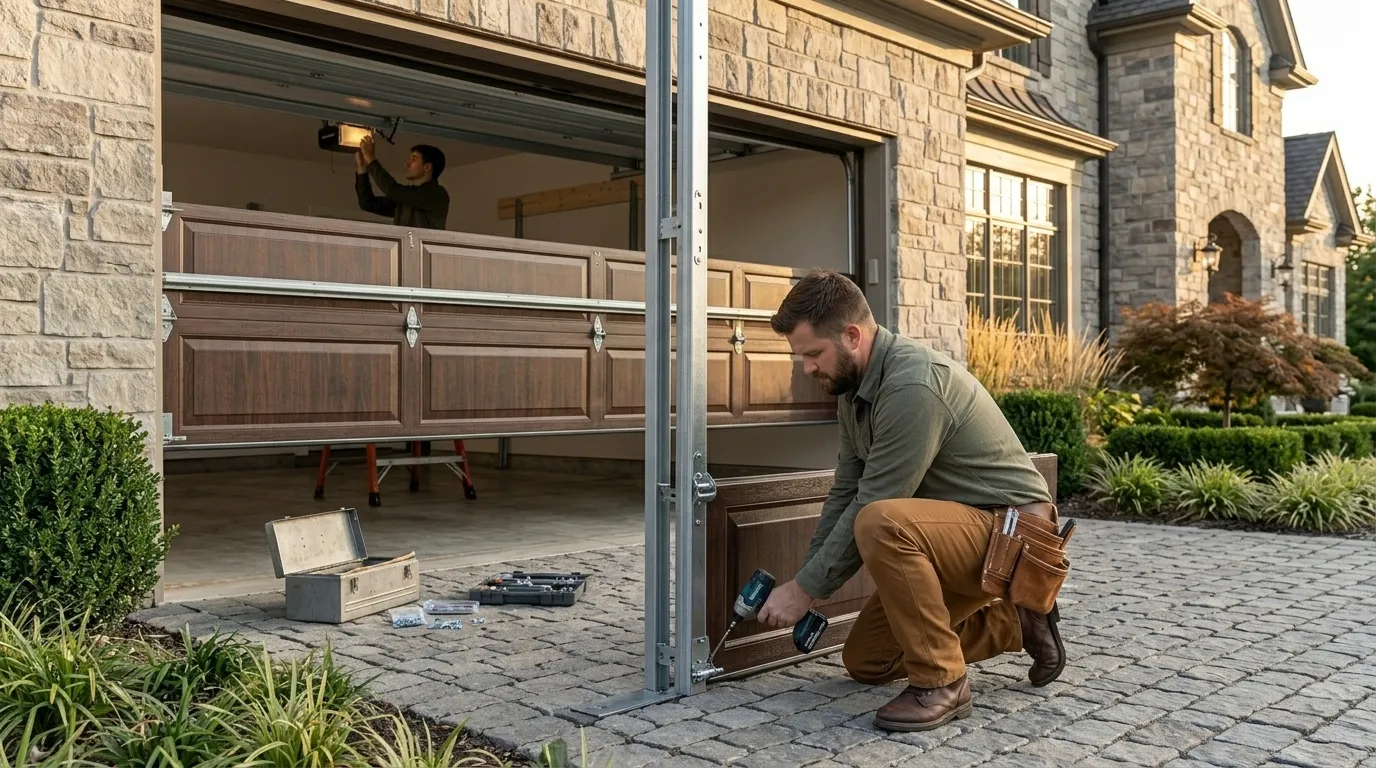
For a neighborhood built around 1938, the truck carries jamb extension kits and adjustable track brackets more often than for newer housing stock, because original openings run narrower than the 8 or 9 foot standard most sectional doors are built to now. We stock the hardware to true up an out-of-square opening rather than force a modern door into a frame it wasn't sized for.
We carry insulated sectional doors as the default here, not the bare single-layer option - the area sits in a cold climate band, and a garage attached to the house loses real heat through an uninsulated door all winter. That's not an upsell; it's what holds up. We also bring standard-width torsion springs and openers, since most jobs are straightforward once the opening's been squared up. What we don't carry on the truck is custom millwork doors or anything built to order - those are special-order items with their own lead time, and we'll tell you that up front rather than promise a truck-stock swap that isn't one.
DIY or pro
If you're pricing out doing this yourself, know what you're dealing with first. A garage from the 1938 era in this area was very likely built for a car half the width of what people drive now, and the frame carpentry around that opening is original in a lot of cases.
Squaring a rough opening that's out of true by an inch or more is not a bolt-in job - it's carpentry plus door work, and getting the sequence wrong means a door that binds on one side within a season.
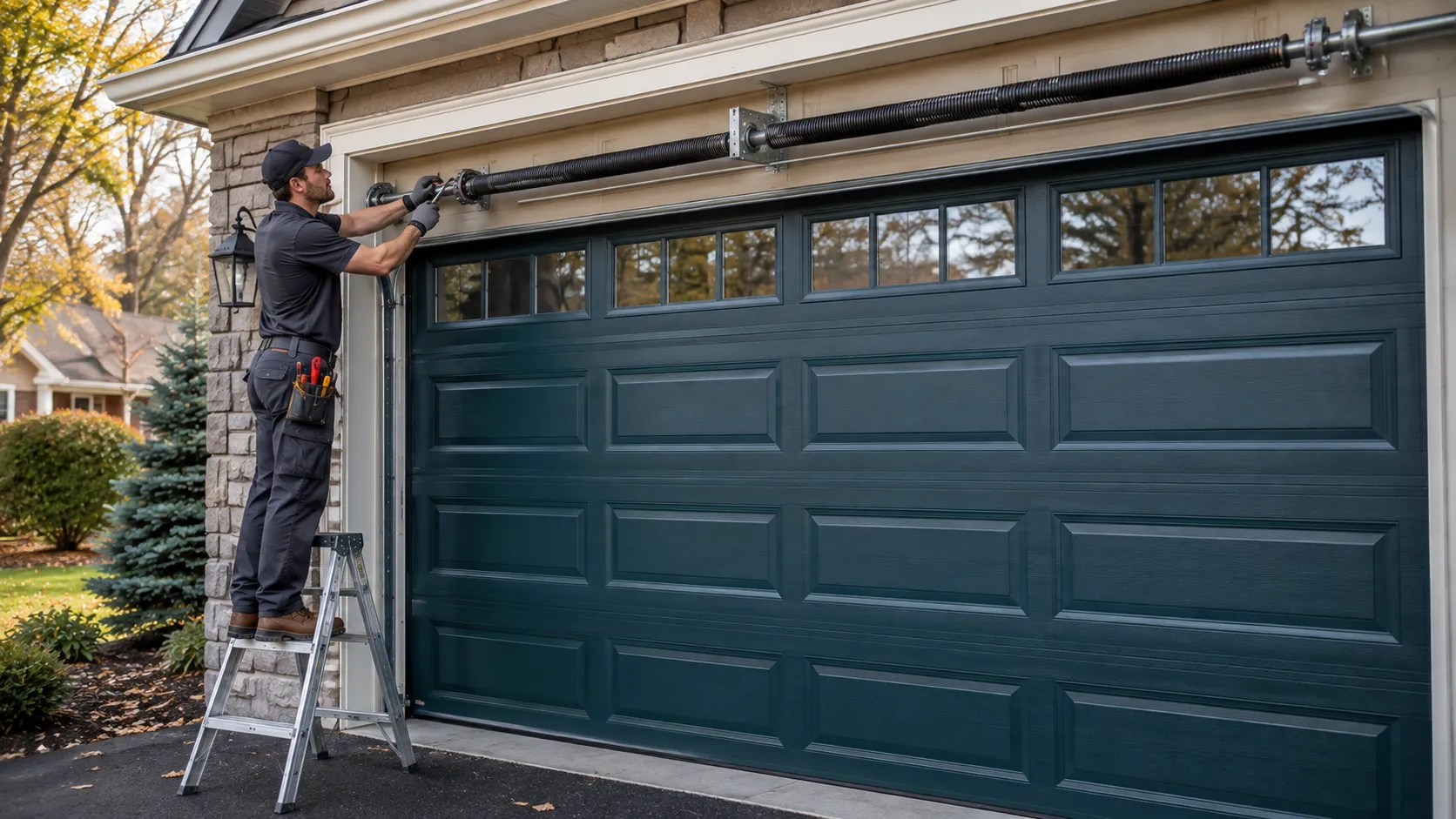
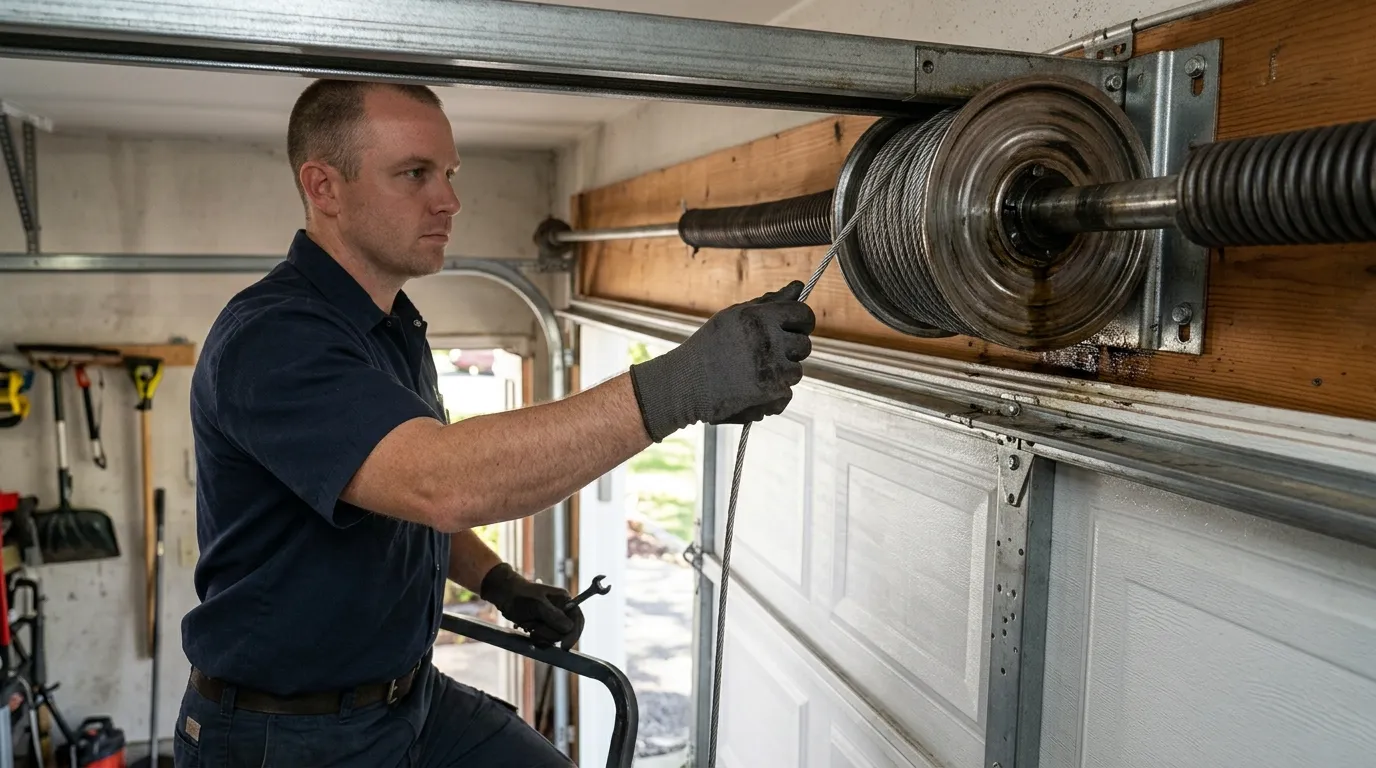
What you can reasonably do yourself: measure the opening accurately, clear the space, and figure out headroom for the track and spring assembly before you buy anything. What we'd tell you to hire out: setting torsion spring tension, and any framing correction on an opening this old.
A spring under tension has put people in the hospital, and an opening that's slightly out of square will eat a bad install faster than it eats a good one.

Symptoms
The complaint we hear most from this stretch of housing isn't a broken spring - it's a door that never sat right to begin with. Owners tell us the door drags on one track, or there's a gap along one side that lets weather in, and they've lived with it for years assuming that's just how an old garage door behaves. Usually it's the opening, not the door: decades of settling on a house built in 1938 shifts a frame just enough that a straight door no longer meets a straight opening.
If your opener runs the door with visible strain, or the door has stopped closing flush no matter how many times it's been adjusted, that's usually the frame telling you it moved. A new door installed square to a corrected opening fixes it for good; another patch adjustment on the old door doesn't. We'll tell you honestly if your case is a fix or a full swap once we've measured it - we don't sell installs to jobs that don't need one.
Questions
Houses built around 1938 in this area were framed for narrower cars and smaller garages than what's standard now. Most sectional doors today are built to 8 or 9 foot widths, so an original 1938 opening often needs the frame adjusted or extended before a new door will fit and seal correctly.
No. We run installation jobs into Berwyn from our Evanston location, about 15 miles away. We schedule these as planned appointments rather than same-day calls so we can bring the right hardware for the opening on the first trip.
Yes, in most cases. The area sits in a cold climate band, and an uninsulated door on an attached garage loses heat through the winter months. We default to insulated sectional doors for that reason unless you tell us otherwise.
Sometimes. On older homes the door itself is often fine but the opening has shifted with age, which throws the door out of square. We measure first and tell you honestly whether an adjustment will hold or whether the opening needs correcting with a new install.
Explore more
Ready when you are
Evanston Garage Door Pros repairs and installs garage doors, springs and openers in Evanston, IL and the surrounding area.